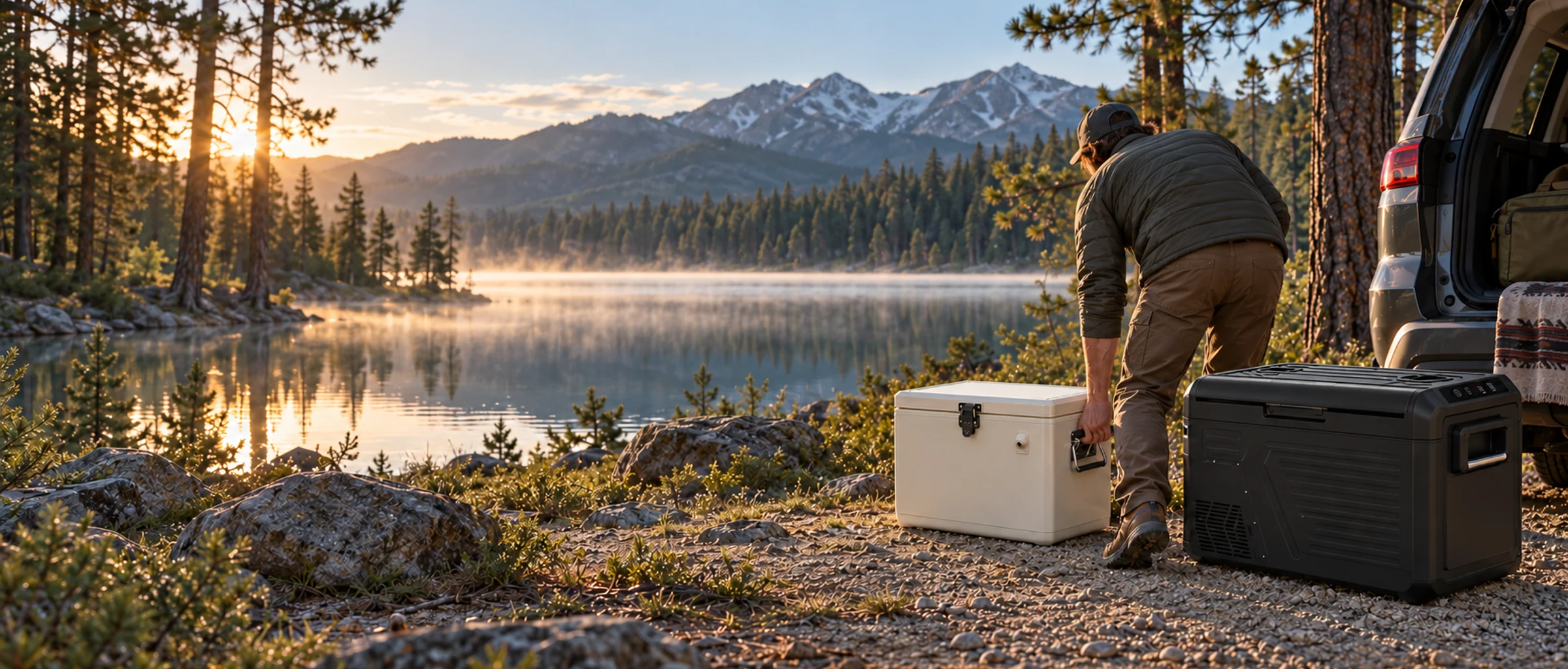
Choose a cooler box when the trip can be planned around ice or ice packs and simple carrying. Choose a portable fridge when the customer needs active cooling and has a dependable power arrangement. For a buyer building a camping or road-trip range, the useful comparison starts with the trip, then moves to capacity, vehicle fit and the approved specification.
Our Car Fridges & Coolers collection includes passive insulated boxes, wheeled formats and powered portable fridges. The catalog examples below show how those choices change a purchasing brief. Capacity labels alone cannot settle the decision.
Cooler box vs portable fridge: the practical differences
| Buying question | Passive cooler box | Powered portable fridge |
|---|---|---|
| How is it cooled? | Insulation slows heat gain; ice or ice packs provide the cooling. | A powered cooling system removes heat. Confirm the system and supported operating range for the model. |
| What must the user plan? | Pre-chilling, ice preparation, packing and ice replenishment. | Compatible electrical supply, cables, ventilation and operation while parked. |
| What occupies the space? | Food, drinks and the ice or ice packs packed with them. | The usable storage compartment, dividers or baskets; equipment also affects the external footprint. |
| What affects trip suitability? | Ambient conditions, opening frequency, packing and access to replacement ice. | Ambient conditions, temperature settings, duty cycle and the available power system. |
| What needs a sample check? | Lid seal, insulation, drainage, handle strength and filled carrying weight. | Cooling performance, electrical compatibility, noise, ventilation and filled carrying weight. |
A passive box can suit picnics and trips where ice is convenient. A powered fridge can suit repeated vehicle travel or a longer camp stay when its supply and installation requirements are met. Neither format has a universal trip-duration guarantee.
Compare usable storage, not just the number on the label
A “35 L” description does not tell a buyer how many meals, bottles or retail packs will fit. In a passive cooler, cooling media shares the interior with the contents. In a powered model, check the actual compartment layout, baskets and any stepped areas. For both, ask whether the capacity figure describes nominal volume or measured usable storage.
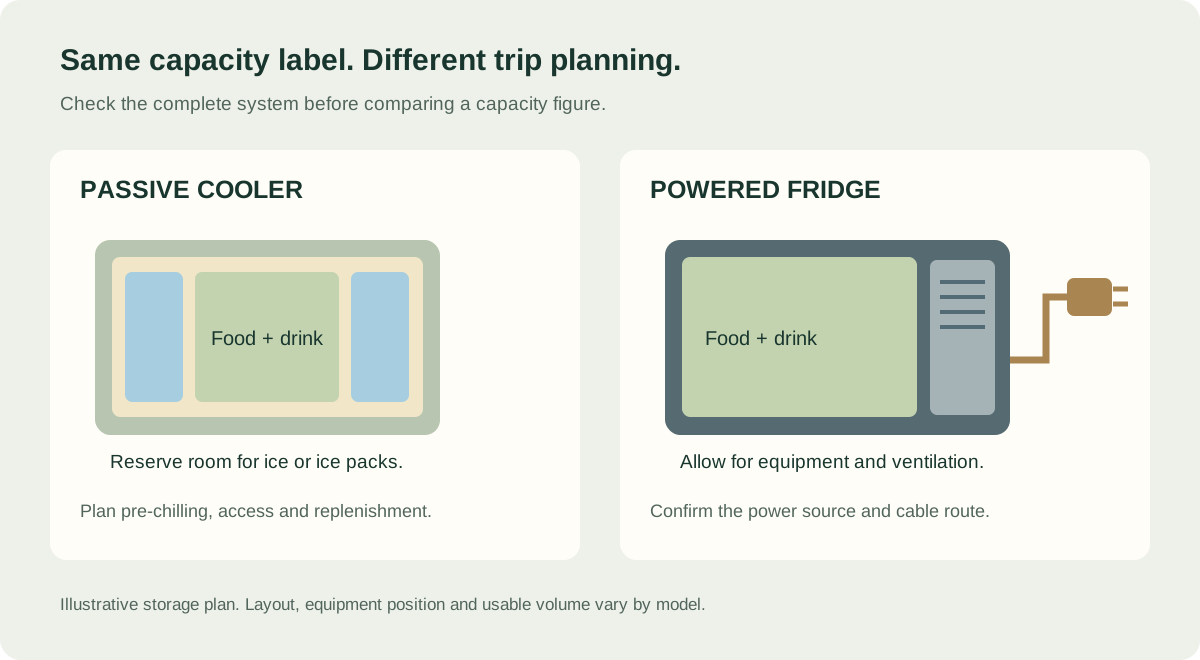
Build a packing list with the intended bottle sizes, food containers and cooling media, then trial it in the sample. A compact option such as the 10 L upright picnic cooler answers a different brief from a 70 L expedition carry cooler. Confirm the filled weight before choosing a larger box.
Measure vehicle fit and check the electrical version
Measure the available floor area, the route through the door or tailgate, lid-opening space and access to handles. External dimensions matter even when two products have the same stated capacity. For a powered fridge, allow the ventilation clearances specified for the final model and keep bags and other luggage away from the required airflow paths.
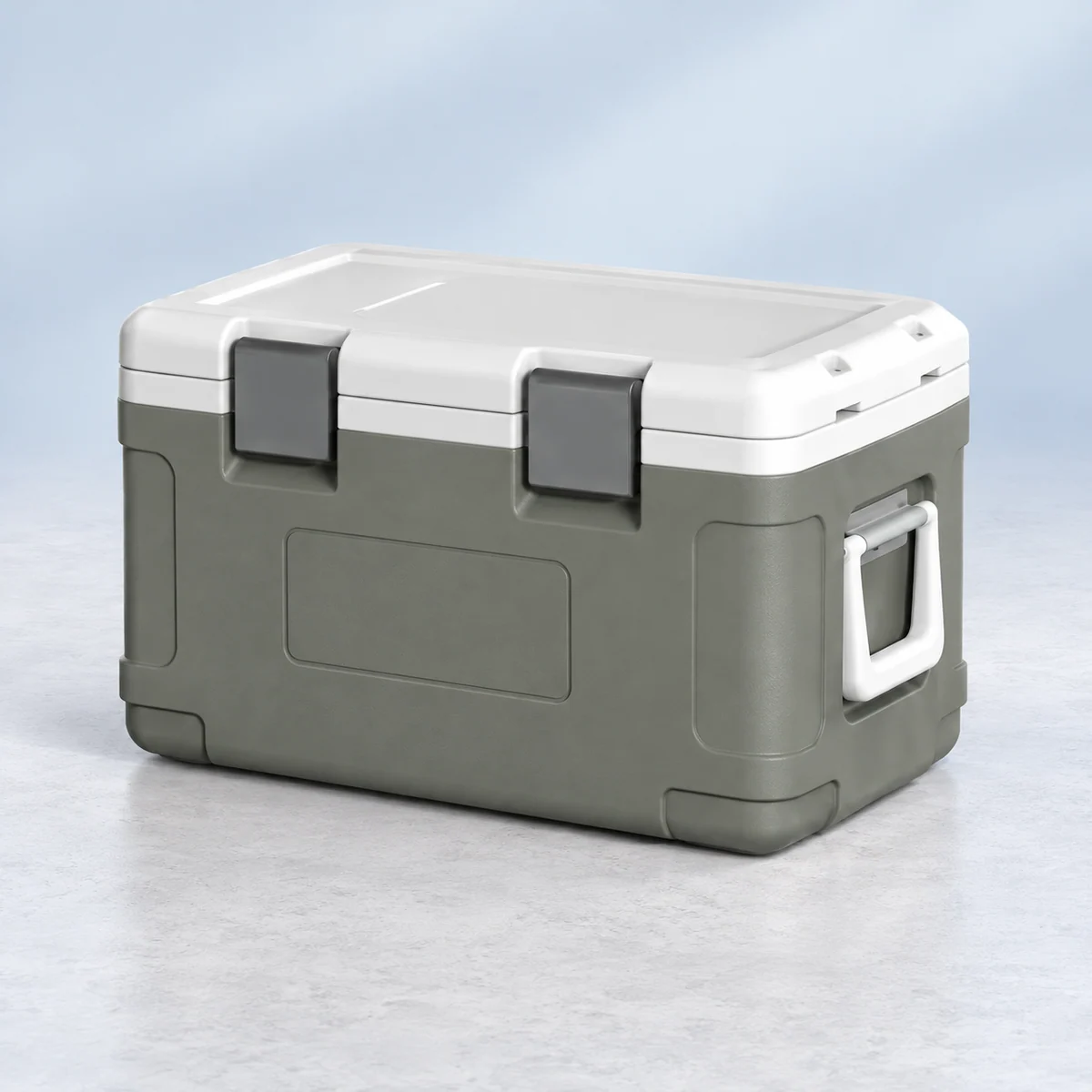
Catalog reference: 55.3 × 33.5 × 33.5 cm; net weight 4 kg. Reserve interior room for ice or ice packs.
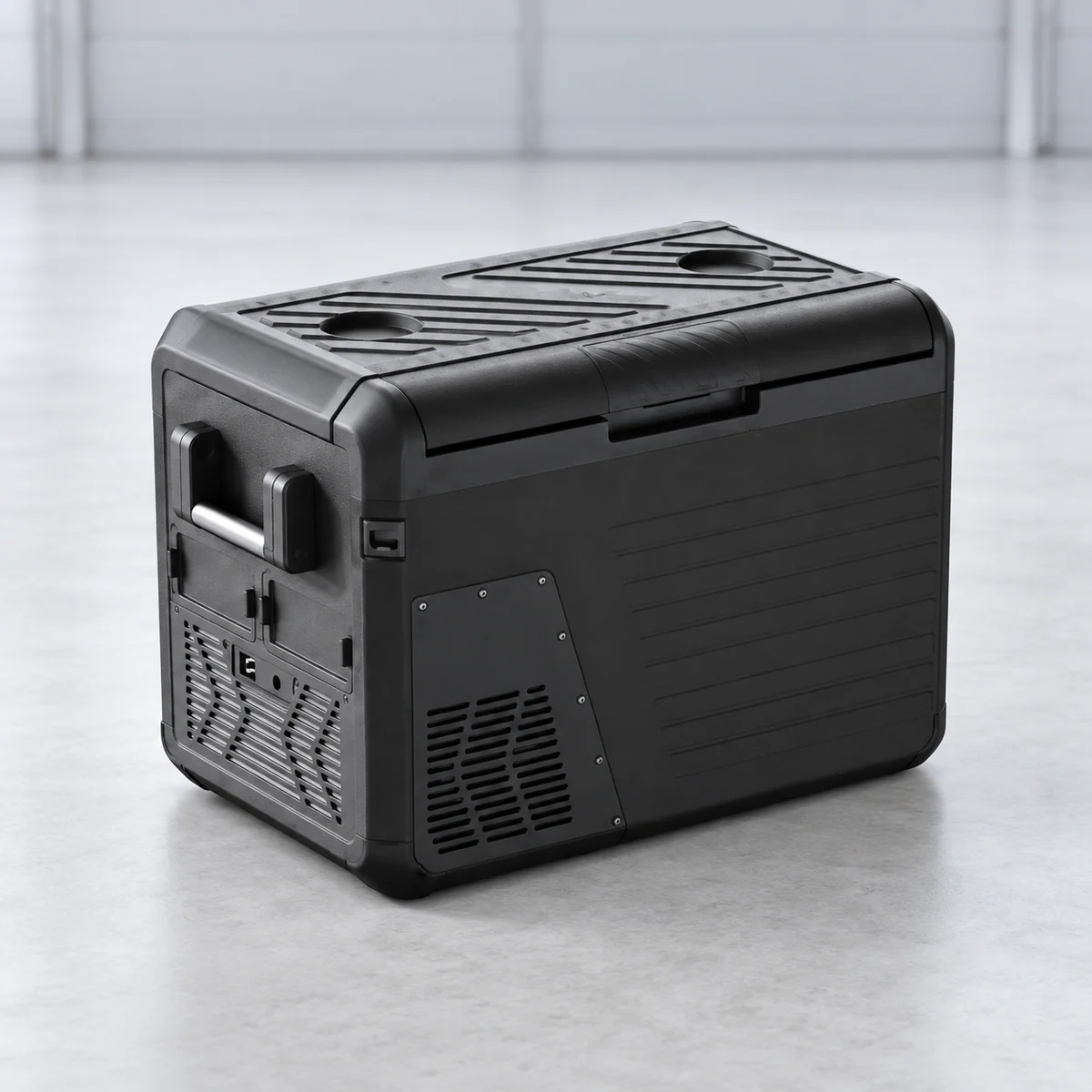
Catalog reference: 645 × 386 × 440 mm; net weight 13 kg; listed power 65 W. Confirm the electrical version and ventilation requirements.
These two catalog examples both state 35 L, yet have different dimensions and empty weights. They are starting points for a specification review; the figures do not establish equal usable storage or equivalent cooling performance.
Before ordering a fridge, confirm its supported input voltage, adapter, connector, cable length, protection requirements and behavior when the vehicle is parked. A catalog power figure in watts is not an energy-use or battery-runtime guarantee. Ask for measured energy use under agreed ambient temperature, setpoint and loading conditions before sizing a battery or making a runtime claim.
Choose the carrying format for the distance from vehicle to camp
A box that works beside a car may be awkward to carry across a campsite. Compare the filled weight, lifting position, handle clearance and the surface it must cross. Wheels change the carrying method; they do not eliminate the need to lift the product into a vehicle.
The 24 L compact rolling camp cooler provides a pull-handle direction for a passive range. For a powered range, compare the 35 L ribbed wheeled fridge with its carry-only counterpart. Check wheel diameter, axle mounting and telescoping-handle operation on the approved sample rather than assuming every rolling format suits rough ground.
If the range is intended for space-limited storage or a distinctive retail concept, the folding cooler OEM platform is a development discussion point. Its final capacity, structure and availability need a project specification before it can be treated as a production-ready selection.
Turn the choice into a clear OEM brief
State the intended user, trip conditions, target capacity, maximum external footprint and filled carrying limit. Add color and branding requirements, packaging, spare-part expectations and the destination market. For powered equipment, record the required electrical version and measurable cooling acceptance criteria.
Material descriptions such as PP, PE, PU, EPS or a metal shell describe construction choices; they do not prove a particular ice-retention time or temperature performance. Set the test conditions you need and review the evidence against the actual sample. Request any relevant food-contact or electrical documentation for the exact model and market. A factory audit or a certificate shown elsewhere in a supplier catalog does not establish product compliance for every version.
What to verify before approving samples
- Storage: trial-pack the intended bottles and containers; include ice packs for a passive box.
- Vehicle fit: check external dimensions, lid travel, access and tie-down or mounting needs.
- Portability: lift the filled sample and test handles, wheels and latches in the intended use.
- Cooling: agree ambient conditions, loading, opening frequency, target temperature and test duration.
- Power: confirm the electrical version, adapters, protection, ventilation and measured energy use where relevant.
- Production: approve materials, color, artwork, packaging, inspection criteria and applicable model-specific documentation.
Keep development references separate from confirmed production options in your buying plan. Where a parameter is missing or inconsistent, resolve it in the sample specification before making a promise to customers.