

A useful waterproof jacket specification gives an OEM supplier a complete approval brief. Define the intended use, fabric construction, waterproof and breathability test methods, seam-sealing coverage, fit and sample acceptance criteria before comparing quotations.
For outdoor brands, importers and uniform buyers, this makes supplier offers easier to compare and gives sample reviewers a shared reference. Start with the hardshell jacket collection, then record the changes and evidence your own program requires.
Start with the wearer and intended use
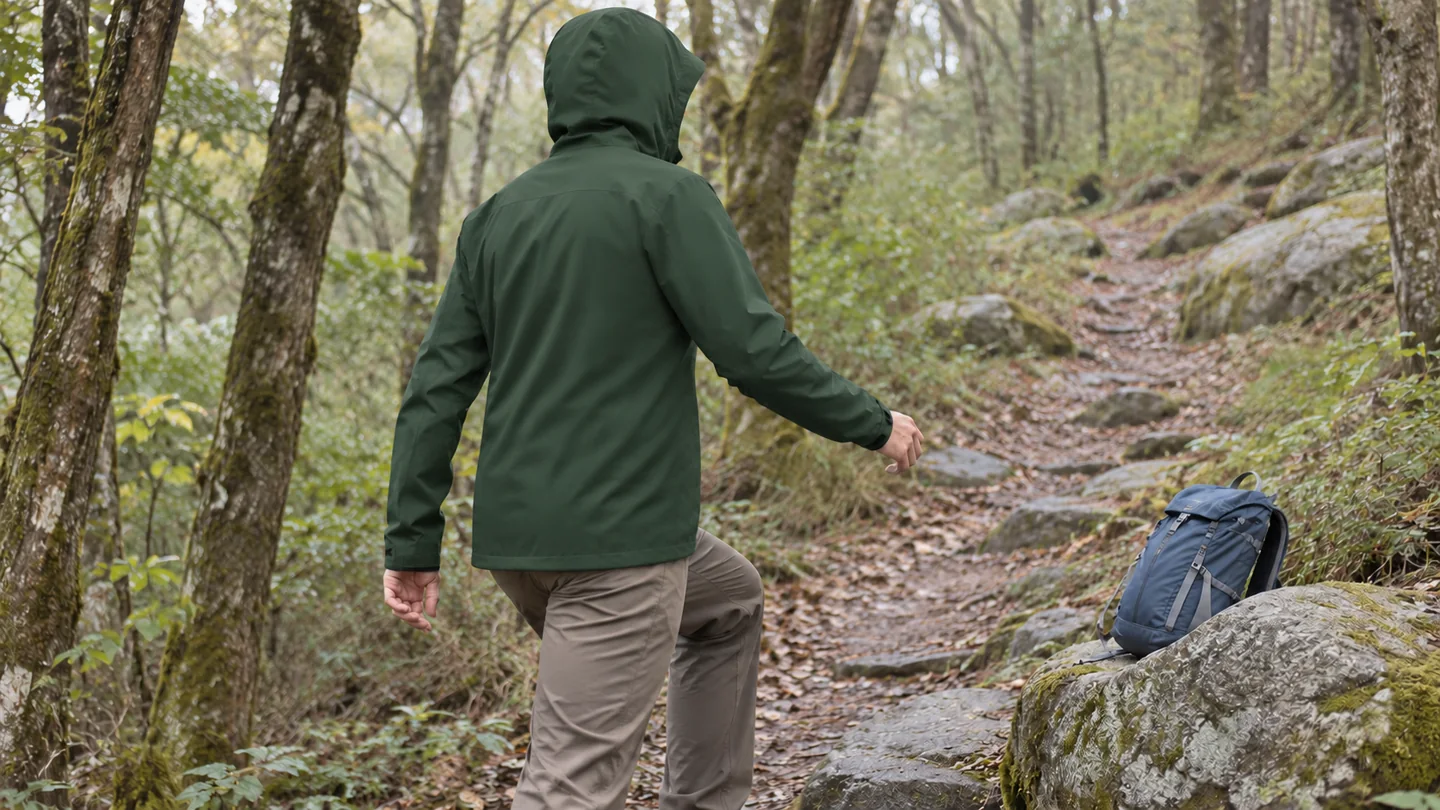
Describe where the jacket will be worn, how active the wearer will be and which layers need to fit underneath. A commuter reaching for a rain shell and a hiker walking uphill with a pack can need different ventilation, pocket access and adjustment details.
Include expected rain exposure, season, wearing duration and carrying equipment in the brief. For a uniform program, add repeated reaching or bending movements and the planned care routine. These details help the development team propose a fabric and construction that can be reviewed against your actual use.
- End use and destination market. Describe the activity, retail positioning and any buyer-specified standards or labeling requirements.
- Fit and layering. Name the intended base and midlayers, target size range and measurement reference.
- Functional priorities. Rank packability, fabric feel, abrasion exposure, ventilation and pocket accessibility.
- Commercial scope. State the quantity by style, color and size, target delivery window and packaging format.
If the product category is still open, the hardshell versus softshell guide can help you settle the construction direction before developing a detailed specification.
Read waterproof and breathability ratings with their test methods
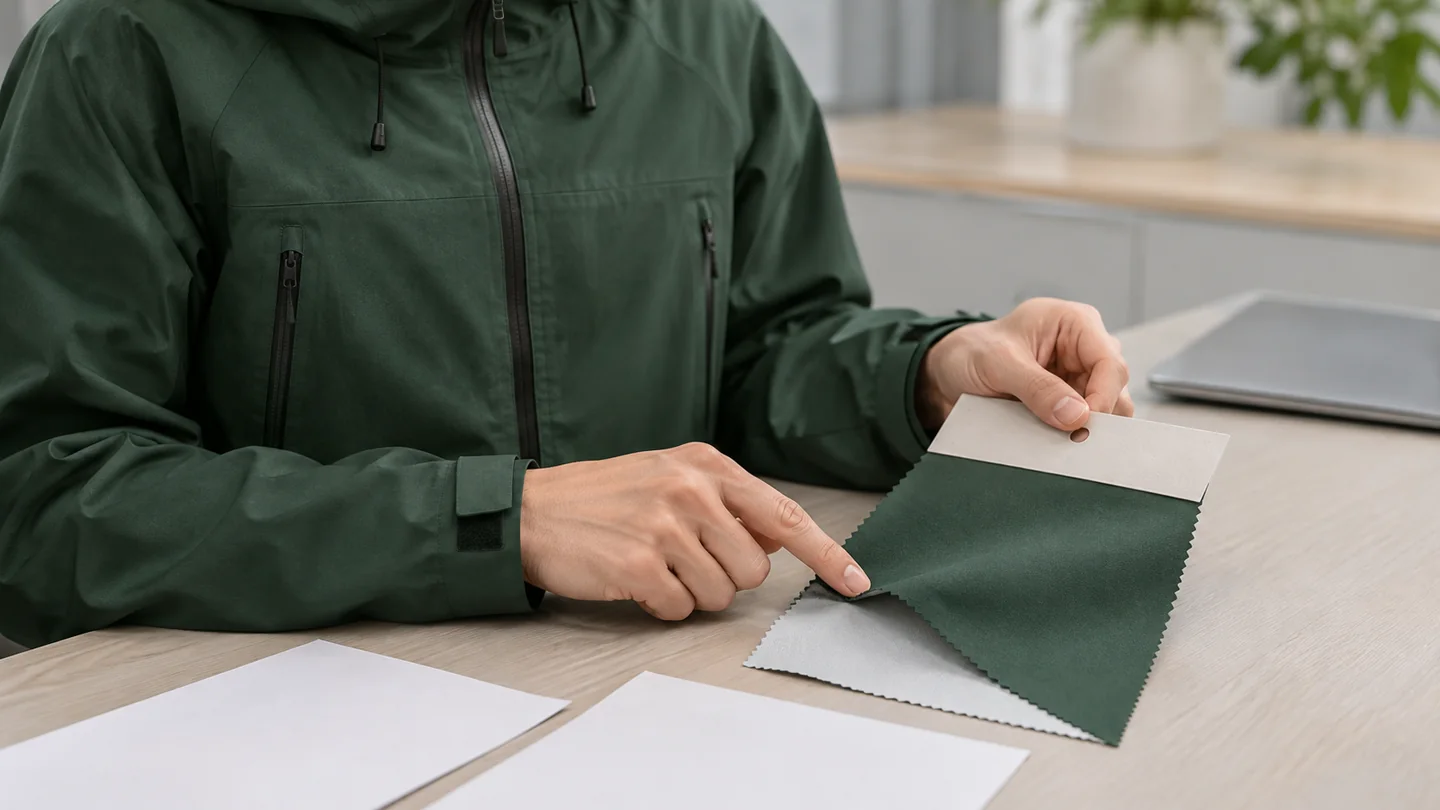
Waterproof jacket specifications often use shorthand such as “10K/10K.” Request the meaning of each number, its unit and the test method. The same shorthand can hide differences in specimen preparation, test conditions and reporting.
Hydrostatic head describes the water pressure a fabric specimen withstands under a defined test. A figure expressed in millimeters of water column needs a method, a stated acceptance level and a clear link to the proposed fabric. ISO 811 describes a hydrostatic-pressure method for assessing fabric resistance to water penetration. See the ISO 811 scope.
Breathability can be reported as moisture vapor transmission rate, often in g/m²/24 h, or as water-vapor resistance, commonly called Ret. Within comparable test conditions, higher transmission values indicate more vapor transfer, while lower Ret values indicate less resistance. Compare results produced with the same method and conditions. ISO 11092 covers steady-state thermal and water-vapor resistance measurements. See the ISO 11092 scope.
| Specification | Record in the buying brief | Ask to review |
|---|---|---|
| Water penetration resistance | Target value, unit, test method and edition, specimen condition | Report identifying the selected fabric and tested condition |
| Breathability | MVTR or Ret, unit, method and test conditions | Comparable results for each proposed material |
| Surface water repellency | Finish requirements and agreed assessment before and after care | Finish specification and relevant surface-wetting results |
| Seam sealing | Coverage map, tape and substrate combination, repair criteria | Construction sample, seam appearance and agreed seam tests |
| Finished garment | Closures, hood, pockets and agreed rain-exposure assessment | Complete sample tested in the specified configuration |
| Care durability | Care procedure, cycle count and retained-performance targets | Results after the agreed washing and conditioning sequence |
A durable water-repellent finish, often called DWR, affects surface wetting. Record that requirement separately from resistance to water passing through the fabric. Assessments of the fabric, seams and complete garment answer different questions, so keep each result attached to its tested component.
Set performance targets with the development team and testing laboratory around your intended claim and use. Keep the sample identity, report date and test conditions together so subsequent material changes can be assessed against the approved version.
Specify fabric layers, seam sealing and closures separately
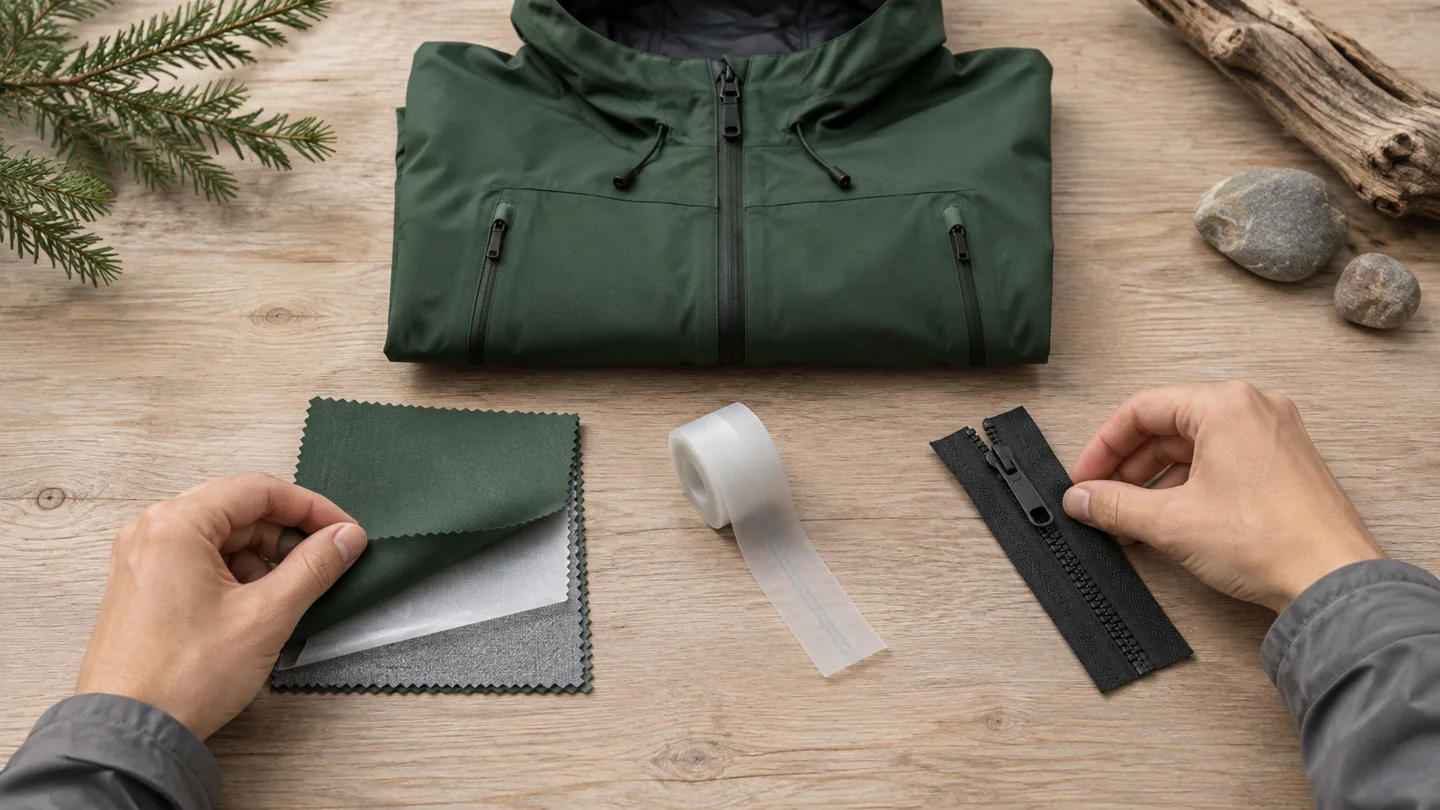
What 2-layer, 2.5-layer and 3-layer descriptions tell you
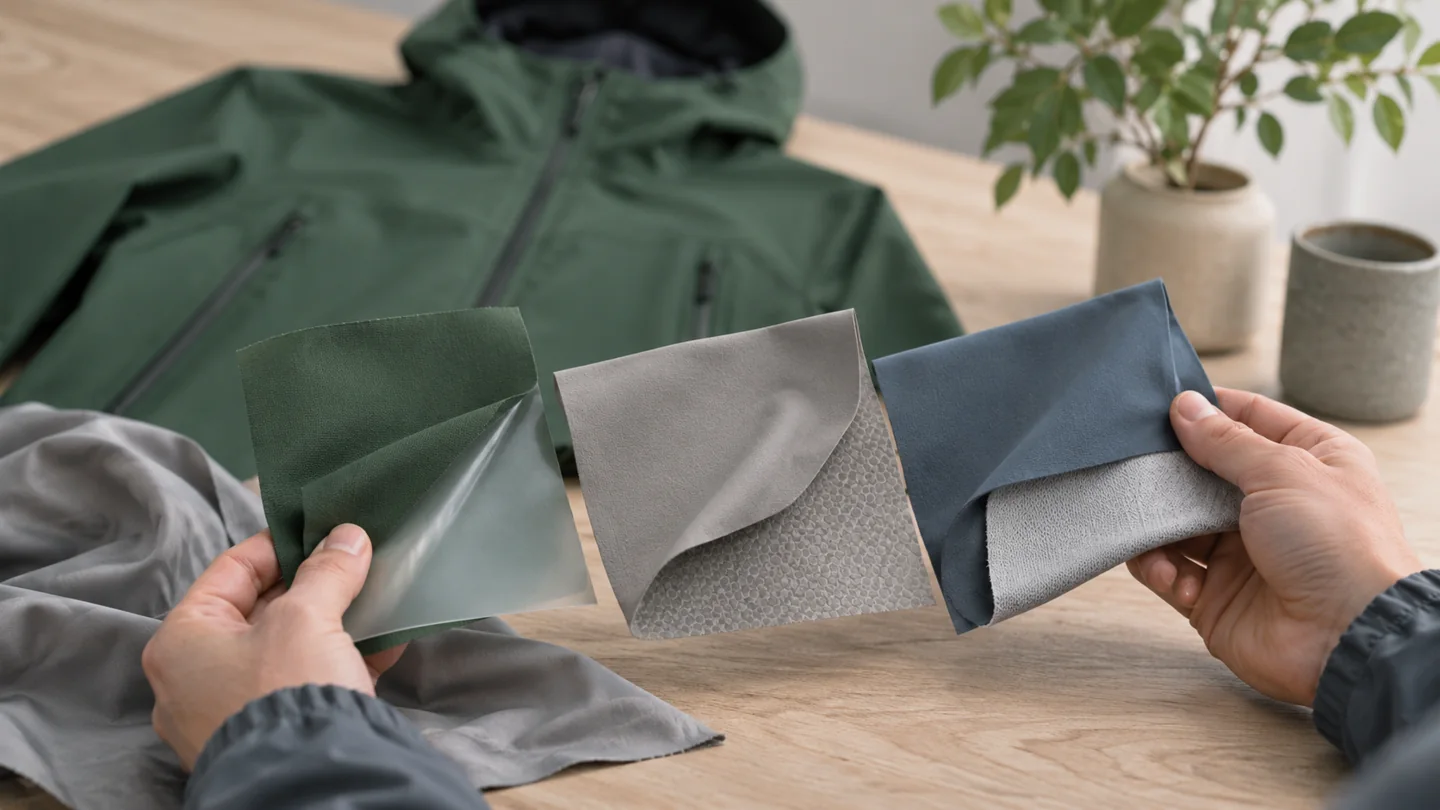
These descriptions identify broad fabric constructions. A two-layer laminate generally combines an outer face with a barrier layer and often uses a separate garment lining. A 2.5-layer construction typically adds an inner protective print or treatment. A three-layer laminate bonds the face fabric, barrier and inner backing together.
Ask for the exact construction, composition, fabric weight and backing description for the proposed material. Compare hand feel, movement and packing volume on physical samples. Layer count is one input to that review, alongside the tested performance and the finished design.
Put seam-sealing coverage on a drawing
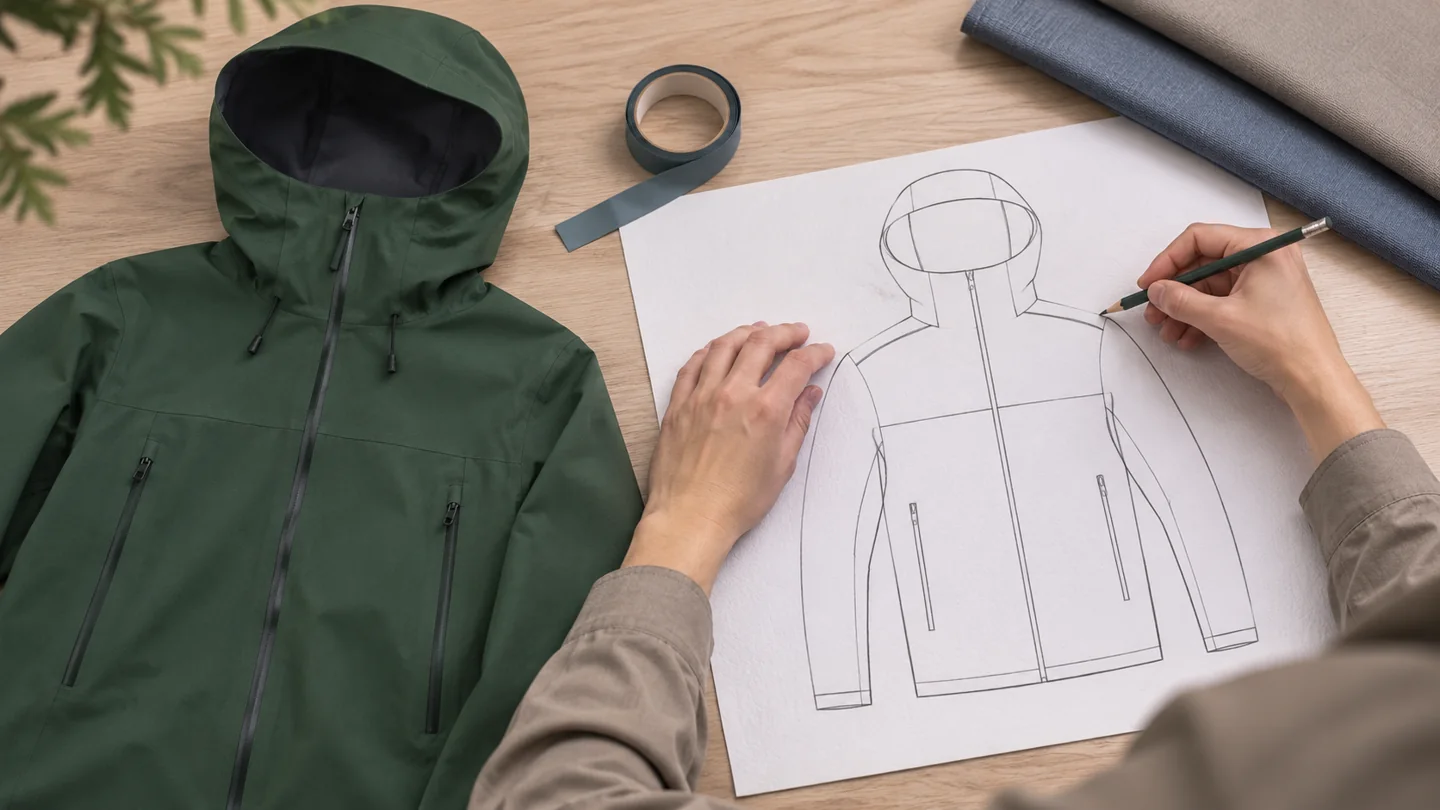
Stitching creates holes in a fabric assembly. For a taped-seam design, identify which sewn seams receive tape and how intersections, curved hood seams, pocket attachments and reinforcement points are handled. A seam map makes the intended coverage visible to both the sampling team and the buyer.
Agree how the tape bonds to the selected backing and how lifting edges, wrinkles or incomplete coverage will be judged. Review adhesion and leakage under the agreed test and care conditions. Fabric lamination and seam-tape application should each have their own approval record.
Review the opening as a complete assembly
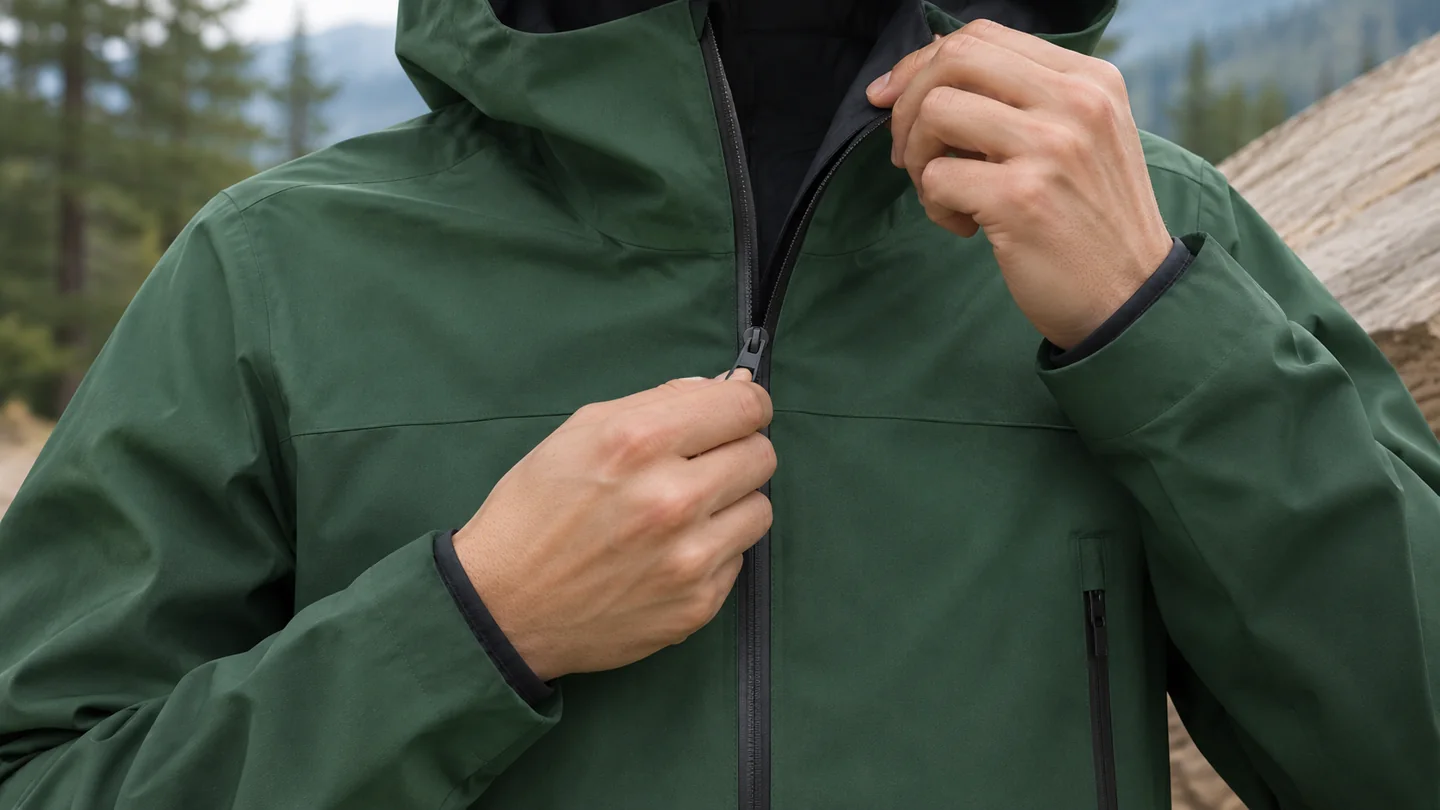
Specify the front zipper, storm-flap arrangement, pocket zipper ends, hood opening, cuffs and hem adjustments. Operate them on the sample with the planned layers and equipment. Record whether each pocket needs protection for its contents and how its construction will be evaluated.
For branding, mark the exact logo location, application process and backing treatment. Review how embroidery, transfers or added labels interact with the shell construction before approving the decorated sample.
Use product references to make the brief concrete
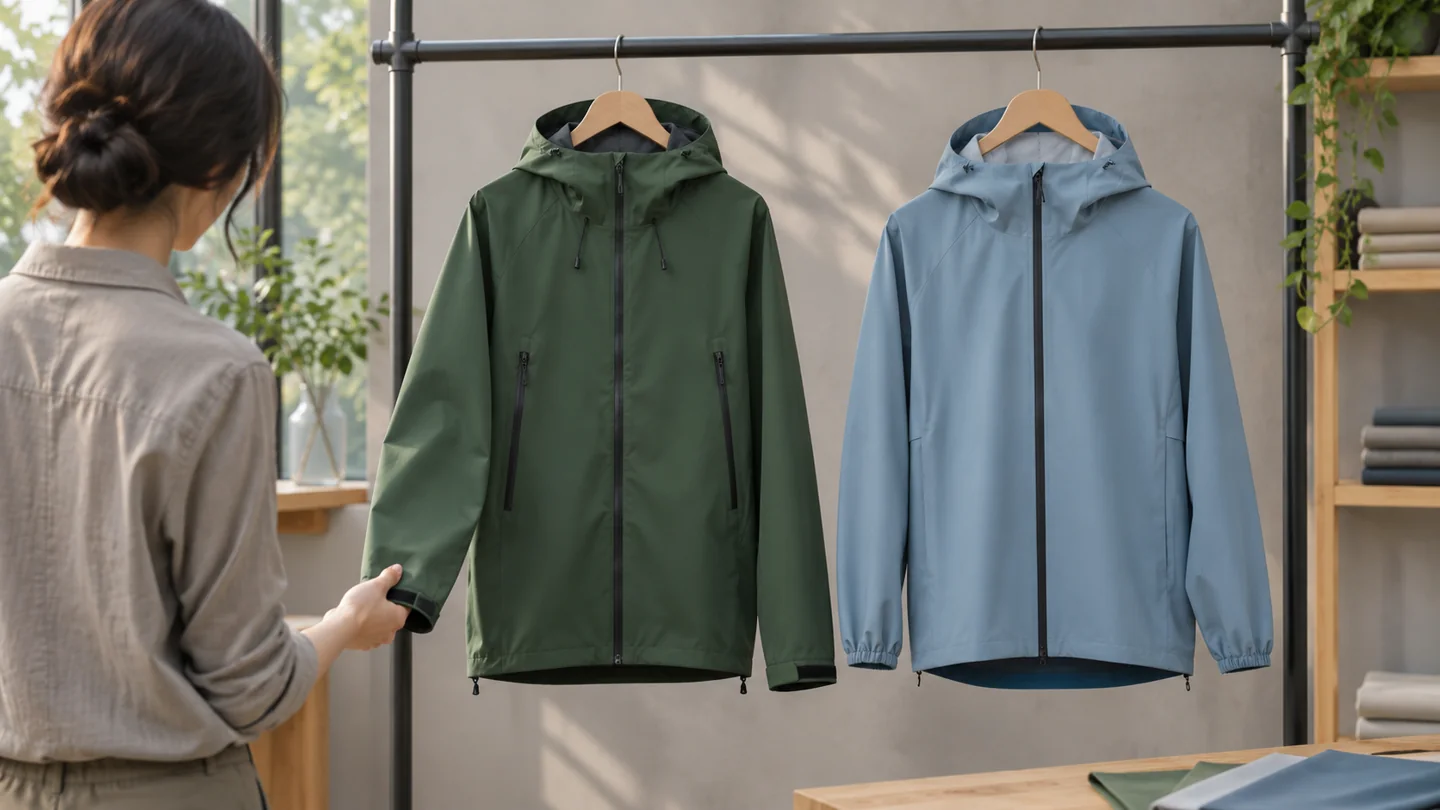
Two existing shell references show how to separate a catalog description from the specification you will approve for your own order.
AY-2505 Three-Layer Outdoor Shell
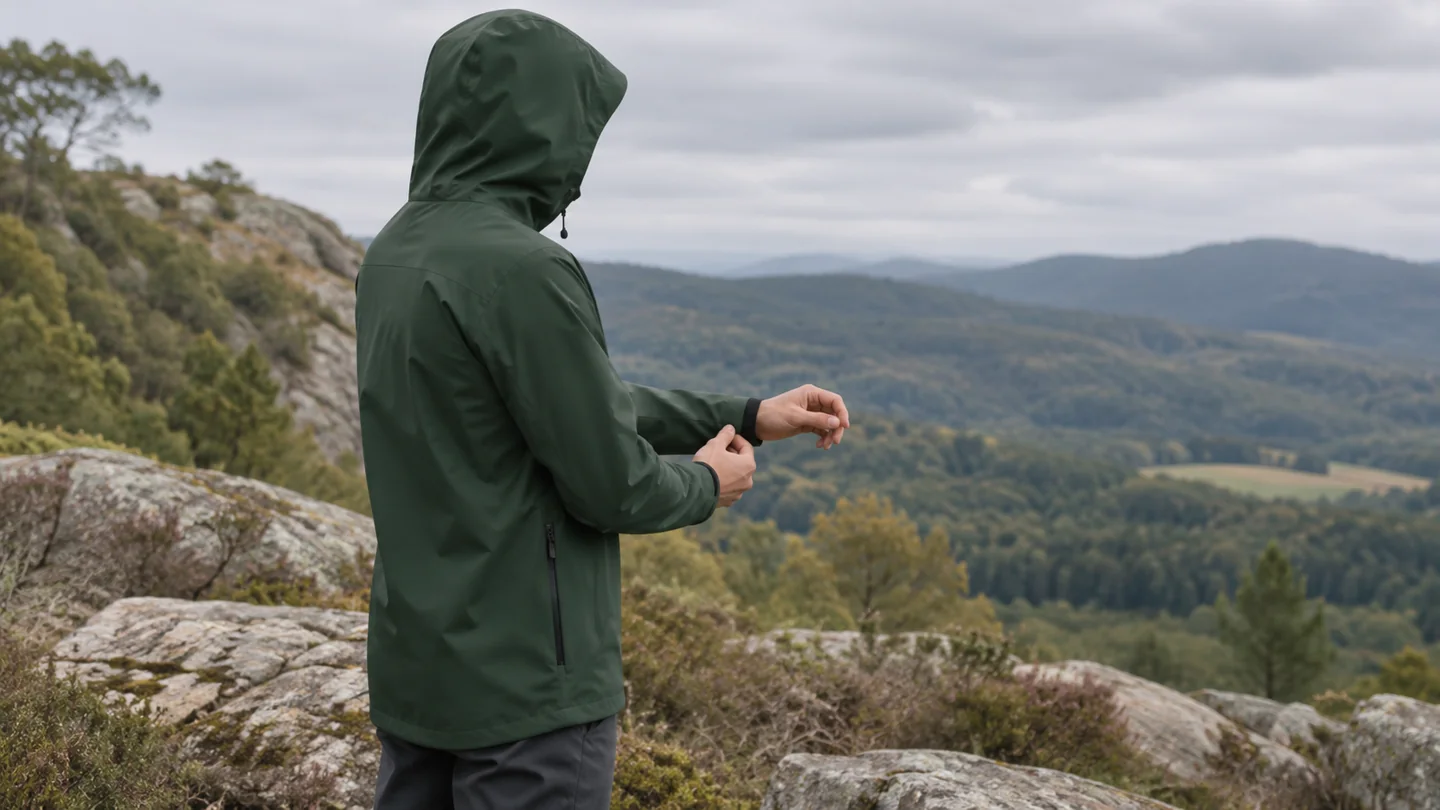
The supplied catalog identifies AY-2505 as a hooded three-layer bonded design with a TPU film and eight listed colors. It provides a starting point for discussing a laminate-based shell.
Request the selected fabric specification, seam-sealing map and relevant performance reports for your proposed version. Confirm the meaning and composition of the catalog’s material terminology during sampling.
WI-003 Storm Blue Unlined Hardshell Jacket
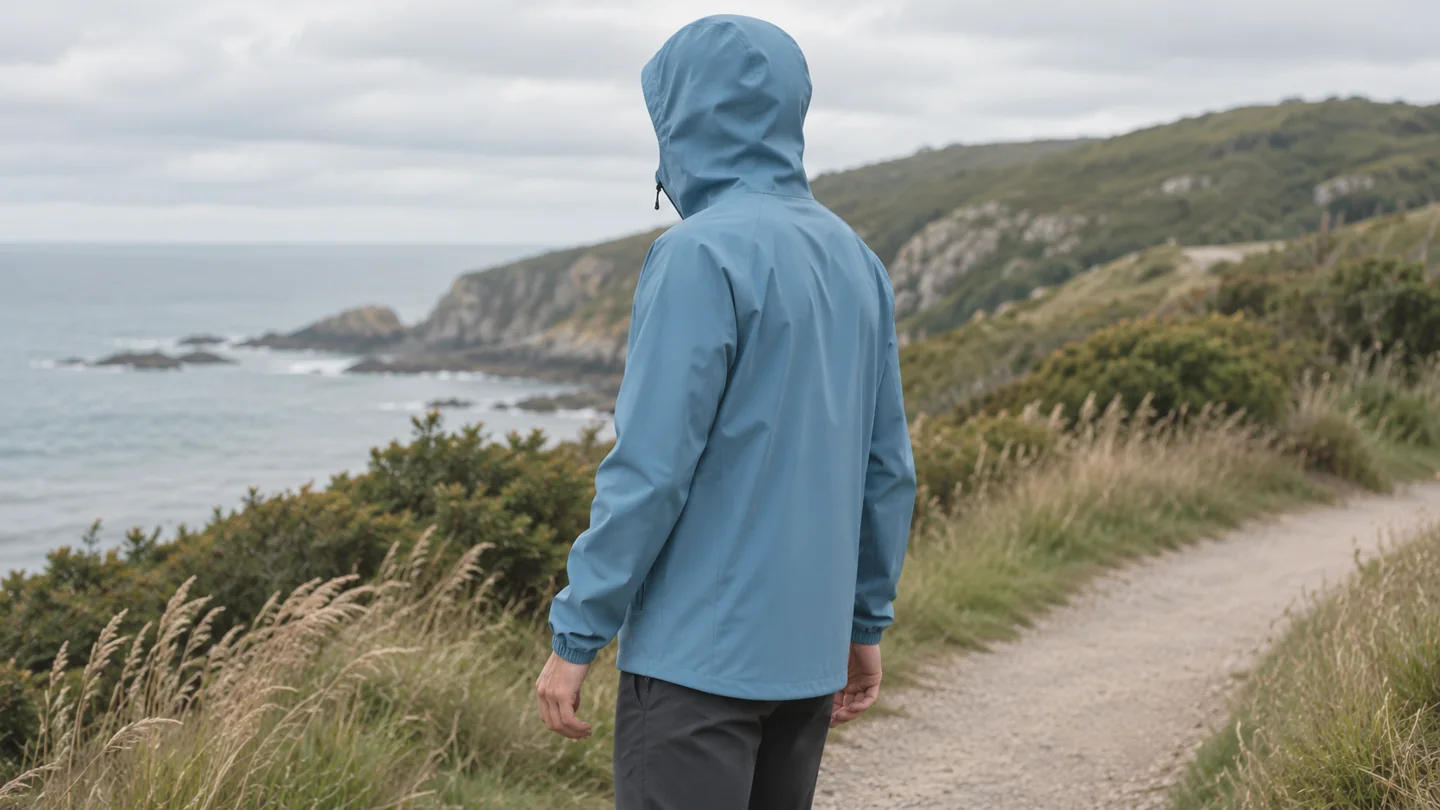
The source listing identifies WI-003 as a hooded, full-zip unlined shell. Its published reference is useful for discussing silhouette and a shell-only wearing system.
Confirm the fabric composition, laminate or coating, seam treatment and performance targets when developing the sample. Keep those approvals attached to your chosen material and construction.
Both references need project-specific performance confirmation. If a detachable insulated layer is part of the brief, compare the 3-in-1 jacket range and include attachment compatibility, combined fit and separate care requirements in the review.
Approve the sample with a repeatable checklist
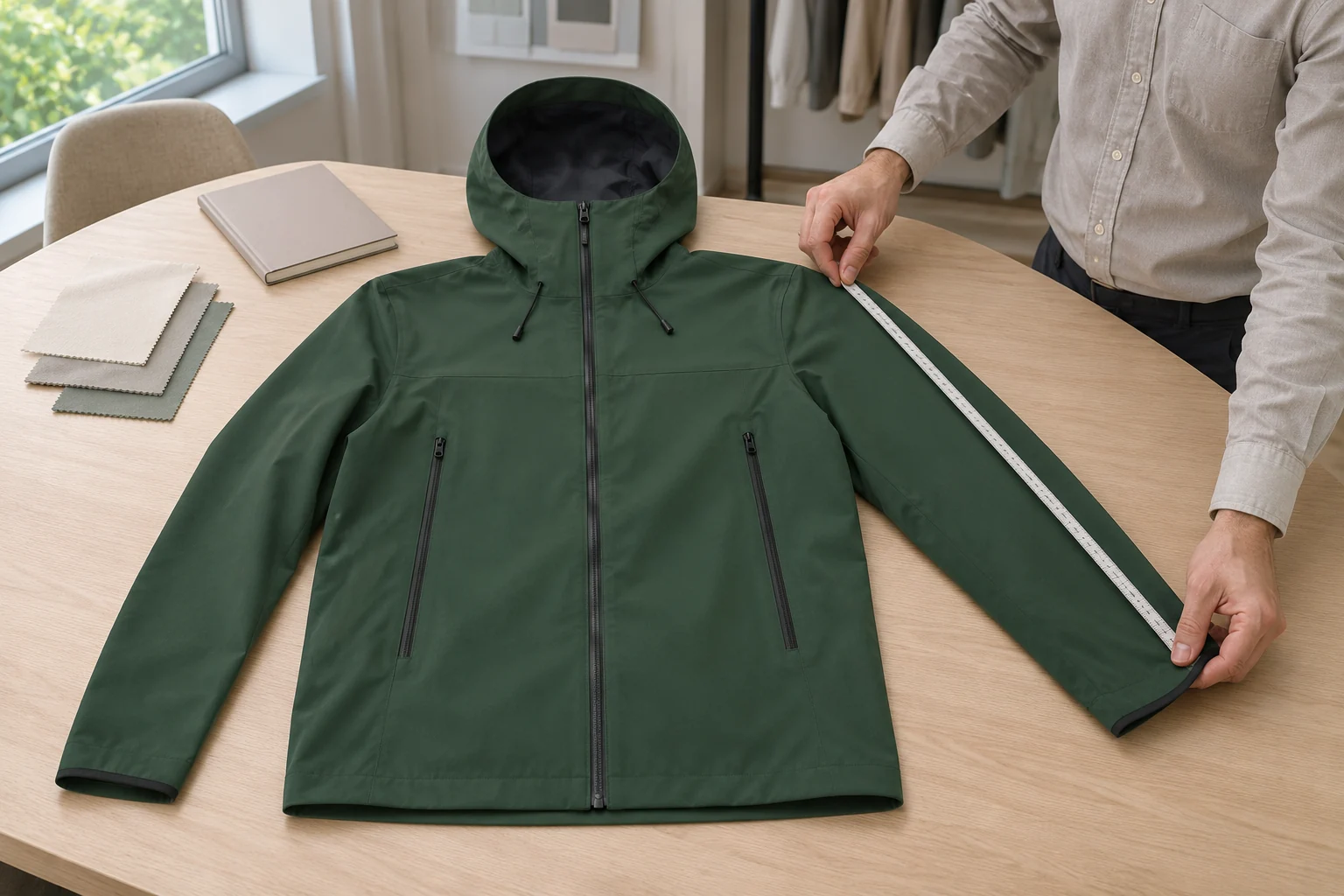
Review appearance, fit, construction and performance evidence as separate approval items. A sample can be accepted for its silhouette while the material or testing stage still needs work. Give each revision a reference so comments remain traceable.
- Measure the agreed points. Check body length, chest, sleeve length, shoulder or raglan measurements, cuff opening and hem. Use the measurement method and tolerances in the specification.
- Wear the intended layers. Reach forward, raise the arms, bend and turn the head with the hood adjusted. Review hem movement, sleeve coverage and freedom of movement.
- Operate every closure. Check front and pocket zippers, cuff adjustments, drawcords and hood controls. Include gloves or a backpack if they form part of the intended use.
- Inspect the inside. Review seam-tape coverage against the map, intersections, pocket construction, trim attachment and the finish around branding.
- Match the reports to the sample. Check the fabric reference, construction version, method, units, conditioning and agreed acceptance limits.
- Review after agreed care. Repeat the relevant measurement, appearance, adhesion and performance checks after the specified care sequence.
Before production, carry the approved sample, measurement chart, material list, color standards and inspection criteria into the purchase specification. The OEM outerwear production guide explains how those approvals connect with material booking, sewing and shipment review.
Prepare an RFQ that makes quotations comparable
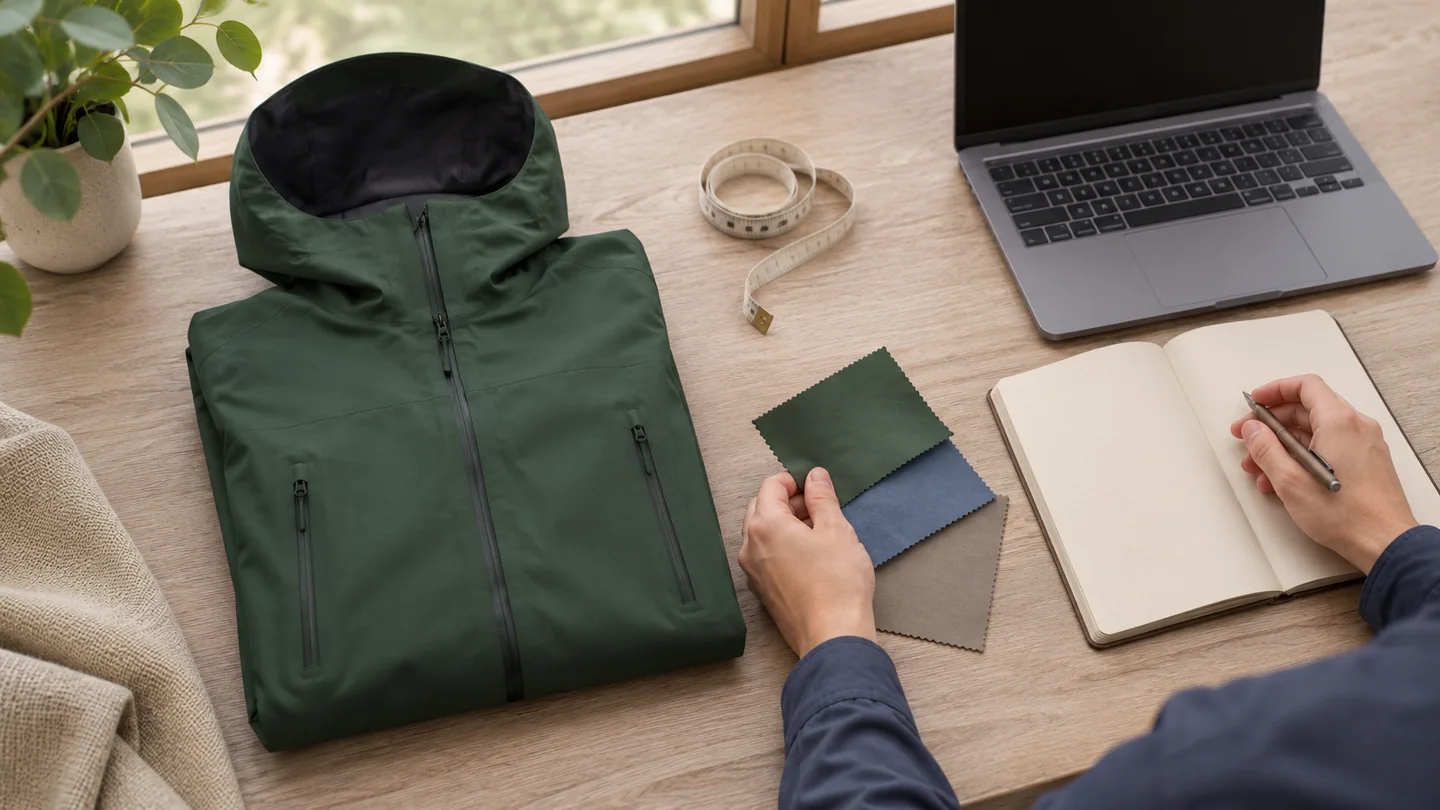
Send each supplier the same specification revision and ask them to identify assumptions, exclusions and proposed substitutions. Separate sample development, testing, decoration and packaging costs where relevant. Confirm whether an offered price includes the material and construction you intend to approve.
Information to include in your waterproof jacket RFQ
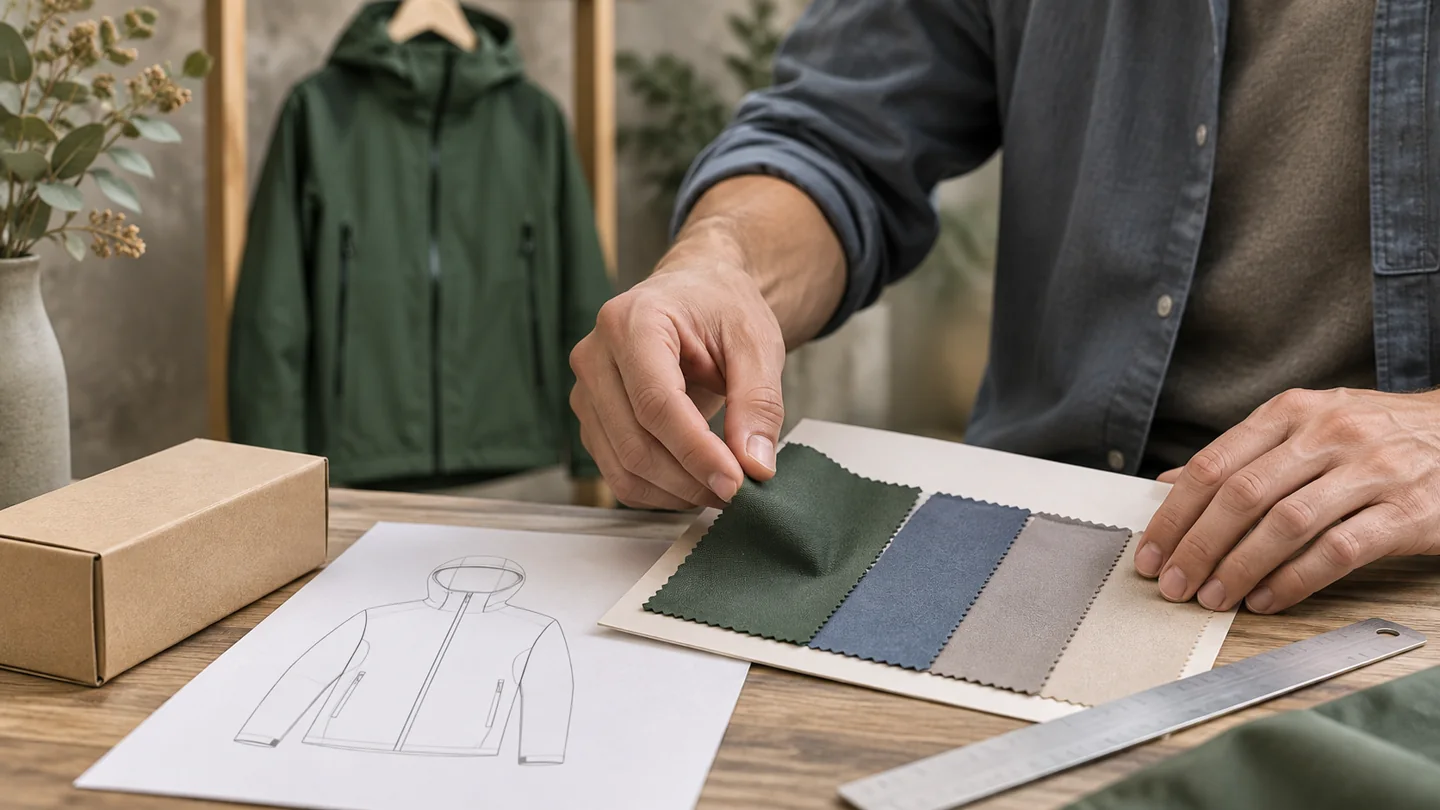
- Target market, intended wearer, activity and expected weather exposure
- Style reference, technical drawing and requested shell construction
- Waterproof and breathability targets with methods, units and conditioning
- Seam-sealing map, closure details, hood, cuffs and pocket requirements
- Size chart, measurement tolerances and intended layering allowance
- Quantity by color and size, branding artwork and packaging requirements
- Sample stages, test scope, approval responsibilities and delivery window
Ask the supplier to return a marked-up specification with the quotation. Review any material change against its effect on testing, fit, tape compatibility and care instructions. Confirm MOQ and lead time against the selected style, materials and quantity during quotation review.
Common questions from OEM buyers
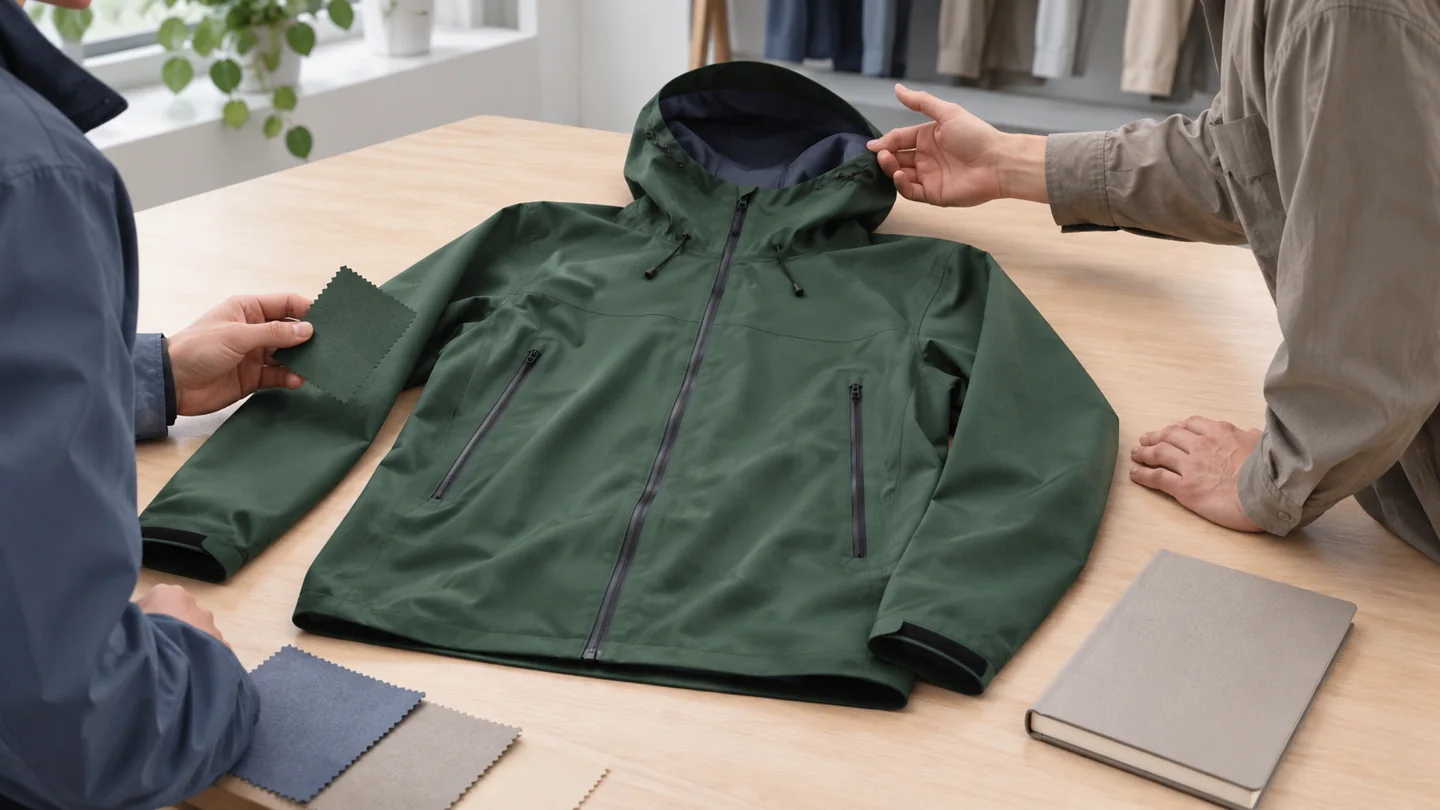
What does a 10,000 mm waterproof rating mean?
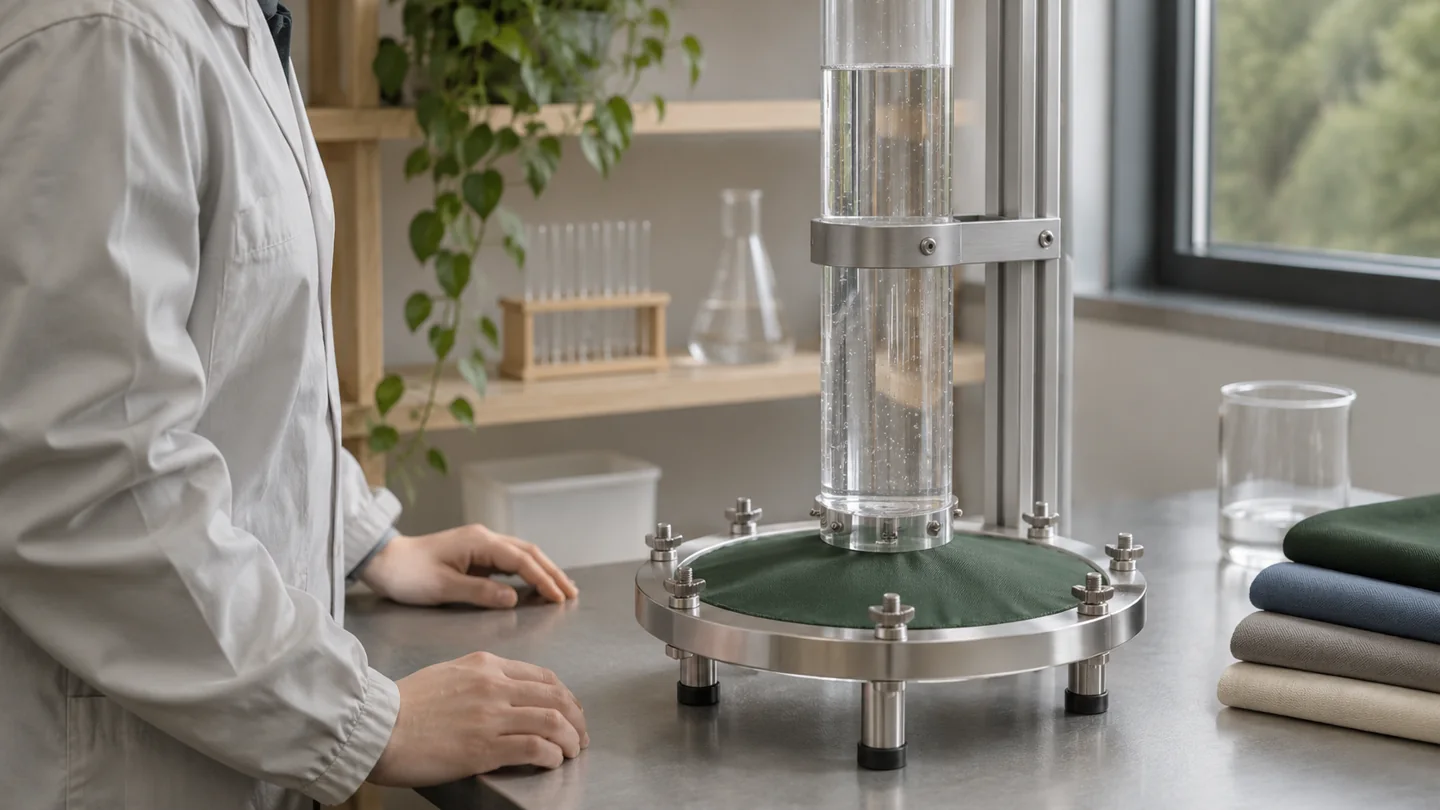
It describes a hydrostatic-head result expressed as a water-column height under a specified test. Ask for the method, specimen identity and condition, then review seam and complete-garment performance separately for your proposed jacket.
Does a three-layer jacket need a seam-sealing specification?
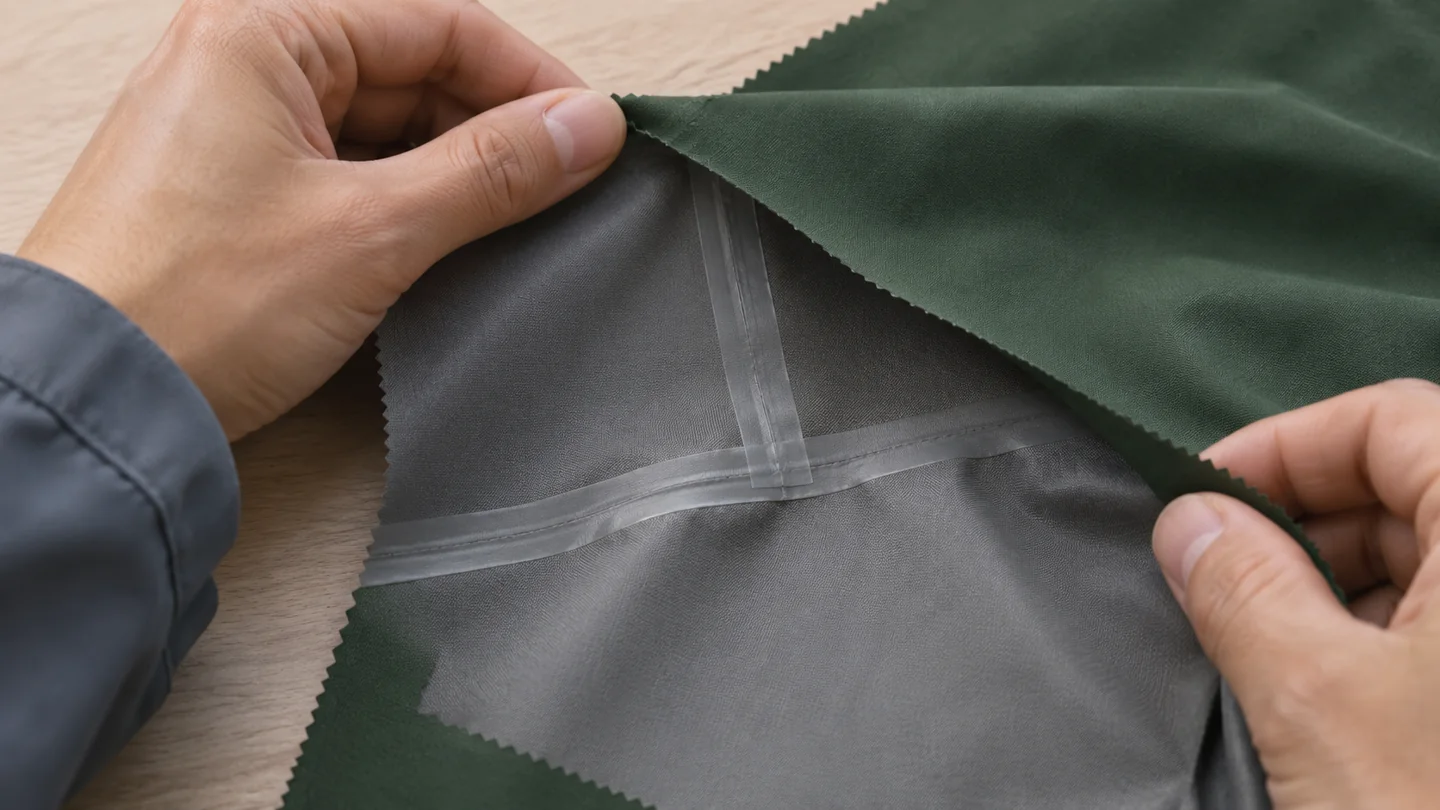
Yes. Three-layer describes the bonded fabric assembly. A seam-sealing specification records the treatment of sewn seams, coverage, compatible tape and approval criteria for the finished construction.
Can different breathability figures be compared directly?
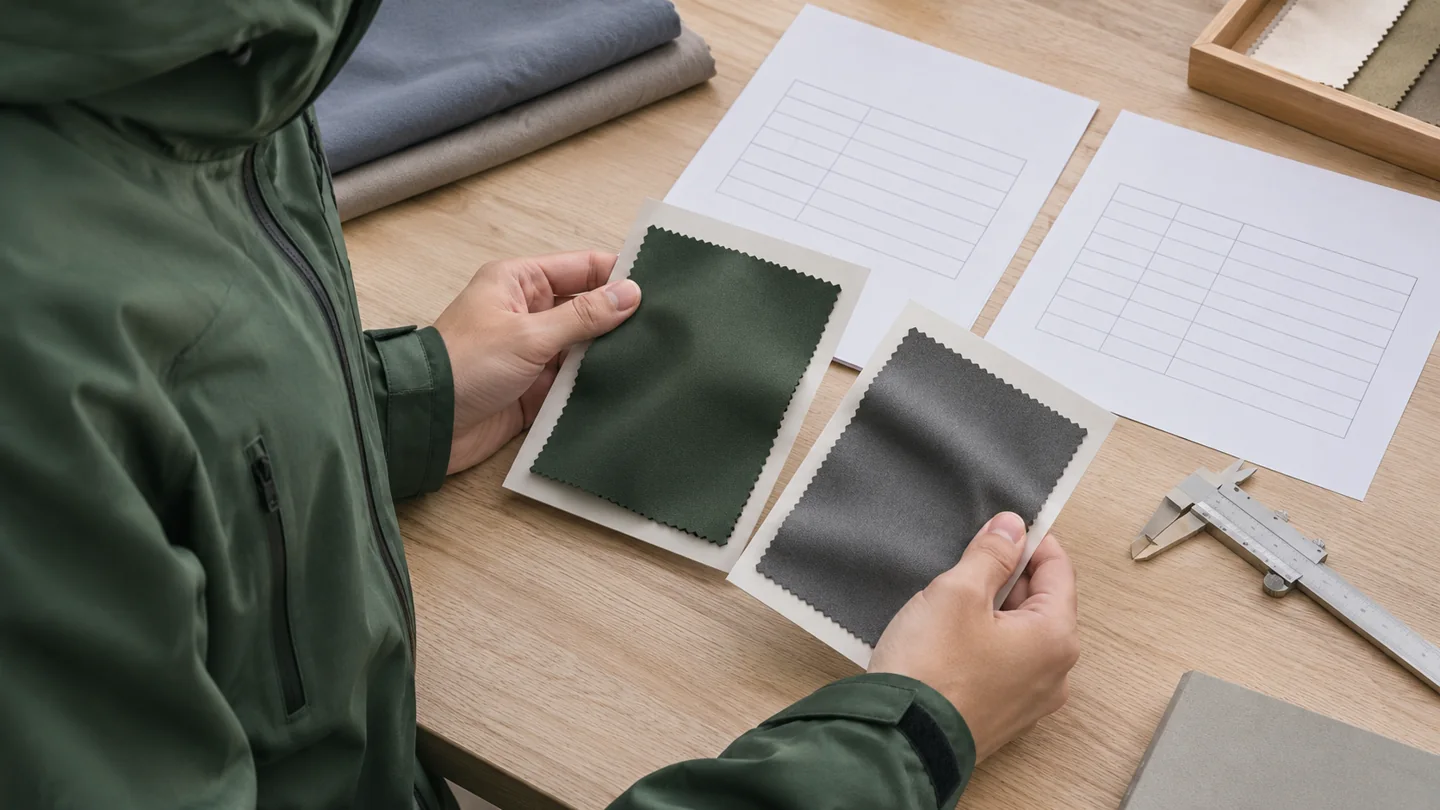
A meaningful comparison uses the same metric, method and conditions. MVTR and Ret describe vapor transfer in different ways. Ask the laboratory or supplier to explain the reporting basis before ranking proposed fabrics.
Which documents should accompany sample approval?
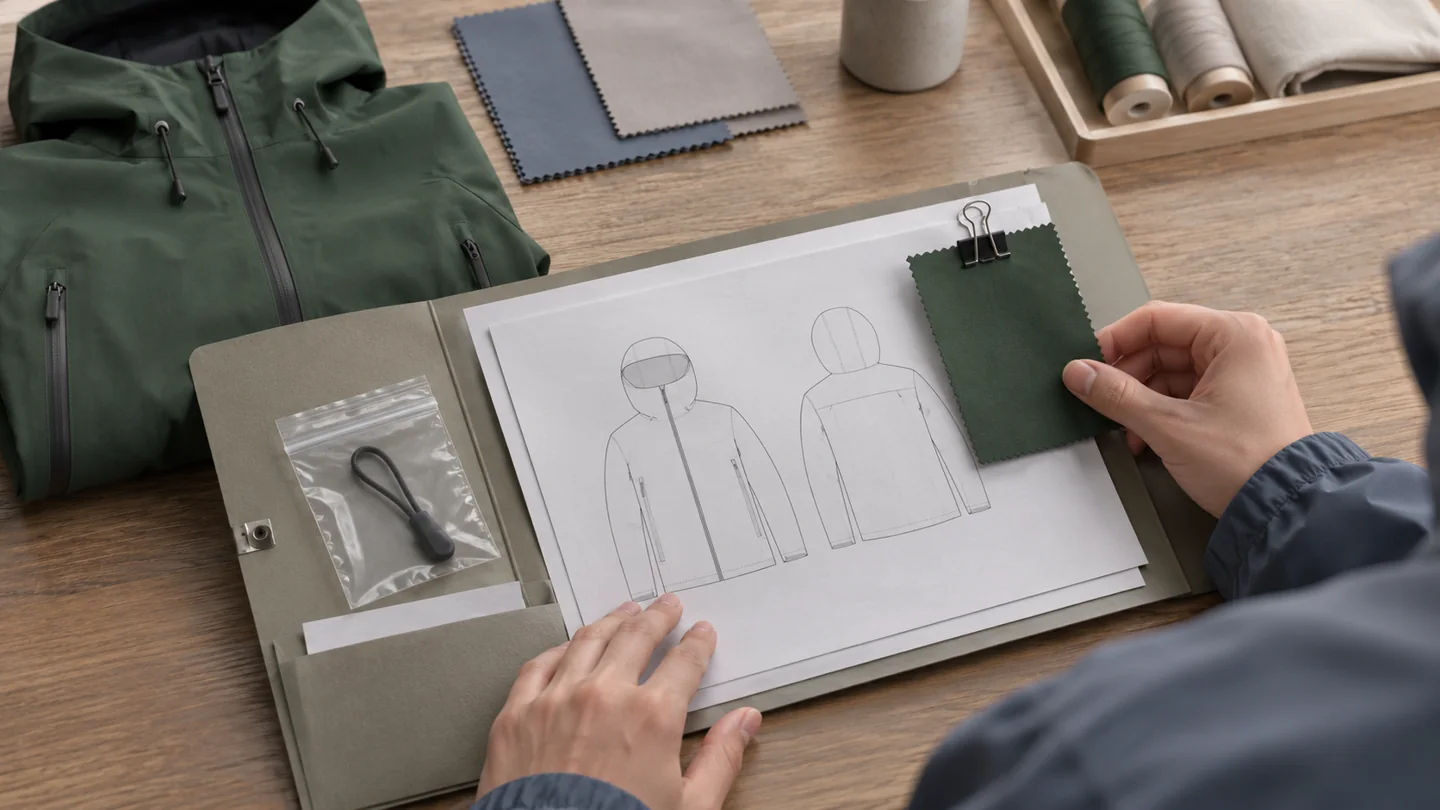
Keep the approved sample reference, measurement chart, material and trim list, seam map, artwork, care instructions and agreed test results together. Record remaining actions and approve revisions before the corresponding production stage.