
03 / DRIVERS AND MOBILE TEAMS
First Aid Kits for Delivery Drivers, Fleet Operators and Field Technicians
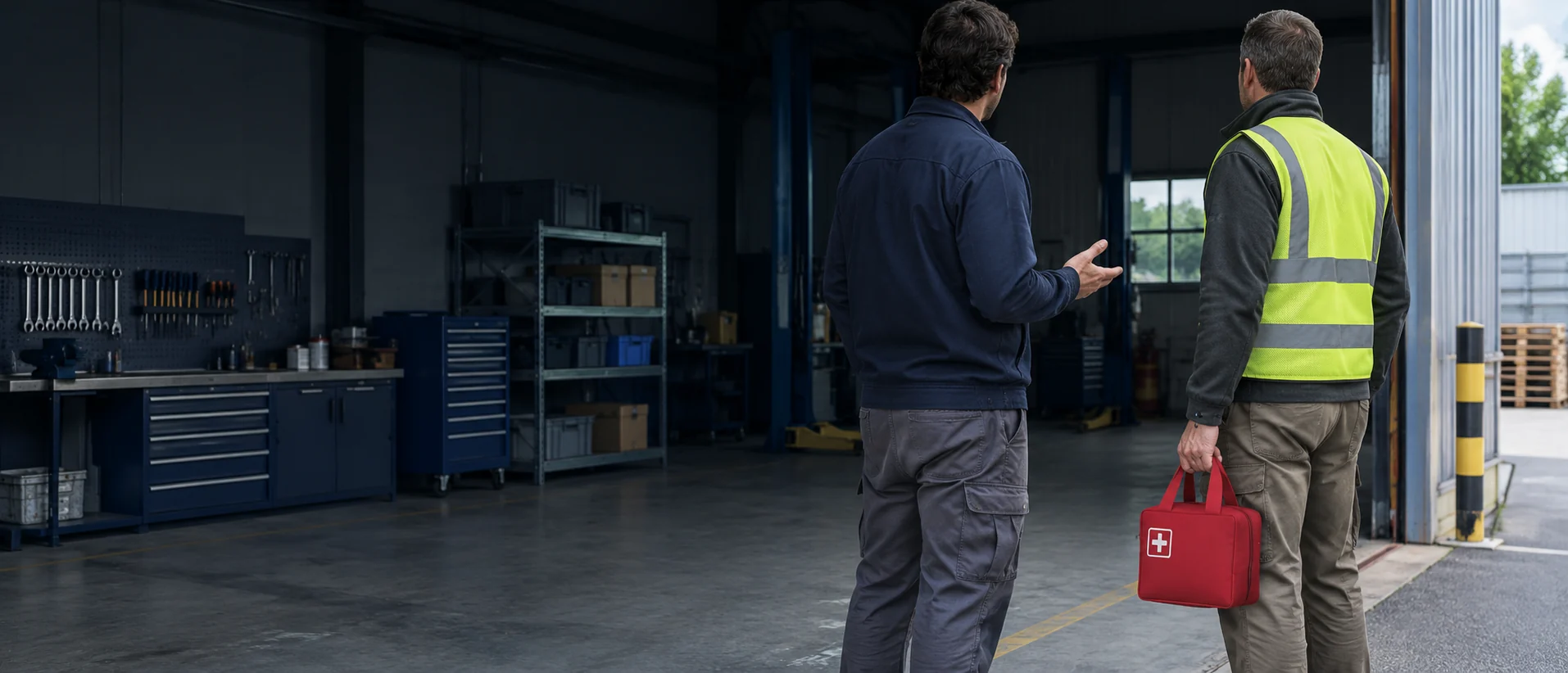
A mobile worker's workplace includes more than the depot. A delivery driver may spend most of the shift in a vehicle or at customer sites, while a service technician carries tools between buildings. HSE's guidance specifically asks whether continuously mobile or long-distance workers need personal first aid boxes and communication arrangements.[5]
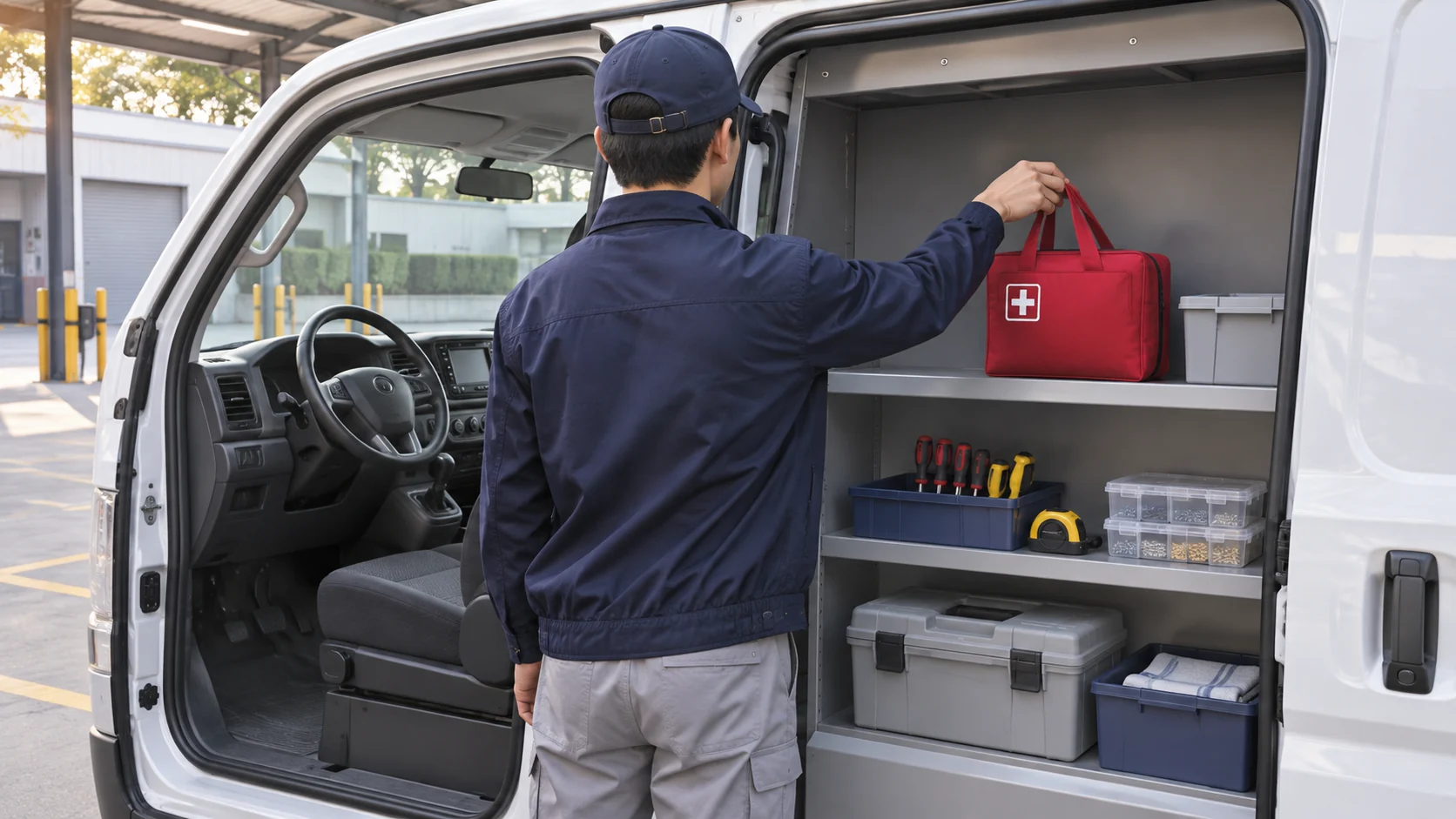
For a fleet order, define the storage position before approving the pack. Check the fully packed sample in the proposed compartment: can it be identified quickly, removed without unpacking other equipment, and returned to the same position after use? Secure the arrangement so it does not interfere with driving controls or other vehicle safety requirements.
Treat vehicle storage as part of the supply specification
Review storage instructions for each included item and assess the temperatures and moisture conditions expected in the actual vehicle. Do not assume that an ordinary case protects medical contents from prolonged heat, freezing or water exposure. Environmental claims need evidence tied to the agreed configuration.
The FA-009 Vehicle First Aid Soft Pack is a vehicle-range reference to discuss with the supplier. A catalogue contents schedule is a starting point for verification, rather than proof that every destination-market vehicle requirement is met. Request the applicable edition, approved bill of materials and matching documentation for the final order.
Plan handover and replacement
Assign responsibility by vehicle or crew, rather than leaving the task to whichever driver notices a problem. A practical handover can identify the kit location, report missing or opened items and record which replenishment pack is required. Agree the inspection frequency through the applicable requirements and needs assessment.
Scenario to review: a technician transfers between vans. Ensure the transfer does not leave one vehicle without its assigned kit or move the only kit away from colleagues who still need access. A labelled asset and a clear handover record make this visible.
04 / HOSPITALITY AND FOOD SERVICE
First Aid Kits for Chefs, Catering, Hotel and Cleaning Staff
A hospitality business combines several work environments. Kitchen staff handle food and equipment; housekeeping staff move through guest areas; maintenance workers may operate in plant rooms or external spaces. Purchasing one kit for the reception desk does not answer how those teams will access supplies during their own shifts.
Start with a needs review covering each working area and agree the contents with the responsible first aid adviser. For a food business, also confirm the site's requirements for dressing visibility, hygiene and secure storage. Those decisions should be explicit in the purchasing brief rather than inferred from a kit's colour or a “catering” label.
Check access without compromising hygiene
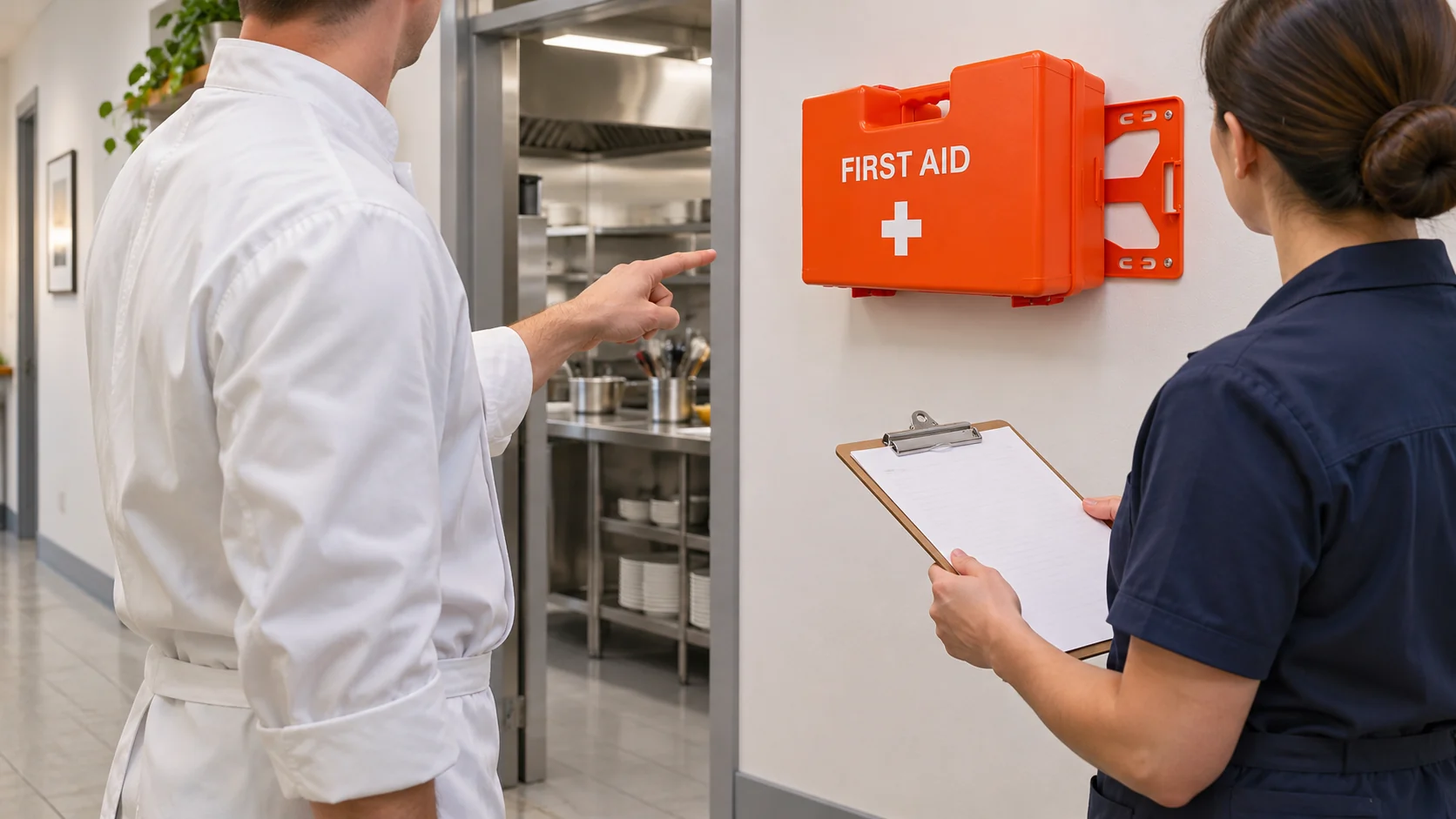
Select an identifiable storage point that staff can reach and keep clear. Review how the outside of the container will be cleaned and whether the kit can be moved to the relevant area when needed. Keep first aid supplies separate from cleaning chemicals and other materials that could damage packaging or create confusion.
The wall-mounted FA-024 case can be reviewed as a container format; it does not demonstrate a particular hygiene or cleaning performance. Ask the supplier for the selected material, compatible cleaning instructions, mounting arrangement and approved sample.
Separate routine supplies from specialist arrangements
Where the needs assessment identifies burns, chemical exposure or other hazards, ask the site's competent adviser what additional equipment, facilities and training are appropriate. US OSHA's general-industry provisions distinguish readily available first aid supplies from suitable emergency flushing facilities for corrosive exposure.[4] An add-on item placed in a bag does not resolve every specialist requirement.
Scenario to review: kitchen and housekeeping shifts overlap only briefly. Confirm who checks the stock after an item is used and who has access outside the reception team's normal hours. A replenishment system should work across departments, not rely on one informal contact.
05 / SCHOOLS, SPORT AND PUBLIC PREMISES
First Aid Kits for Teachers, Sports Coaches, Offices and Retail Teams
Teachers, school trips and sports coaches
A school or sports programme needs a plan for both the usual premises and activities elsewhere. England's Department for Education guidance discusses first aid provision on school premises and during off-site activities, with needs assessed for the activity and group. Its scope is England; other markets need their own education and childcare requirements checked.[6]
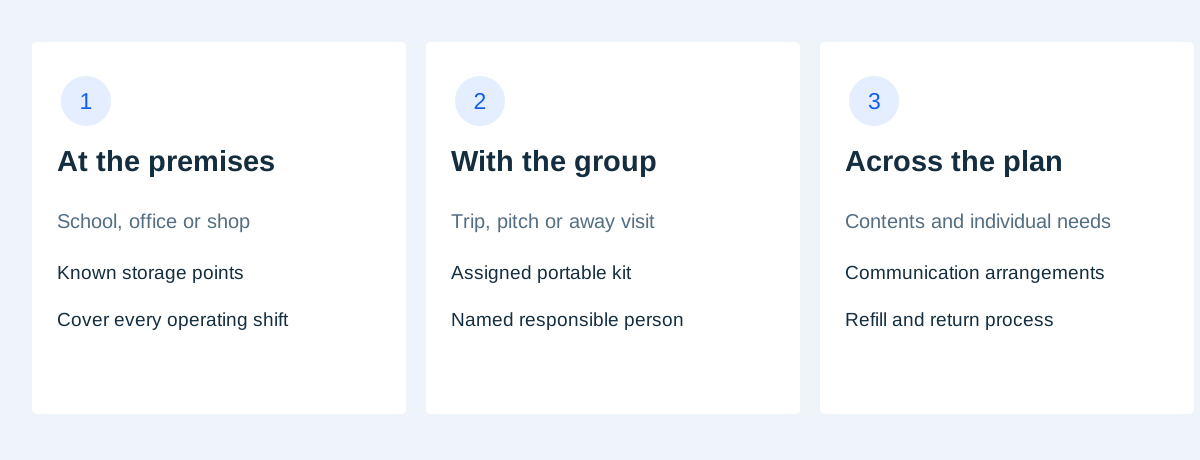
For a coach, the practical question is where the group will be when assistance is needed. A kit kept in a school office may not accompany an away fixture. Review a portable format, the responsible adult, the location of backup supplies and how the group will communicate with the venue or emergency services.
Also distinguish an organisational kit from individual medical arrangements. A standard contents list does not replace participant-specific care plans, authorised medication procedures or training appropriate to the people being supervised. Ask the organisation's qualified adviser to define those arrangements.
The FA-001 handled bag can be assessed as a portable container reference. Confirm the packed weight, organisation and carrying method against the approved contents. Do not assume that a product intended for children or sports automatically includes suitable medical supplies.
Office managers, reception and retail supervisors
An office or shop may have fewer obvious industrial hazards, but access still deserves attention. Consider separate floors, stockrooms, customer areas, lone opening or closing shifts and shared premises. Map which people can reach which kit and who takes responsibility when the normal appointed person is absent.
HSE includes work patterns, workforce size and first aider absences in its assessment guidance, and identifies provision for non-employees as a factor to consider.[1] For purchasing, turn that into an access-and-responsibility plan with named locations and owners. Several clearly assigned points may work better than an oversized central box.
Scenario to review: a retail team uses a locked back office for secure storage. Confirm that the arrangement still allows supplies to be obtained when required by those working on the shop floor. Security and ready access need to be resolved together.