
06 / OUTDOOR AND REMOTE WORK
First Aid Kits for Outdoor Guides, Farmers and Landscaping Crews
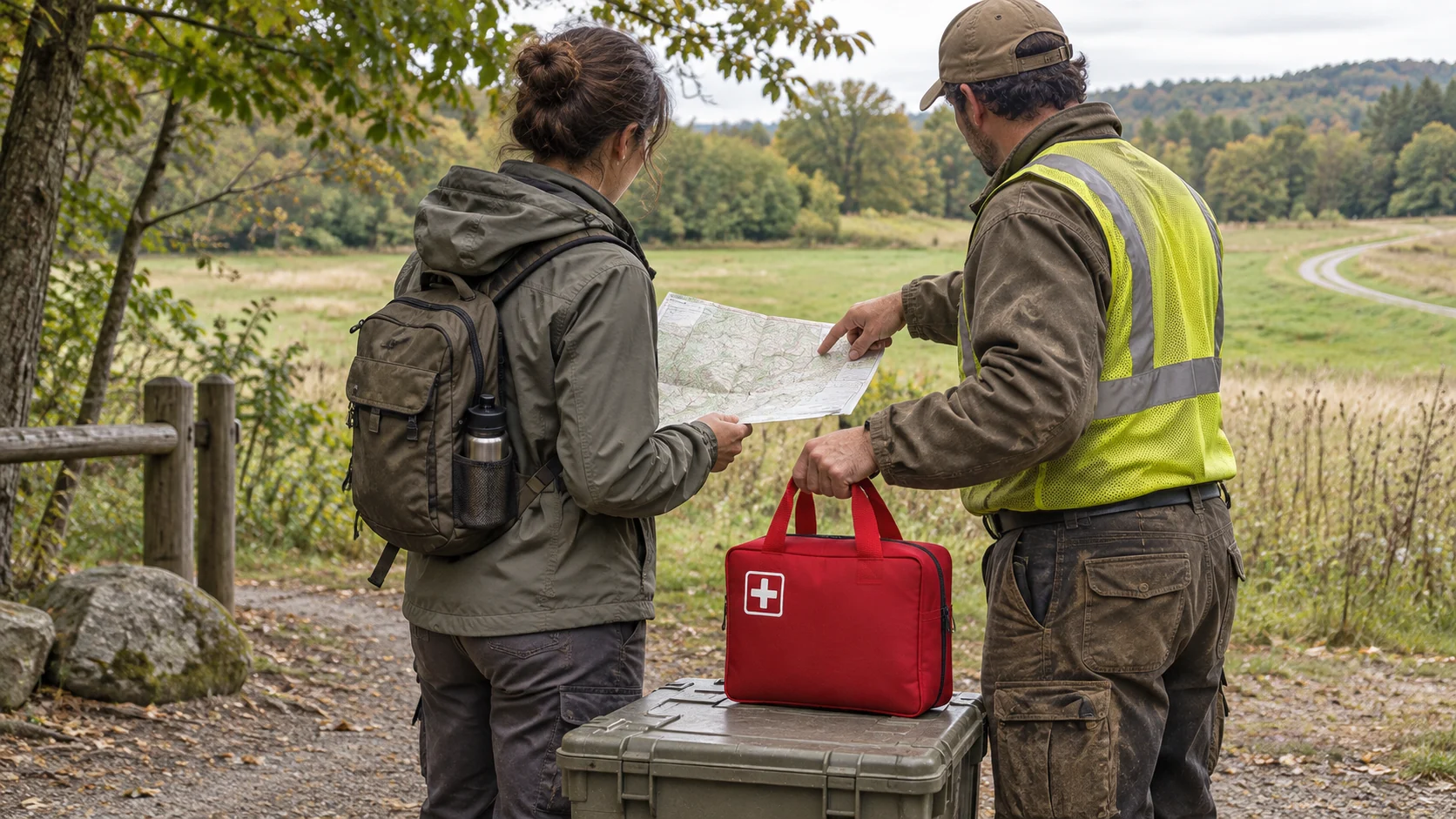
Distance changes the planning problem. An outdoor guide may lead a group away from vehicle access, while farm and landscaping teams move between fields, buildings and customer properties. The kit needs to follow the work, but it is only one part of the communication and response plan.
Safe Work Australia's model code covers kit selection alongside procedures, facilities and first aider training. Its guidance considers the nature and location of work, and its publication page directs readers to check the code's legal effect with their local regulator.[7] For international buyers, use that as a planning reference rather than a global mandatory contents schedule.
Outdoor guides and activity leaders
Discuss group size, activity duration, likely exposure and access to assistance with the responsible qualified adviser. Then evaluate how the approved supplies will be carried and located within the group's equipment. Review the pack with the actual load, including whether individual items can be identified without emptying it on the ground.
A product named for outdoor use is not automatically waterproof or suitable for every remote activity. If the programme requires a water-protection level, specify the complete packed arrangement and supporting evidence. Keep communications equipment, navigation and emergency planning in the wider operational review.
Farmers, grounds staff and landscaping contractors
For dispersed crews, map the working areas and equipment movements at the start of a shift. A kit assigned to a vehicle may leave a team without local access if that vehicle is driven elsewhere. Identify which supplies stay at a base point and which travel with individual teams.
The FA-001 bag is a nylon handled design listed at 21 × 15 × 9.5 cm in the checked supplier catalogue. Those dimensions describe the container, not its approved capacity, medical coverage or environmental protection. Test the agreed contents and organisation on the actual sample before deciding whether the format fits the task.
Scenario to review: a landscaping crew works at several properties in one day. Include kit checks in the equipment handover and identify the current work location in the response plan. The same physical bag can have very different practical value depending on whether the whole team knows where it is.
07 / PROCUREMENT AND READINESS
How to Specify, Refill and Approve an Industry-Specific First Aid Kit
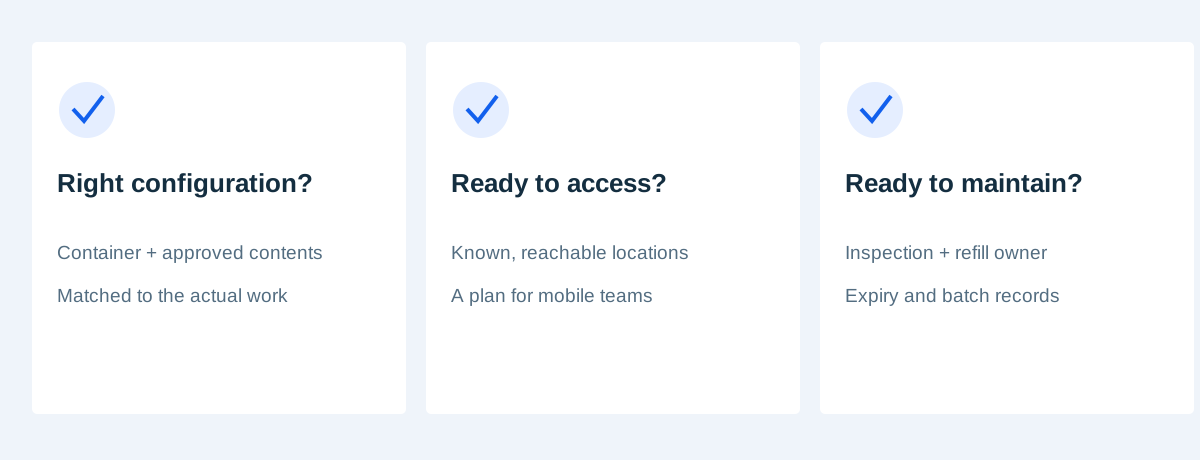
Once the work scenario is clear, convert it into a written purchase specification. Separate the container, the approved medical contents and the operational arrangements. This prevents a quotation for an empty bag being compared with a fully stocked kit, or a general catalogue list being treated as a verified order configuration.
| Specification area | Record before sample approval |
|---|---|
| Intended work and location | Job roles, sites, shifts, mobility and destination market |
| Container | Product reference, material, dimensions, organisation and carrying or mounting method |
| Contents | Item-level description, quantity, pack size and agreed substitutions |
| Storage and shelf life | Item instructions, required remaining shelf life at delivery and batch identification |
| Documentation | Applicable standards or regulatory requirements and evidence for the final supplied configuration |
| Replenishment | Replacement pack references, inspection responsibility and reporting after use |
| Acceptance | Approved sample, packing list, labels and order-specific inspection criteria |
Give replenishment a clear owner
Agree what happens after supplies are used, packaging is damaged or expiry dates approach. HSE's FAQ explains that expiry-marked items should be replaced by the dates given; for sterile items without dates, it advises asking the manufacturer about retention. It does not prescribe one review timetable for every workplace.[5] Keep this distinct from sector-specific rules such as the US construction inspection provision described earlier.
For a distributor, agree whether customers will receive a complete replacement kit or a refill pack matched to the original specification. Define which substitutions need approval and how batch information will remain traceable. A large piece count provides little reassurance if essential agreed items are missing or out of date.
Match equipment to training without overstating the evidence
A 2025 Cochrane review included 36 studies and 15,657 participants. It found that first aid training probably improves knowledge, skills and self-efficacy in the short term, but found no studies establishing an effect on recipients' real-life health outcomes or the quality of aid delivered. These findings support careful claims about learning; they do not establish that a particular commercial kit improves clinical outcomes.[8]
The purchasing implication is to coordinate equipment selection with the organisation's training and response arrangements. Supplies should be identifiable to the people expected to use them, while specialist decisions should stay within appropriate qualifications and local requirements.
For more detail on container formats and sample checks, read our first aid kit buying guide, browse the First Aid & Emergency Kits collection, or send your role-specific requirements for an OEM quotation.
08 / BUYER QUESTIONS
Frequently Asked Questions About First Aid Kits for Different Jobs
Can one first aid kit serve every occupation?
Some supplies can overlap, but contents, locations and access arrangements should follow the actual needs assessment. A travelling worker and a staffed office may require different provision even when they belong to the same employer.
How many people does a kit cover?
Treat a supplier's headcount label as a claim to verify against its contents and intended context. Workforce size is one input; shifts, hazards, site layout and distance from help also matter. Ask for an itemised list and review it with the person responsible for the site's arrangements.
Is a workplace first aid kit automatically compliant because the case has a cross symbol?
No. A symbol identifies the intended purpose of a container; it does not establish the contents, applicable standard edition, product documentation or adequacy of the whole workplace arrangement. Assess those elements separately.
Should a vehicle kit be the same as the office kit?
Review the vehicle's intended work, access and storage conditions independently. A depot kit cannot accompany a driver who is working elsewhere. The selected pack and contents also need to meet any requirements applicable to the vehicle and destination market.
Can Wisp supply a role-specific private-label first aid range?
Discuss the intended occupations, quantities, destination market, container reference and required contents with the team. The final supplied configuration, documentation and commercial terms should be confirmed through quotation and sample approval.
Prepare Your Industry-Specific First Aid Kit Enquiry
Send the job roles, work scenarios, number and location of access points, destination market and proposed contents. Include branding, refill and packaging requirements so the team can prepare a comparable proposal.