
Choose a first aid kit around where it will be kept, who must reach it and the agreed contents list. An outdoor pouch, a vehicle pack and a workplace cabinet solve different storage problems. A larger piece count alone says little about how useful the finished kit will be.
The Wisp First Aid Kits collection covers portable bags, compact cases, vehicle formats and wall-mounted storage. The following examples help buyers turn those formats into a clear specification. They do not establish the contents or compliance of an unapproved configuration.
Match the container to the access point
| Intended placement | Useful format to review | Questions for the sample |
|---|---|---|
| Daypack or campsite | Handled soft bag or compact zip case | Can the user find each item quickly? Does the packed kit fit the intended bag? |
| Bicycle | A pouch with a mounting arrangement | Does it clear moving parts and remain secure on the intended bicycle? |
| Vehicle | Soft pack or rigid carry case | Can it be reached without unloading luggage? How will it stay secured? |
| Fixed workplace location | Wall-mounted case or cabinet | Is it accessible to the intended users? Can stock be checked and replenished? |
| Pet or family range | A clearly identified dedicated kit | Are the contents and instructions appropriate for the intended users? |
A buyer planning an outdoor line can start with the Handled Outdoor First Aid Bag FA-001. Its catalog reference lists nylon and 21 × 15 × 9.5 cm. Those dimensions help with pack-space planning; the approved contents determine whether that space is sufficient.
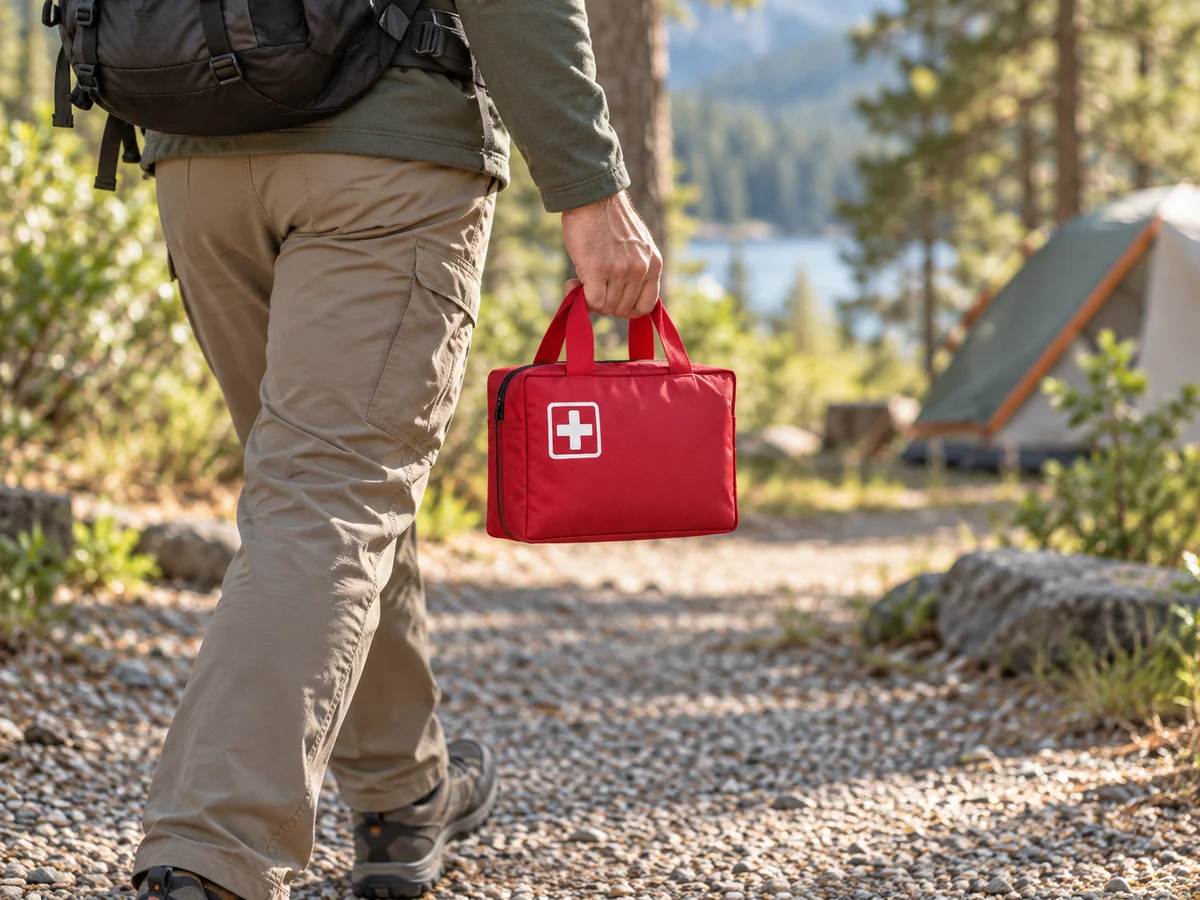
FA-001: catalog-listed nylon construction, 21 × 15 × 9.5 cm. Confirm the filled layout and contents separately.
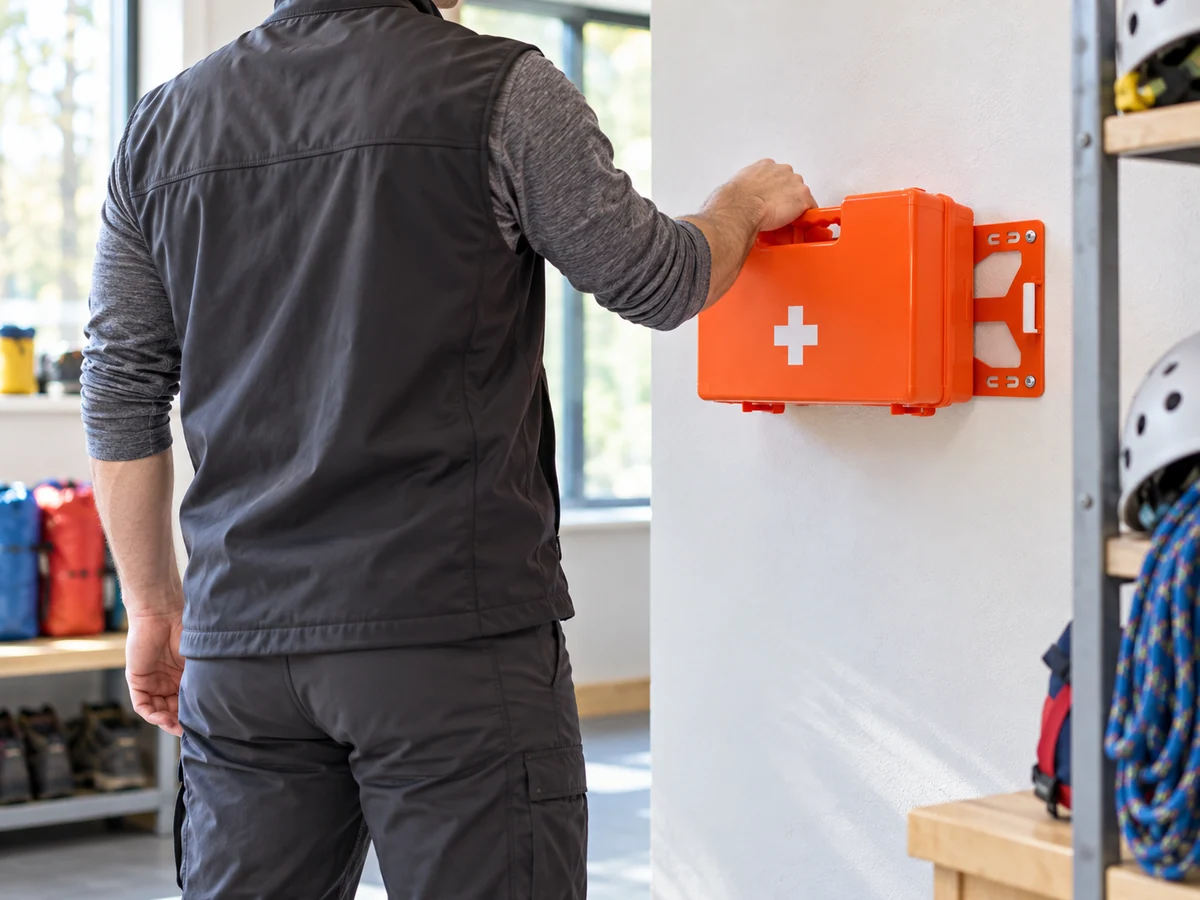
FA-024: a fixed-location storage direction. Select the size, mounting arrangement and contents for the intended site.
Approve the contents before comparing piece counts
Request an itemized bill of materials with the quantity, size and specification of every component. State whether the quotation covers an empty container, a filled kit or both options. Photographs of dressings, scissors and other accessories do not define what a particular order includes.
Compare the contents against the intended setting and destination requirements. A car kit may require a different contents schedule from a camping pouch; a dedicated pet kit needs its own review. Agree the language of instructions, component labeling and any expiry information. Have an appropriate qualified reviewer assess the contents where the intended use requires it.
For refill planning, ask how the components will be packed and identified. Individual item access, a clear stock list and a practical replacement process can matter more than a headline item count.
Separate container material from environmental protection
The range includes nylon bags, EVA cases, plastic boxes and metal storage formats. These descriptions identify construction choices. A nylon label does not establish resistance to rain, and a hard case does not by itself establish a watertight seal.
The Roll-Top Water-Use First Aid Bag FA-004 is a closure direction to discuss for wet environments. Specify the expected exposure and ask for evidence for the finished, closed kit. Confirm how the closure must be operated and whether individual contents need additional protection. Do not assume suitability for immersion from the product name.
Check the fully packed kit in its real storage position
For vehicles, measure the storage opening as well as the compartment. Trial access with the surrounding luggage in place and agree a suitable securing method. Include the expected storage temperature conditions in the brief so component suitability can be reviewed.
For cycling, review the Bicycle-Mount First Aid Pouch FA-008 with the proposed mounting hardware and the actual bicycle geometry. For workplace storage, test the selected case’s opening clearance, bracket security and stock visibility. A catalog image cannot confirm universal mounting compatibility.
Sample approval checklist
- Configuration: sign off the contents list and distinguish included items from optional accessories.
- Access: open, close and repack the filled kit; check visibility and retention of each component.
- Construction: review seams, handles, zippers, hinges and mounting hardware under the agreed filled load.
- Identification: confirm instructions, languages, batch details and component expiry information where applicable.
- Evidence: review any requested standards or conformity documentation against the exact kit version and market.
A contents schedule headed with a standard number is a starting point for checking requirements. It does not, on its own, demonstrate that every kit in the range meets that standard or a particular edition.