
Choose ski goggles around face fit, helmet interaction and the lens specification for the intended light conditions. Decide on frame size and lens-change requirements before choosing colors. Then review the complete goggle, spare-lens arrangement and case as one retail package.
The 2026 ski-goggle design references include adult formats, children’s formats, magnetic-lens directions and separate carrying cases. These choices create different sampling questions. Current Wisp goggle platforms can be explored through the Sports Eyewear collection.
Separate adult and junior fit development
The H050 adult design reference lists a frame width of 185 mm, while the H053 children’s reference lists 165 mm. Both list TPU frames and PC lenses. These are catalog design references for discussion, rather than Wisp product IDs or guarantees of fit.
Frame width is only one part of the fit. Review the nose interface, foam contact, strap adjustment and the way the goggle sits with the intended helmet. A junior model needs its own wearer and helmet review; a smaller width alone does not establish suitability for a stated age range.
| Range decision | Specify before sampling | Check on the sample |
|---|---|---|
| Adult fit | Target face profile and intended helmet types | Foam contact, nose clearance, strap adjustment and view |
| Junior fit | Target wearer group and a separate fit plan | Contact pressure, strap fit and interaction with junior helmets |
| Lens options | Tint, transmission requirements and any special properties | Exact lens identification and supporting measurements |
| Lens-change format | Whether a replaceable or magnetic format is required | Retention, assembly and operation with gloves |
| Retail package | Case, pouch, cloth and spare-lens contents | Complete packed fit, labels and included accessories |
Choose the lens by its specification
Mirror colors describe a visible finish. They do not establish visible light transmission, UV performance, polarization or suitability for bright or low-light conditions. Ask for the exact lens data and relevant documentation for the destination market. If multiple lenses will be sold together, identify each lens and its intended use clearly.
Confirm the lens construction and any anti-fog treatment instead of assuming them from a snow-sports photograph. Discuss ventilation, care instructions and the conditions for any fogging evaluation. A treatment claim should match the approved lens version and the evidence supplied for it.
Verify the lens-change system physically
The 2026 references label some designs as magnetic formats. If your range needs that feature, request a physical demonstration and a defined specification for the selected version. Check alignment, retention, removal and reassembly with the intended gloves. Confirm whether the design includes additional mechanical retention and how it should be operated.
Do not transfer a magnetic-format label to a similar-looking goggle. The current GP3050 Ski Goggles and GP3051 Ski Goggles are separate Wisp platform references for comparison; their lens-change systems and optical configurations need their own confirmation.
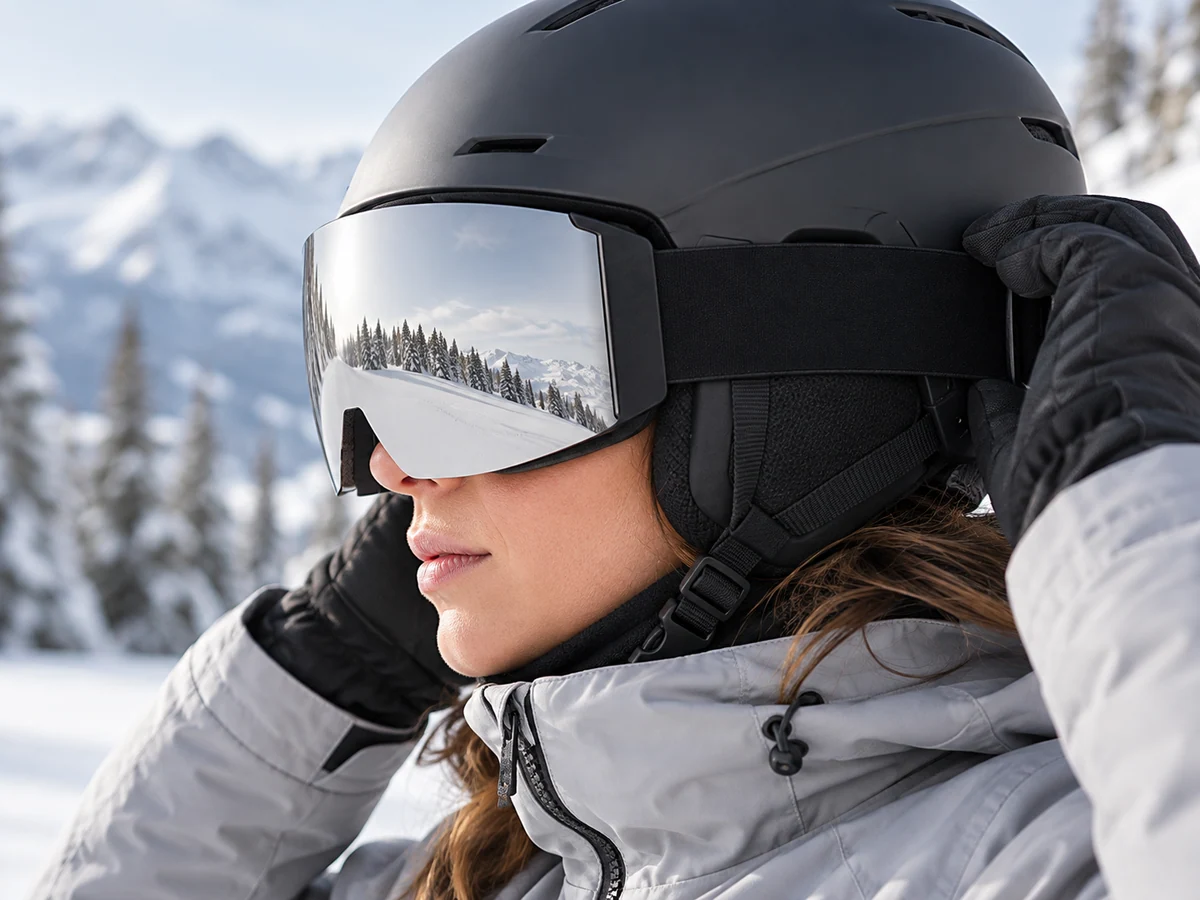
Adult wearing scene based on the H050 catalog design reference. Confirm the selected goggle and helmet combination.
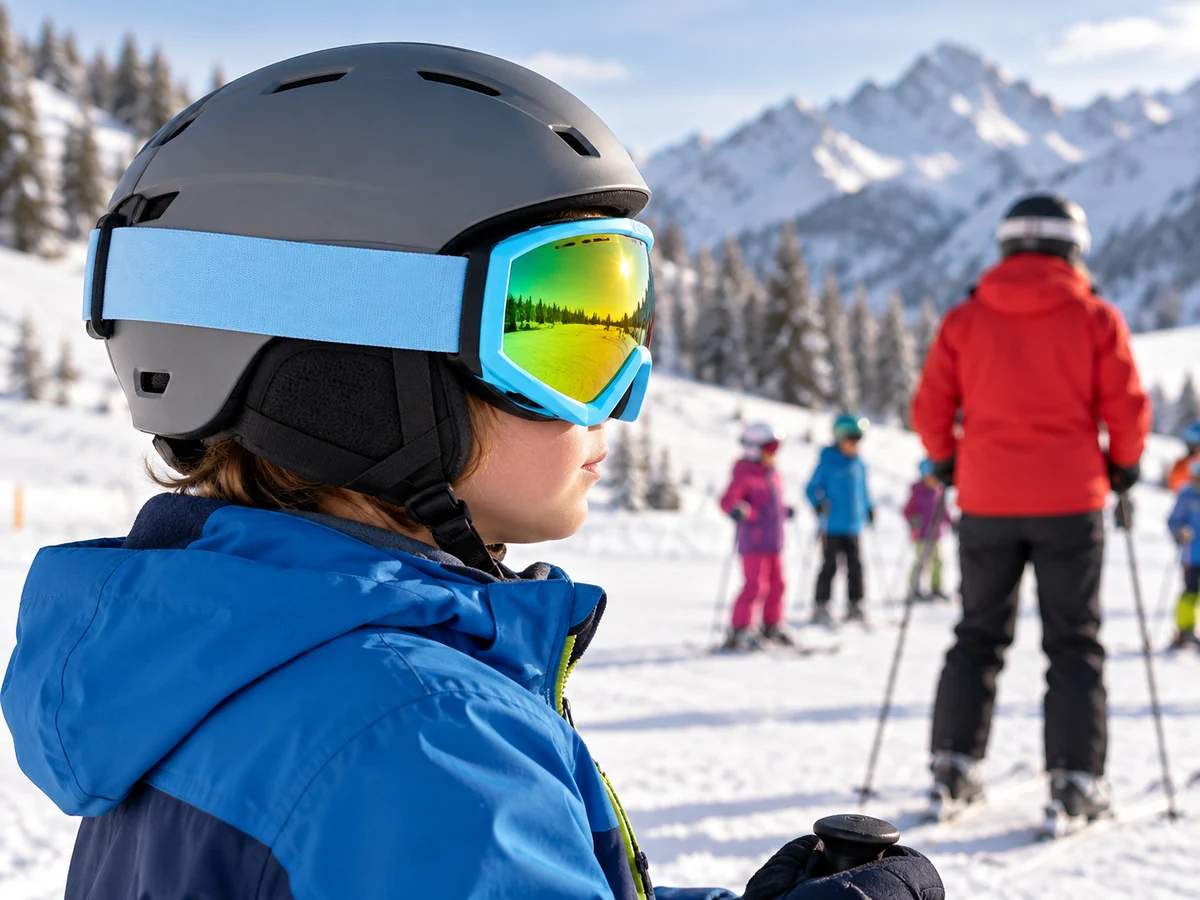
Junior wearing scene based on the H053 catalog design reference. Fit and age suitability need a separate sample review.
Approve the case and packaging with the goggles inside
The design range includes adult and children’s EVA case directions as well as several box styles. Select the case around the actual goggle profile, strap and any spare lens. Outside case dimensions do not establish usable internal clearance.
Pack the approved sample exactly as it will be sold. Check for pressure on the lens, foam or strap adjuster, and make sure accessories cannot rub against the lens surface. Agree protection during shipping, case branding and the printed information for each lens version. A carry case should not imply a level of impact protection that has not been established.
Document the complete approved configuration
Record the frame, lens, foam, strap and adjustment components, along with the lens properties and artwork. Keep the approved case and accessories in the same configuration record. Confirm the finished product weight on the actual version instead of using a figure from a different color, package or catalog entry.
- Fit: assess the intended wearer group and helmets, including junior fit where relevant.
- Lens: review the selected tint and supporting optical or protection evidence.
- Assembly: check retention, strap adjustment and any approved lens-change procedure.
- Care: agree cleaning instructions and handling of the inner lens surface.
- Package: approve the full contents, labels, case fit and shipping arrangement.
For a broader seasonal range, pair this review with Ski & Snowboard Protection planning. Each product family still needs its own approved specification and supporting evidence.