
Build a yoga wear range around the intended movement, the fit of each garment and a manageable set of coordinated styles. A matching bra and legging image gives a design direction; it leaves fabric, support, size grading and performance requirements to be specified.
The Wisp Yoga Wear collection includes paired style references from the yoga wear presentation. Use these references to begin a sample discussion, then approve the top and bottom individually as well as together.
Choose a small set of distinct design directions
A first range is easier to develop when each style has a clear role. A restrained solid-color direction can anchor the assortment, while a different strap layout or print adds variety. Avoid multiplying color and size combinations before you have agreed the material and fit blocks.
The YG20501 / YG20502 set pairs a cross-back bra design with a legging reference. The YG20523 / YG20524 set provides another back-detail and seam-layout direction. Compare the actual panels and openings when choosing which samples to develop.
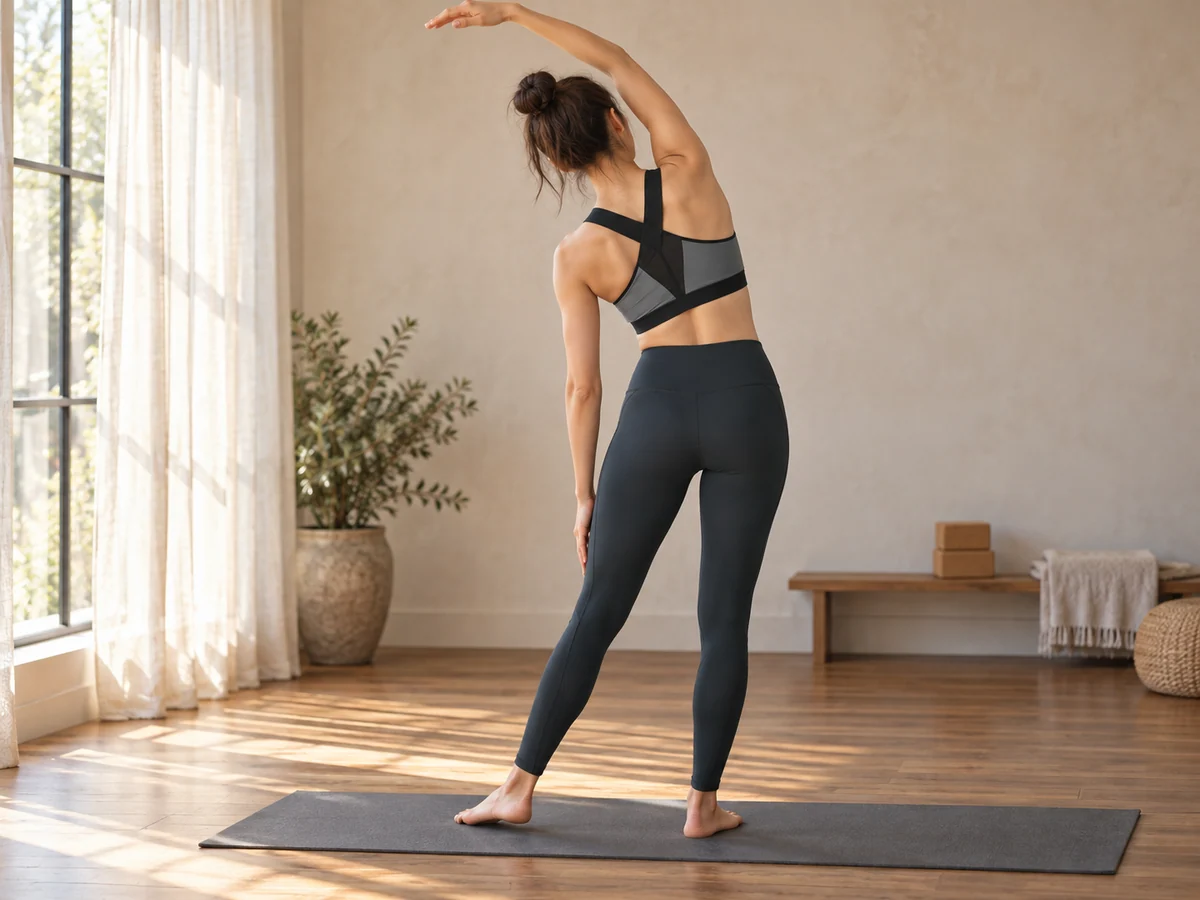
Cross-back top and full-length leggings in a studio stretch. Confirm fabric, measurements and support requirements in the sample brief.
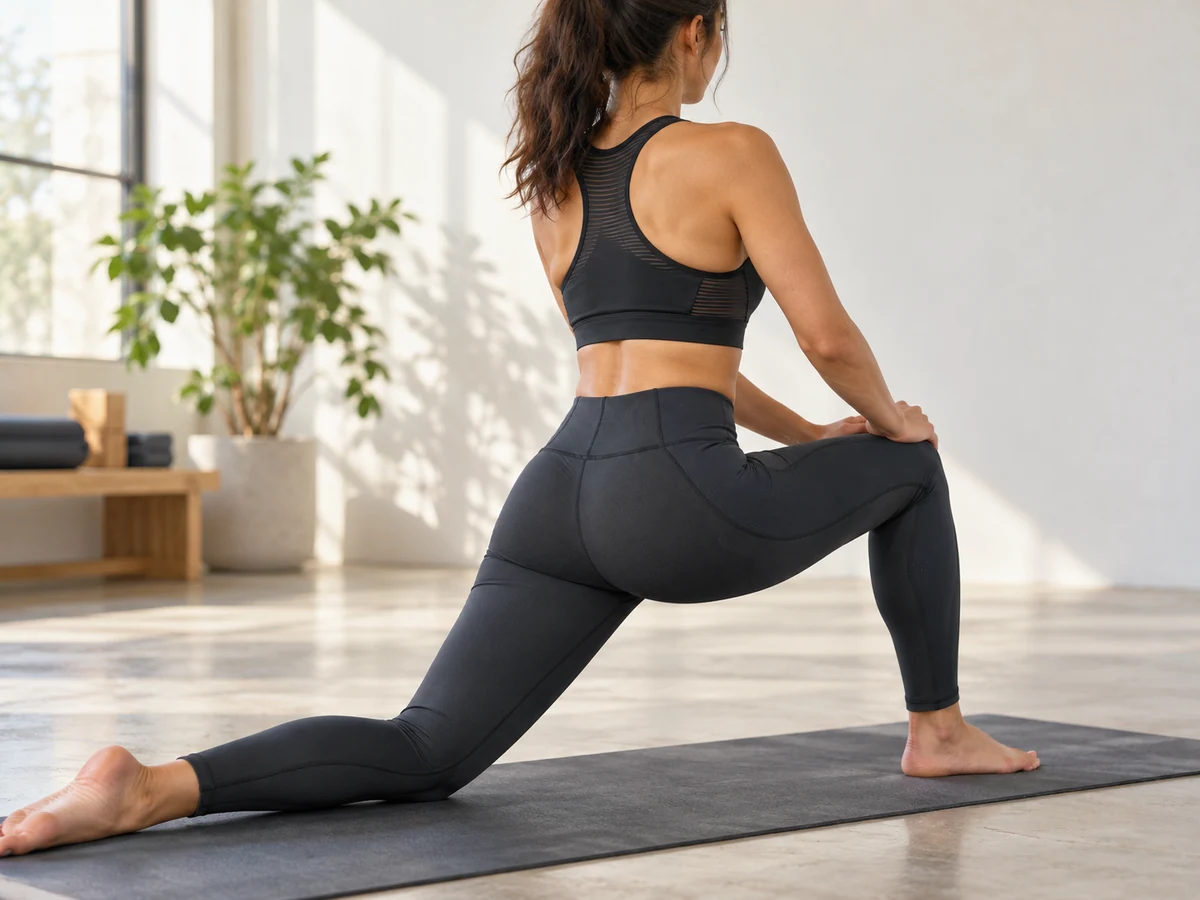
Racerback and legging panel direction during a low lunge. Review strap construction, openings and seam placement on the approved sample.
Turn the fabric direction into a measurable specification
The presentation supplies style images and numbers, without a verified fabric composition or performance test schedule. Request composition, fabric weight, construction, finish and color references for the proposed material. Agree the fabric using a physical swatch before treating a visual reference as a production specification.
Stretch and recovery need review in the directions and movements that matter for the garment. Check the waistband, knee and seat areas after repeated movement, along with the bra’s underband and straps. If the program needs a particular moisture-management or drying claim, agree how it will be measured on the selected material.
| Decision | Specify in the brief | Review on the sample |
|---|---|---|
| Fabric | Composition, weight, construction, finish and color | Hand feel, opacity under agreed conditions and recovery |
| Bra fit | Intended activity, coverage and support expectations | Band fit, strap position, openings and movement comfort |
| Legging fit | Rise, waistband, leg length and measurement tolerances | Waist stability, ease of movement and seam positioning |
| Size range | Target customer, graded measurements and fit model | Representative sizes and consistency between top and bottom |
| Care | Care procedure and acceptance criteria | Dimensional change, color behavior and appearance after care |
Fit the bra and leggings independently
A coordinated set may need different grading decisions for its two components. Start with a measurement chart for each garment and identify the intended fit model. Check coverage during reaching and bending, strap placement, band comfort and the interaction between the top and waistband.
For leggings, review waistband position during movement, inseam length, seam comfort and areas that become stretched. An opacity review should use agreed lighting, garment color, size and stretch conditions. A dark fabric photograph cannot establish opacity for every color or body position.
Keep support claims tied to the approved bra and intended activity. A strappy or cross-back appearance does not establish a high-support classification. Where a claim matters for the channel, agree suitable evidence and a consistent evaluation method.
Treat color and print as approval work
The YG20563 / YG20564 set offers a printed-top direction alongside a dark legging reference. Review the print placement on the garment panels, color balance between fabrics and the appearance of seams when stretched.
For solid-color sets, approve both garments together under the same lighting. Different fabrics or finishes can produce a visible mismatch even when they share a color code. Check labels, heat transfers or other branding for placement, skin contact and appearance after the agreed care procedure.
Keep the approved sample and specification aligned
Record the fabric and trim references, graded measurements, tolerances, artwork and packaging for each style. Evaluate representative sizes and the colorways that create the greatest opacity or color-matching questions. Use a retained approved sample and a controlled specification revision for production review.
Before confirming a launch schedule, discuss the proposed assortment, sample rounds and order quantities with the supplier. The style presentation does not establish a universal MOQ, lead time or ready-stock status.