
Select sports sunglasses by fit during movement, the intended light conditions and the evidence available for the exact lens. Shield shape and mirror color help define the appearance, but they do not establish UV protection, polarization or suitability for a particular activity.
The Wisp Sports Eyewear collection includes shield, semi-rimless and other frame directions. Shortlist the shape first, then review lens properties, wearing stability and packaging for your cycling or running range.
Compare frame shapes on the intended wearer
A broad shield is a useful direction to assess when a buyer wants coverage across the front of the face. A semi-rimless layout changes the visible frame arrangement. A more conventional wraparound or square frame offers a different fit and retail appearance. Actual coverage, view and comfort depend on the sample.
The Mm-9395 Shield Cycling Sunglasses reference shows a broad single-lens direction with a supported upper edge. The 9375 Semi-Rimless Sport Sunglasses offers a narrower visual direction. Review them on the target customer profile rather than treating one outline as universally better.
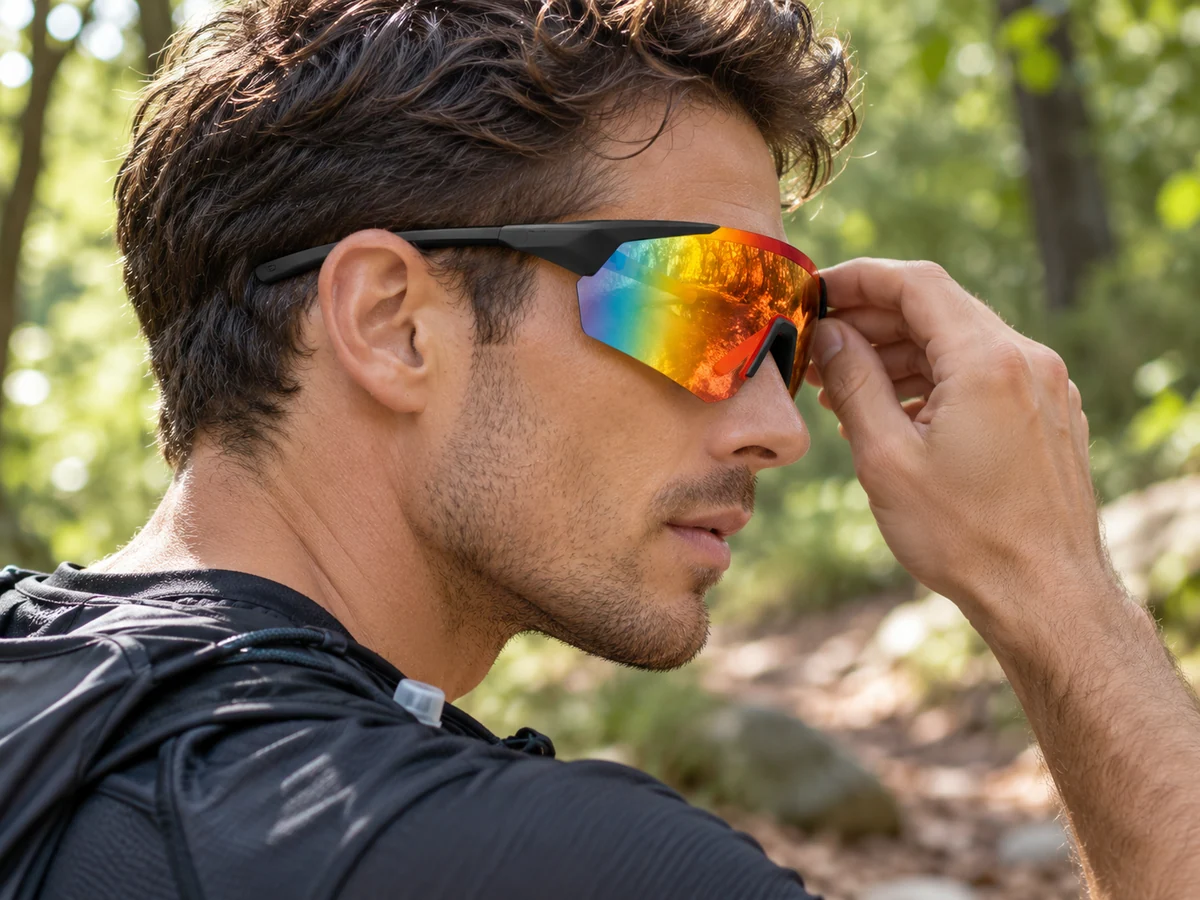
Mm-9395 design reference: inspect nose contact, temple grip and clearance in the intended riding position.
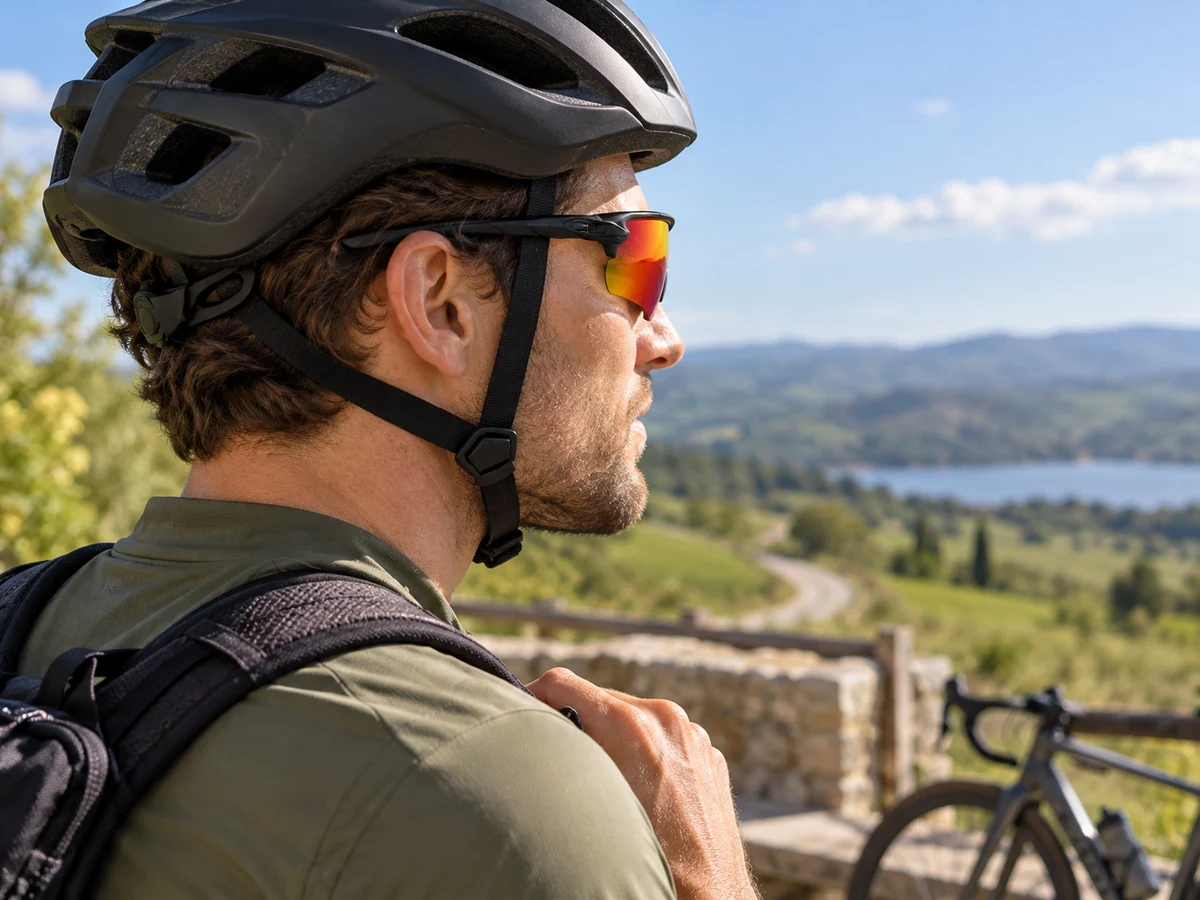
9375 design reference: compare the frame arrangement and wearing fit with your chosen helmet.
Specify the lens beyond its visible color
A mirrored blue, orange or purple surface does not disclose visible light transmission or the underlying tint. Request the lens specification and supporting measurements for each version. Ask separately about UV performance, optical quality, polarization and any photochromic behavior you intend to claim.
| Buying question | Evidence or sample check |
|---|---|
| What light conditions are intended? | Identify the lens version and its measured transmission or applicable category. |
| Is it polarized? | Request confirmation and relevant evidence for the exact lens; mirror color is insufficient. |
| Does it change tint? | Confirm that the selected version is photochromic and review its response under specified conditions. |
| Will it fit with a helmet? | Trial the glasses with the intended helmet and retention system. |
| Is it suitable for a claimed protective use? | Match the product, intended use and destination requirements to the supporting documentation. |
A material label such as PC describes a material choice, not a complete optical specification. Avoid assuming that all color options on a model page share the same properties. Review each lens and coating combination you plan to order.
Check fit in cycling and running positions
For cycling, try the glasses with the helmet in place and the wearer looking ahead from the expected riding position. Check brow clearance, temple contact and whether the frame blocks a critical part of the view. Include the helmet straps and any prescription arrangement in the review when relevant.
For running, assess retention during movement and comfort at the nose and behind the ears. Agree the review conditions, including expected perspiration, and record any slipping or pressure points. Adjustable-looking components need physical confirmation; do not infer an adjustment range from a product photograph.
The 9240-2 Vented Shield Sport Sunglasses is another design direction for a sample discussion. Visible vent openings indicate a construction detail. Their effect on fogging or comfort needs evaluation under the intended conditions.
Build a lens and color assortment you can control
Give each frame-and-lens combination an unambiguous specification reference. Record the tint, mirror finish, frame color and branding together so samples and bulk orders remain comparable. Ask which components can be shared and which require separate approval before expanding the number of variants.
Confirm the included case, pouch, cleaning cloth and instructions. Check that the packed glasses do not press against the lens or hinges, and review the product labels for the destination market. A case should fit the complete selected glasses, including any accessories sold with them.
Sample approval before an OEM order
- Inspect the lenses for visible defects and obtain the agreed optical and protection evidence.
- Check hinges, nose components and temple contacts on the actual sample.
- Review wearing fit with the intended user group and compatible equipment.
- Approve artwork, labels, care information and the complete packed product.
- Confirm any sport-specific or protective claims against the exact product version and market.
For a snow range, use the separate ski goggles buying guide to review frame size, strap fit and packaging. Sunglasses and goggles need their own specifications and fit reviews.