
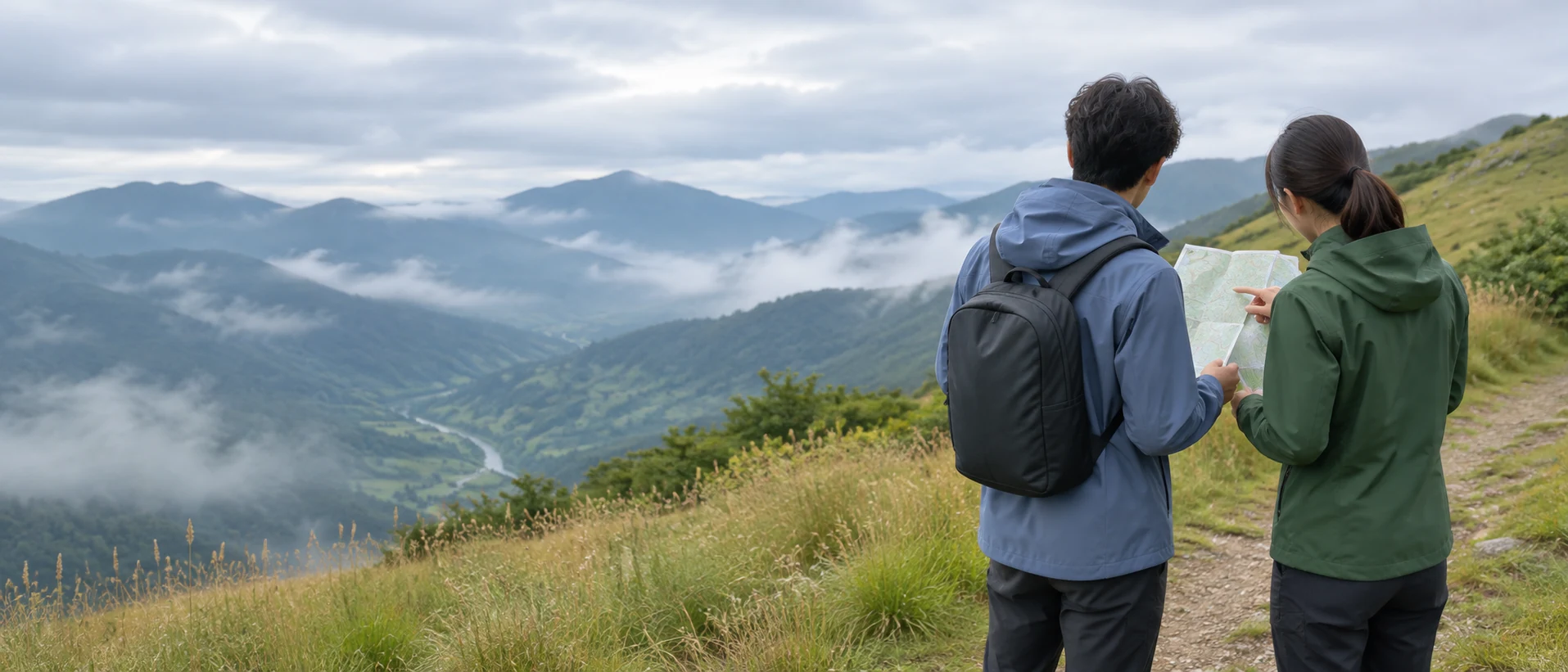
For a mountain hike, prepare clothing for the conditions, suitable footwear, navigation, water and food, lighting, first-aid supplies, emergency shelter and a way to call for help. An overnight trip adds a planned sleeping system, campsite equipment and more supplies. The right selection depends on the route, weather, daylight, access and the experience of the group.
This guide connects those needs with practical equipment choices and coordinated outdoor sets for retailers, importers and activity providers. Wisp Outdoor can help develop a matching product program through its supplier network: outerwear, bags, bottles, trekking poles, eyewear and first-aid containers, with specifications and packaging agreed together. The aim is a useful set built around the trip, rather than a collection of products chosen only because their colors match.
The main checklist covers mountain hiking and nontechnical hillwalking. Rock climbing, glacier travel and winter mountaineering require an additional, route-specific technical equipment and training plan.
1. Start with the route, conditions and people
Before choosing products, describe the outing. Is it a maintained valley path, a long exposed ridge or a route with snow remaining? Will everyone return before dark? How far is the group from road access, drinking-water facilities and assistance? A jacket-and-backpack set suitable for a guided summer walk may need substantial changes for an overnight journey.
Mountaineering Scotland organizes route preparation around four connected factors: conditions, the party's skills, the terrain and the equipment. It recommends checking mountain forecasts and planning alternatives around difficult points on the route.[1] Apply that approach before finalizing a packing list. A shorter distance can still involve more exposure or difficult ground than a longer, sheltered walk.
The National Park Service also advises leaving a trip plan with someone who is staying behind, making an emergency plan and recognizing that phone reception may be unavailable.[2] Put those arrangements beside the gear checklist. A trusted contact who knows the intended route and expected return can recognize when the group is overdue and pass useful information to responders.
For an outdoor equipment program, record the intended season, destination, user profile and activity on the brief. These details guide shell construction, layering room, pack organization and the accessories that belong in the set.
2. Build a day-hiking checklist around essential functions
The National Park Service's Ten Essentials framework covers navigation, sun protection, extra clothing, illumination, first aid, fire, repairs, extra food, hydration and emergency shelter. It also says that particular activities can require additional equipment.[3] Use these as functions to cover, with the actual contents adapted to local guidance and the trip.
| Function | Day-hike packing check | Selection question |
|---|---|---|
| Navigation | Route map, compass and appropriate electronic navigation | Can the user follow the route if the phone fails? |
| Weather protection | Hooded shell, suitable trousers, insulating layer and accessories | Will the clothing work during a stop as well as during movement? |
| Sun protection | Suitable eyewear, hat and sunscreen | Are the lens specification and coverage appropriate to the environment? |
| Lighting | Headlamp or other suitable light, with backup power | Can it be reached before the pack is unpacked? |
| First aid | Trip-appropriate contents, personal medication and instructions | Who approves and checks the contents? |
| Water and food | Water capacity, safe refill plan, food and reserve | What happens if the intended refill point is unavailable? |
| Emergency shelter | Appropriate survival bag, bivy or group shelter | Can the group use it in the conditions expected? |
| Repairs and signaling | Activity-specific repairs, whistle and suitable communication | Are tools and communication arrangements understood? |
| Fire or cooking | Equipment only where appropriate and permitted | What are the local restrictions and safe operating requirements? |
This table is a planning aid, rather than a complete packing specification for every mountain. For organized groups, allocate shared equipment explicitly. Mark which items each participant carries and which remain with a leader; check that separating into smaller groups does not leave one group without essential coverage.
3. Choose clothing as a working system
Start with layers that work together: a next-to-skin layer, insulation suited to the conditions and an outer layer for wind and precipitation. Consider walking pace, rest stops and the possibility of a delayed return. Mountaineering Scotland's summer hillwalking list includes a hooded waterproof jacket, waterproof overtrousers, a fleece, a spare warm layer, hat and gloves. It recommends synthetic or merino base layers and discourages cotton for that setting.[4]
A shell needs enough room for the intended layers without excessive loose fabric. Check whether the hood can be adjusted while wearing gloves, whether the cuffs close comfortably and whether the hem remains positioned when reaching overhead. Shoulder straps should not make every useful pocket inaccessible. These are reasons to assess a dressed, loaded sample rather than approving a shell from its photograph.
Wisp's AY-2505 Three-Layer Outdoor Shell is one platform to discuss when developing a hiking clothing program. Compare other options in the hardshell jacket collection, then agree the fabric, seam treatment, fit and performance evidence for the order. A product name or a three-layer description alone does not establish a hydrostatic-head rating or a finished-garment rain-test result.
Insulation also needs a packing position that keeps it available and protected. A warm layer at the bottom of the pack is inconvenient when stopping briefly in a shower. For a coordinated set, approve the shell, midlayer and loaded pack together. Include the clothing sizes and likely underlayers in the fit review, with separate grading where the target users require it.
Footwear should match the surface and the wearer. Test fit with the intended socks and before a long trip. Trekking poles may be useful accessories for selected routes and users, but they do not replace suitable footwear, balance skills or a decision to turn back.