
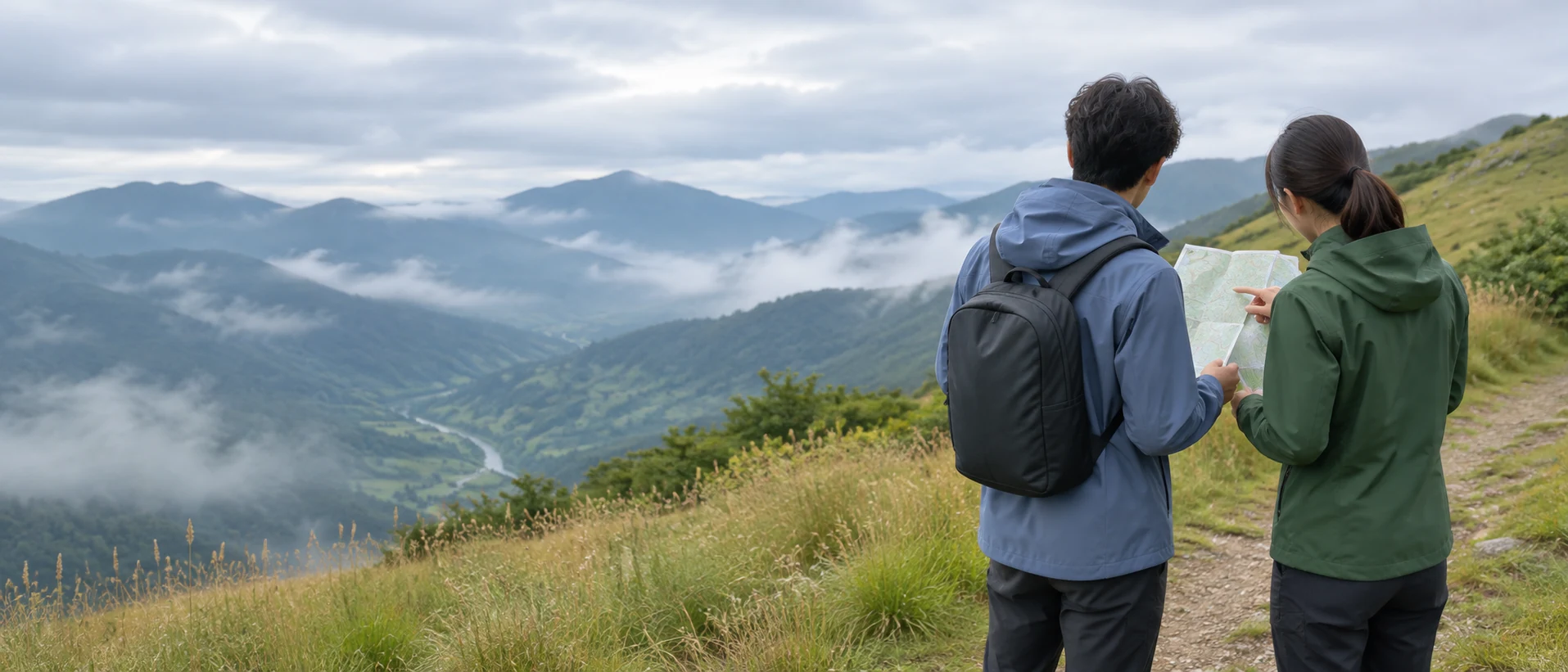
7. Treat technical mountaineering as a separate equipment plan
When the route involves glaciers, climbing pitches, steep snow or avalanche terrain, a hiking set needs specialist planning. The UIAA's alpine-skills guidance adds equipment such as helmets, ropes, harnesses, crampons and route-specific rescue equipment, adapted to the chosen climb.[8] Selection also depends on training, compatibility and current conditions.
For these products, verify the exact make and model, applicable certification, instructions, inspection requirements and compatibility with the rest of the system. UIAA purchasing guidance stresses matching equipment to the activity and user expertise, checking compatibility and maintaining inspection and purchase records.[9] Where a UIAA Safety Label is claimed, its certified-equipment database provides a model-level verification route.[10]
An accessory camping clip is not a substitute for a certified climbing connector, regardless of its visual similarity or an isolated strength figure. The outdoor set examples in this article do not represent a Wisp technical climbing or glacier-rescue package. Specialist components should enter a project only after their source, intended use and documentation have been reviewed by competent people.
8. Build a coordinated outdoor set with one sourcing partner
For brands and importers, the packing list can become a practical product program. Wisp Outdoor's strong supplier network supports coordinated sourcing across outdoor clothing and accessories, with one project brief connecting product selection, customization, sample approval and shipment planning.
The service is useful where individual products must work together. A bag must accept the packed clothing; a bottle must fit the carrying arrangement; the first-aid container must accommodate its approved contents. Coordinating these decisions early reduces the chance of discovering a mismatch after separate components have been ordered.
Start with a core set, then add modules for the intended customer:
| Program | Product directions to review | Project approval priorities |
|---|---|---|
| Mountain day-hiking set | Shell, backpack, bottle, selected eyewear, optional poles and first-aid container | Fit, packing access, documented performance and approved contents |
| Guided-group or club program | Core personal set plus a separately specified leader/shared-equipment module | Size distribution, allocation, instructions and replenishment responsibilities |
| Overnight extension | Core set plus suitable sleep, shelter, cooking and food-storage equipment sourced to the brief | Total carried load, campsite suitability, compatibility and verified specifications |
| Vehicle-supported camp set | Hiking essentials plus separately packed campsite tent, seating and camp accessories | Camp layout, transport volume and separation of trail and vehicle loads |
These are configurable development directions. Each final bill of materials states what is included, what is optional and which items the customer or activity provider supplies separately. Items outside the verified catalog require sourcing and specification review before quotation or inclusion.
Coordinate the specification before the graphics
Use a shared product schedule with model references, materials, sizes, colors and approved performance requirements. Record the test reports or other documents needed for each category. A jacket report does not establish bag waterproofness; a bottle material description does not establish every destination-market compliance requirement.
Then coordinate logos, labels, instructions, barcodes and packaging. Matching color names across fabric, plastic and coated textiles can still produce visible differences, so approve physical color samples and agreed tolerances. Review how the set is presented and whether the packaging makes its contents and limitations clear to the buyer.
Approve one complete packed sample
Evaluate the complete set in addition to component samples. Check fit, pack access, closure operation, item identification and repacking. For first-aid configurations, compare the packed sample with the signed contents list and relevant labeling requirements. Keep a retained reference so later inspections have a concrete standard.
Plan quantities and delivery across the set
Different components can have different minimum quantities and production schedules. Agree size and color allocations, replacement items, packaging sequence and delivery priorities before confirming an order. Discuss consolidation and shipment options against the actual project, rather than assuming every supplier can finish on the same date.
To request a coordinated outdoor equipment set, send the activity, destination market, season, target users, quantities and desired retail or program positioning. Include any performance requirements and an initial packing list. Wisp can then review the available product directions and develop a sample-led proposal around the intended use.
9. Mountain hiking gear questions
What should a beginner take on a mountain day hike?
Start with suitable clothing and footwear, navigation, water, food, lighting, first aid and emergency protection. Adapt the list to the route and local advice, and check that the person knows how to use the equipment. A guided introductory route may be the right starting point while skills develop.
Is a waterproof jacket enough in wet weather?
A jacket covers one part of the system. Consider trousers, pack contents, dry spare clothing and what happens during an extended stop. Review the shell's documented performance, construction and fit rather than treating a waterproof label as a complete outing plan.
Should every mountain set include a tent?
A planned overnight trip needs an appropriate shelter arrangement. A day trip still needs emergency protection suited to the environment, but that does not always mean carrying a full camping tent. Separate personal, shared and vehicle-basecamp equipment when developing the set.
Can Wisp supply a branded outdoor kit instead of individual products?
Wisp can coordinate an outdoor set across agreed product categories, with supplier sourcing, customization and sample review connected through one brief. The final selection, contents, documentation, quantities and delivery arrangements are confirmed for the project. Technical climbing equipment requires a separate specialist review.