
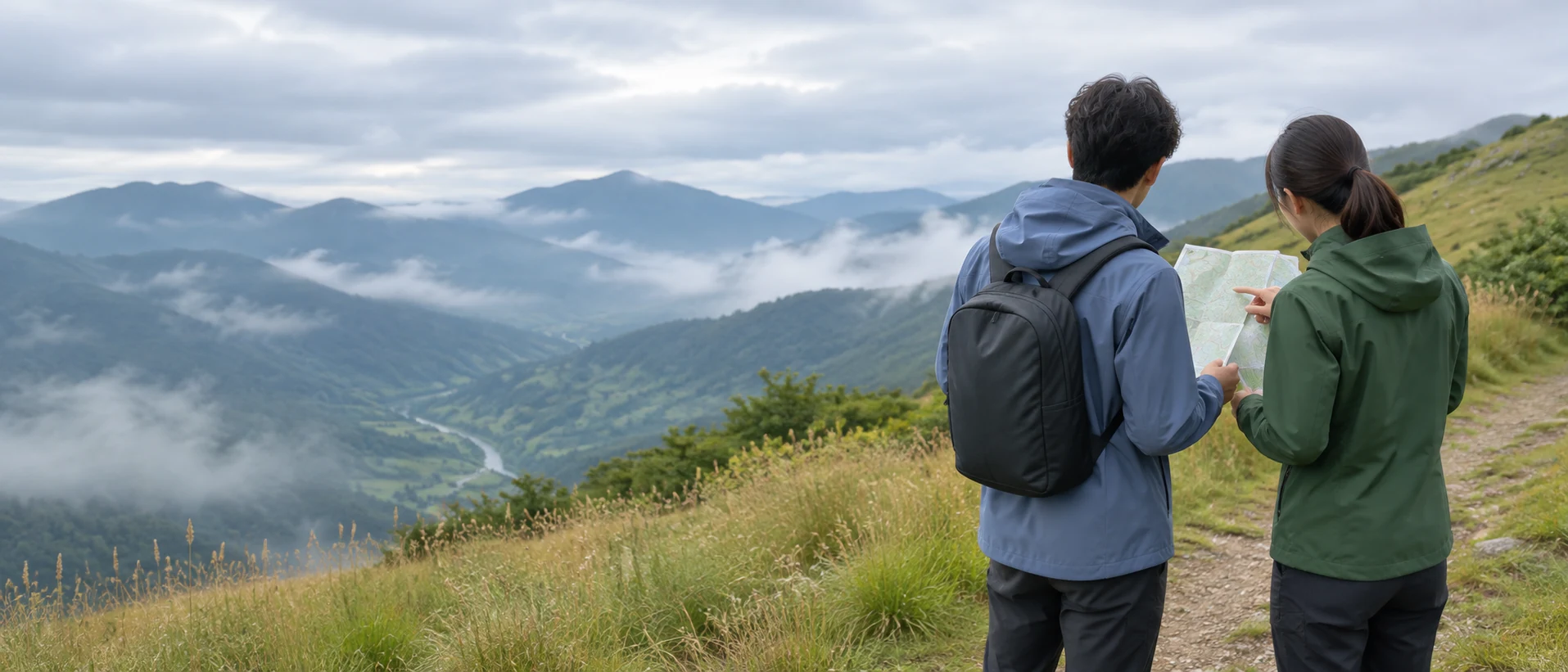
4. Organize the backpack, bottles and trekking poles
Choose the pack after defining the contents. Carry volume is only one part of the decision: torso fit, strap adjustment, stability, access and the weight of the full load matter too. Trial-pack the actual clothing and accessories. Check whether the user can retrieve water, a map and rainwear without unloading everything into the weather.
The WP-001 TPU backpack is a listed platform for a coordinated bag program. Discuss its harness and closure with the actual sample. For a mountain set, agree how the closure must be used and what rain or water-ingress evidence is needed. The word waterproof should not be interpreted as permission to immerse a packed bag or as a guarantee for electronic equipment. Our waterproof bag buying guide explains the questions around materials and closures.
Keep a dry clothing group, an accessible emergency group and a separate food-and-water group. This makes a packing demonstration easier for retailers and activity providers. It also makes sample review concrete: pack the set, carry it, open it in the intended order and identify anything that is difficult to find or repack.
For hydration, the WB-005 bottle with loop-handle lid is one container option within the water-bottle range. Select total carrying capacity from the water plan; one bottle is not automatically enough for a day out. Review lid operation, leakage, cleaning access and compatibility with the pack's storage before approving a bundle.
If poles belong in the program, assess the TP-004 folding trekking pole as a sample option. Check the adjustment range, locking mechanism, grip, strap and packed attachment. Its published catalog weight does not specify a single-pole or pair basis, so confirm that distinction before making weight comparisons. Keep poles secured so that tips do not damage the shell or bag.
5. Plan sun protection, water, first aid and communication
For exposed routes, eyewear selection includes fit, coverage and verified lens properties. Wisp's Model 9302 wraparound sports sunglasses provide a frame direction for a hiking range; confirm the ordered lenses, filter category, UV documentation and destination-market requirements. Frame appearance and lens tint do not establish those properties.
Snow and glacier environments need a separate eyewear assessment. UIAA guidance highlights UV protection and side coverage in expedition eye protection.[5] Ordinary sports sunglasses must not be presented as glacier glasses without appropriate evidence. Review specialist requirements for the actual route rather than selecting eyewear only by its outdoor styling.
Plan the water supply and refilling
Water preparation involves both quantity and safety. Identify reliable sources and the treatment equipment needed before departure. The CDC notes that clear-looking stream water can contain germs and that treatment methods have different capabilities; it also warns that boiling or disinfection does not make chemically contaminated water safe.[6] Carrying a bottle therefore solves storage, while safe refilling needs its own plan and suitable equipment. Follow current local advice and the treatment product's instructions.
Approve first-aid contents and upkeep
First-aid supplies should be selected for the party, duration, likely delays and the skills of the people carrying them. The FA-001 handled outdoor first-aid bag is a container option, with included items and quantities confirmed against the order's approved packing list. Its presence in a bundle does not establish a complete medical inventory or wilderness readiness. See the first-aid guide by industry and outdoor scenario for planning and replenishment questions.
For a buying program, name the person who approves the contents, checks shelf life and arranges replacement items. Keep personal medication arrangements separate from generic promotional packing lists. Training and a workable emergency plan remain part of readiness; a stocked bag cannot supply those skills.
Keep communication ready
Protect communication devices from weather and manage power. Depending on remoteness, a dedicated emergency communication device may be appropriate. Agree local emergency contacts, the person who holds route information and what the group will do if separated. Trial the devices and subscriptions before relying on them in the field.
6. Add a sleeping system for an overnight trip
An overnight hike changes the load and the margin for error. Add a shelter appropriate to the campsite, sleeping bag, insulating mat, food storage and any permitted cooking system required by the plan. The NPS lists a supported backpack, tent, sleeping bag and pad, stove and fuel, additional food and repair equipment among overnight considerations.[2]
Choose a sleeping bag and mat as a pair for expected overnight conditions. Ask for the relevant performance information and test basis, then review fit, packed size and the space available inside the shelter. A generic season label or a photograph of thick insulation is insufficient for a temperature decision.
A planned tent and an emergency shelter serve different purposes. The tent accommodates the night's camp; the emergency option addresses an unplanned stop or separation where carrying and deployment needs may differ. Assign shared tent components clearly and make sure the group can pitch the selected shelter before departure.
Food handling and hygiene also deserve pack space. NPS backcountry-health guidance advises hand cleaning, separate storage of food from fuel and cleaning supplies, and attention to local waste rules.[7] Specify a small hygiene group and waste-carry arrangement, with food-storage equipment appropriate to local wildlife requirements. A tidy kit layout helps users avoid putting clean utensils beside leaking fuel or used waste bags.
Keep vehicle basecamp equipment in a separate module. Wisp's CT-001 quick-open camping tent, camping furniture and other camp products may suit a separately assessed campsite program. Their catalog descriptions do not establish suitability for backpacking, exposed mountain camps or winter use. Bulky comfort items should not become compulsory summit-pack contents merely because they are available in the same catalog.