
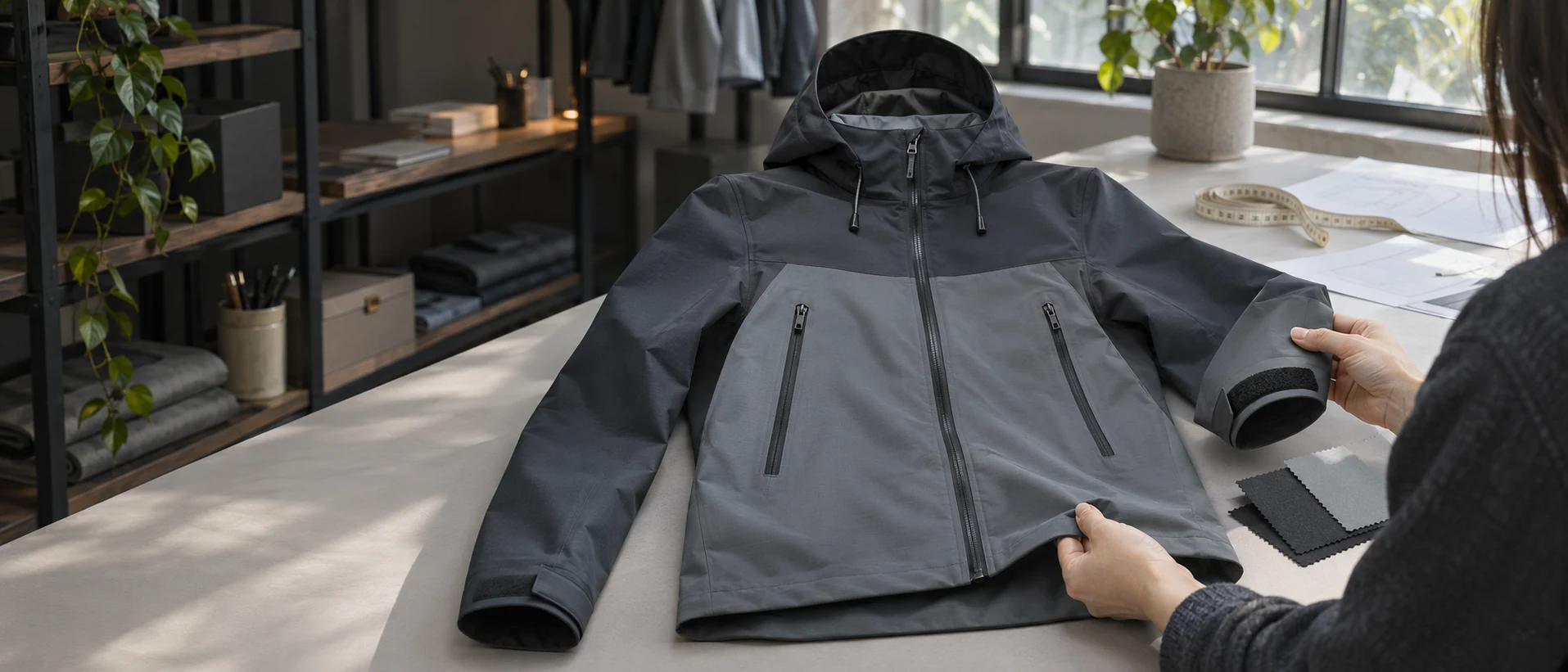
Waterproof jacket quality control starts before a sample reaches the inspection table. A buyer needs an agreed product brief, evidence for the proposed materials, and a repeatable way to examine the finished garment. The approval decision then brings together construction, fit, performance after care and the supplier’s response to any defects.
A high fabric waterproof rating is useful, but it cannot answer every question about the jacket made from that fabric. Rain can enter through openings or construction details, while discomfort during movement can appear only when a wearer adds the intended layers and equipment. Effective sample approval examines those questions separately and records how each one was resolved.
This guide sets out a practical approach for outdoor brands, importers and private-label buyers. It connects published research and test-method scopes with the decisions that a purchasing team actually has to make: which evidence to request, what to inspect, when to ask for further testing and what must be settled before bulk production.
1. Define what the sample needs to prove
Wearer, activity, layers and claims
Methods, samples and acceptance criteria
Revision, result and open items
Start with the job the jacket will do. A commuter wearing a shell over office clothing has different movement, storage and layering needs from a mountain user carrying a loaded pack. Even within hiking, a lightweight emergency shell and a jacket intended for sustained exposure may require different balances of mass, durability, coverage and ventilation. Write the intended use in enough detail that a second person could understand why a feature matters.
The brief should identify the target wearer, expected layers, size range, destination market and equipment that changes the fit. It should also identify the proposed fabric assembly, closures, seam treatment, care instructions and claims intended for product copy or labels. A supplier can then explain how the submitted sample relates to that brief instead of relying on a broad description such as “outdoor quality.” For a starting structure, use the existing waterproof jacket specification guide for OEM buyers.
Separate development approval from production approval
A development sample is often useful for checking shape, pocket positions and the general construction approach. It may contain substitute fabric or temporary trims. Record those substitutions, because a good fit result does not approve a component that was never present in the garment. Similarly, a test on a final laminate does not resolve an unfinished hood pattern or a closure that is still being changed.
Before approving a production-intent sample, ask the supplier to identify its bill of materials and specification revision. Confirm which fabric, backing, seam tape, zips, adjusters and labels are intended for bulk. If a component remains provisional, keep the affected approval item open and identify the evidence needed to close it. An approval record is more useful when it says exactly what was accepted and under which conditions.
Agree acceptance criteria before looking for defects
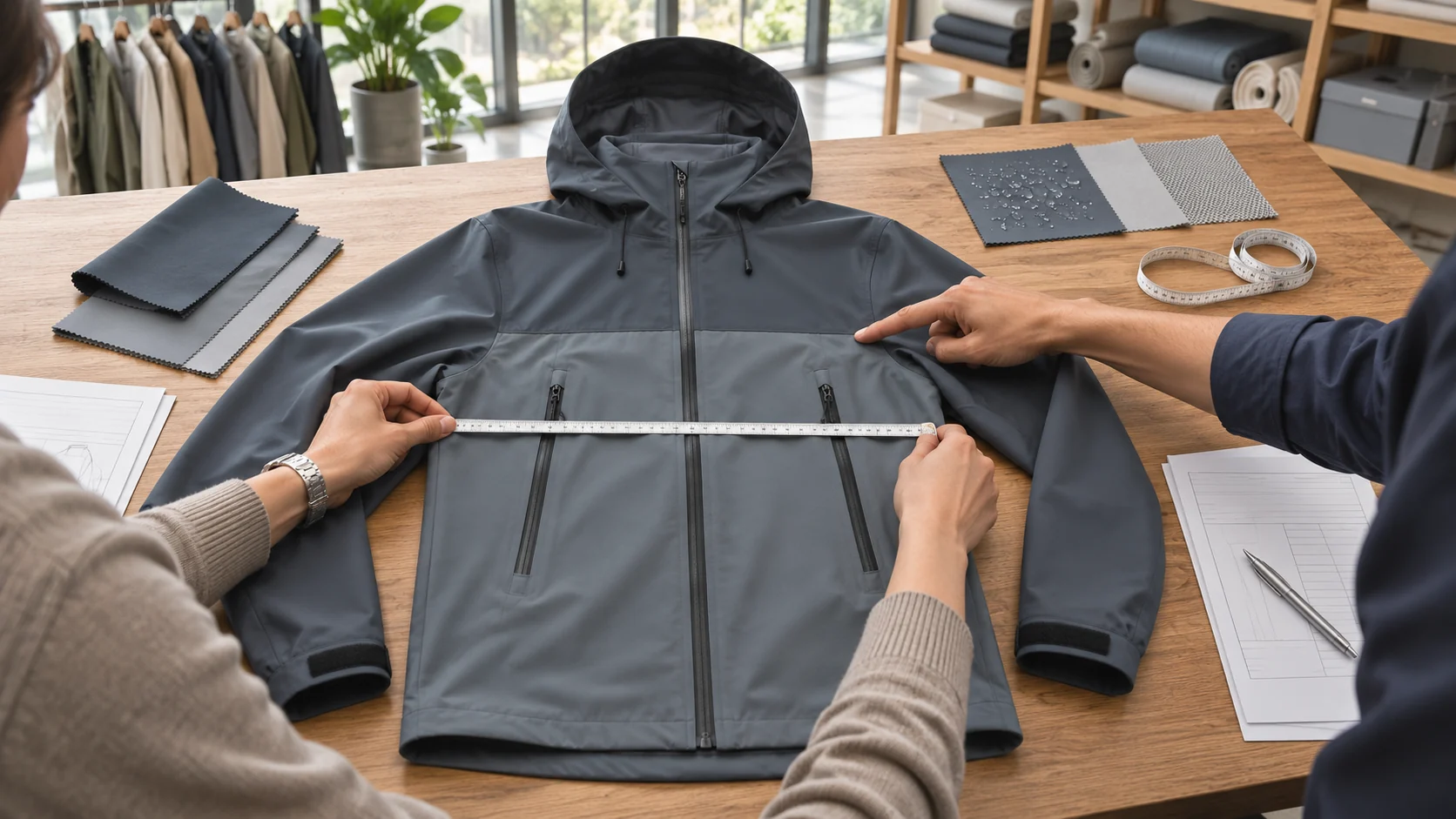
Measurements need agreed points of measure and tolerances. Appearance checks need a shared description of unacceptable defects, supported by photographs or approved examples where helpful. Functional checks need a method, conditioning or care state, and an agreed result. Record responsibility for testing and for the cost of any retest. These decisions reduce the chance that a supplier and buyer examine the same issue using different expectations.
A small approval matrix can keep the discussion focused. It should be specific enough to guide action, while leaving room for the laboratory to confirm which method is suitable for the actual assembly.
| Approval item | Evidence to agree | Record to retain |
|---|---|---|
| Fit and dimensions | Measurement method, tolerance and intended layers | Measurement sheet and structured try-on notes |
| Fabric performance | Material identity, test method and care state | Corresponding laboratory report |
| Construction | Seam specification, closures and inspection scope | Photographs and garment evaluation |
| Care durability | Wash/dry procedure and agreed retest properties | Before/after results and retained sample identity |
There is no single waterproof number, wash count or visual defect limit that this guide can prescribe for every jacket. Establish the required outcome for the intended use, then agree how it will be demonstrated. Where a product is sold as protective equipment, the applicable market requirements need their own assessment; a general outdoor sample checklist does not establish that compliance.
2. Read the test report before approving the claim
ISO 4920 · spray assessment
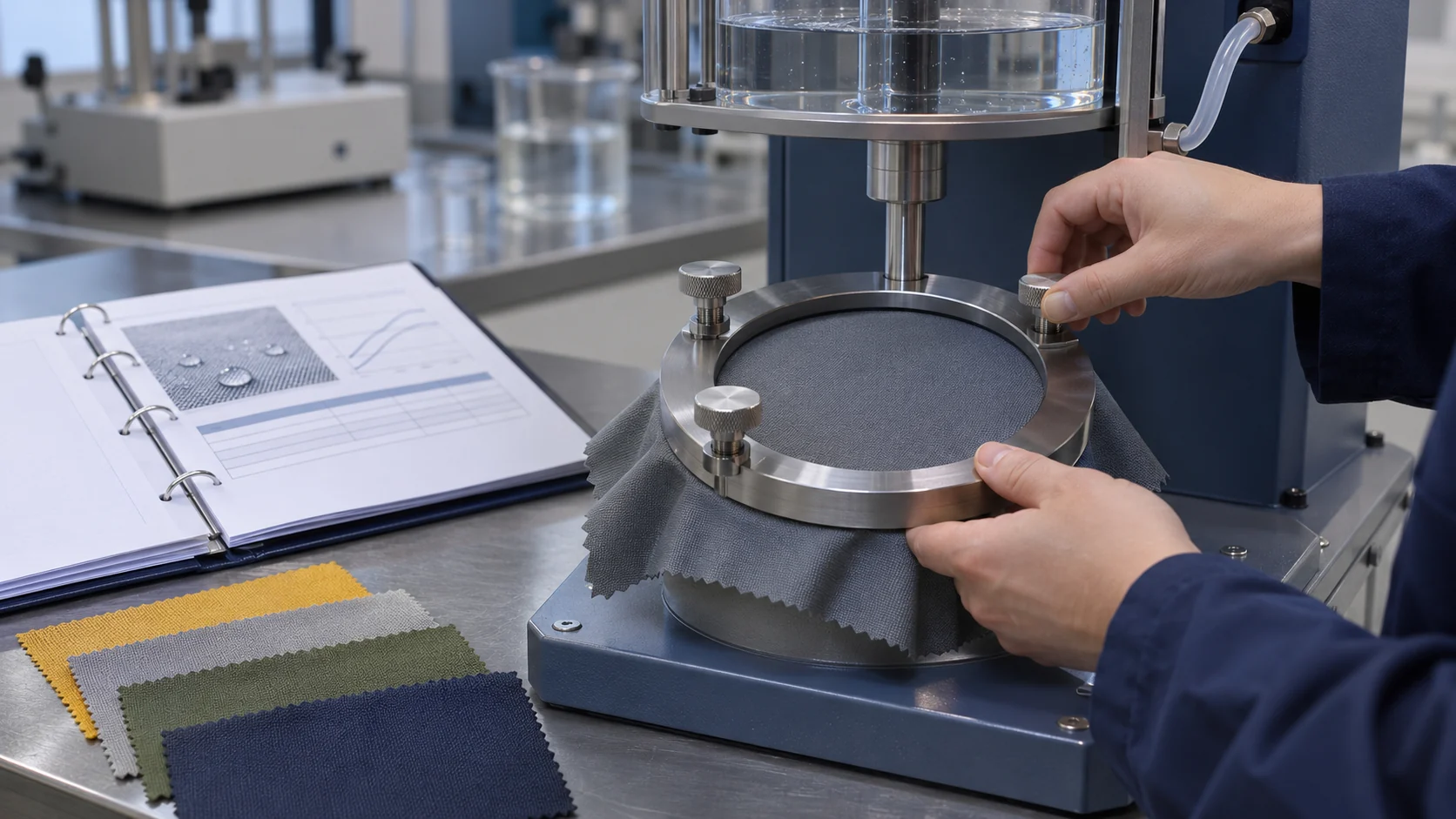
ISO 811 · fabric hydrostatic test
ISO 24231 · static-manikin rain test
The first question about a report is whether it describes the material being purchased. Match its sample identification to the submitted swatch or garment, including the relevant fabric construction, membrane or coating, backing, finish and care state. Ask how the supplier maintains that connection when a report uses a laboratory code. A familiar brand name or a similar color is insufficient to identify the tested assembly.
Next read the method and result together. ISO 811:2018 specifies a hydrostatic pressure method for assessing resistance to water penetration through fabrics. ISO 4920:2012 assesses resistance to surface wetting by a spray test and explicitly does not measure water passing through the fabric. Those results describe different properties and should occupy separate lines in a specification. [5][6]
Water beading, pressure resistance and whole-garment protection
A photograph of rounded water droplets can illustrate the surface condition, but it does not establish a hydrostatic result. A pressure test on an unseamed material sample leaves another question open: how will the finished jacket manage rain at seams, pockets, closures and openings? ISO 24231:2024 addresses ready-made garments using a static manikin exposed to high-energy water droplets from above. Its official scope does not cover resistance to strong winds, snow or hail, so the result should be described within that scope. [8]
Research by Cha and colleagues makes the material-to-garment distinction concrete. Their 2015 study developed a rain-tower evaluation system and tested purchased jackets under two different exposure conditions. In the group of eight jackets exposed to 100 mm/h for 30 minutes, five passed the study’s evaluation. That small, selected group is not an estimate of the market’s pass rate. Its useful lesson is that examining finished garments can reveal questions that fabric data alone leave unanswered. [1]
For a buyer, this means keeping three evidence requests distinct: surface wetting, fabric water-penetration resistance and the construction-dependent behavior of the garment. If whole-garment rain evaluation is part of the program, agree the garment configuration, closure settings, layers, exposure and assessment criteria with the laboratory. Avoid converting a fabric water-column result directly into a promise about hours of rain protection.
Check the conditions behind comparable-looking numbers
Two reports with the same unit can still represent different preparation or test conditions. Record the method edition, relevant procedure details, conditioning, number of specimens, reported results and any deviations or remarks. Ask whether the result represents a new material or a specimen after washing, abrasion or another agreed treatment. When the intended comparison is between suppliers, use a consistent method and preparation wherever practical, and ask the laboratory to explain remaining differences.
Breathability requires the same discipline. A moisture vapor transmission result and an evaporative resistance result describe different measurements; there is no universal conversion that makes any pair interchangeable. Refer to the MVTR versus RET guide when comparing breathability reports, and keep those results separate from the water-penetration assessment.
If a supplier offers an alternative laminate, request the corresponding evidence rather than carrying forward the previous material’s approval. This is particularly important when quotations change the backing, surface treatment or membrane while retaining a similar face textile. The guide to waterproof jacket fabrics and membranes explains why the full assembly matters.
Resolve document gaps before treating a performance claim as approved. An incomplete report can often be clarified with the laboratory or supplier. Where the sample identity, method or relevant care state remains uncertain, keep the item pending and agree what additional evidence will answer the question. This is usually more effective than collecting a larger pile of reports that do not correspond to the proposed product.
Developing an outerwear range? Discuss your sample requirements with Wisp.