

02 / INTERPRET THE RESEARCH
Why Can Different Breathability Tests Produce Different Results?
One of the most common problems in waterproof fabric sourcing occurs when two suppliers report significantly different breathability values for apparently similar materials.
This does not necessarily mean one supplier is providing incorrect information.
Different test methods measure moisture transfer under different conditions. A fabric's performance can change depending on the temperature, humidity, vapour pressure gradient, airflow and specimen configuration.
1. The Cup Method
The cup method measures water vapour transmission by monitoring the change in mass of a test assembly over a specified period.
Two commonly encountered configurations are:
Upright Cup Method
A water or moisture source is placed inside a cup, with the fabric specimen sealed across the opening. Water vapour passes through the fabric and is measured through changes in mass.
Inverted Cup Method
The specimen and moisture source are arranged differently, creating a different vapour pressure gradient and testing environment.
Depending on the method, the test may use water, a desiccant or a saturated salt solution.
These variations can produce different MVTR results even when the same fabric is tested.[7],[13]
2. The Sweating Guarded-Hotplate Method
The sweating guarded-hotplate method is designed to evaluate the resistance of a textile to heat and water vapour transfer.
A heated measuring plate provides a controlled environment that simulates aspects of the human skin surface.
The specimen is placed over the measuring unit, and the equipment measures the energy required to maintain the specified conditions.
The result is used to determine evaporative resistance, or RET.
This approach is particularly relevant when comparing the moisture-transfer resistance of fabrics and multilayer assemblies for clothing applications.[1],[6]
3. What Published Research Tells Us
Research has demonstrated why buyers should avoid comparing breathability figures without considering the testing method.
A 2021 study published in Coatings evaluated 73 waterproof breathable woven fabrics using upright-cup, inverted-cup and sweating guarded-hotplate approaches.
The researchers found that the relationships between the test methods varied across different material groups.[4]
This is important because a correlation observed in one group of fabrics cannot automatically be applied to every waterproof breathable textile.
An earlier study by Huen Sup Shim evaluated 30 commercially available waterproof breathable fabrics using multiple water-vapour transmission methods. It also found that the reported results varied according to the method used.[5]
The research highlights a practical problem for apparel manufacturers: marketing figures without supporting test conditions can create confusion during fabric selection and product development.
4. What This Means for OEM and ODM Buyers
When requesting fabric quotations, avoid asking suppliers for only one breathability number.
Instead, request:
- The exact test standard and edition.
- The complete testing procedure.
- The temperature and relative humidity.
- The test duration.
- The number of specimens tested.
- The average result and individual results.
- The fabric construction and coating or membrane technology.
- Whether the specimen was tested before or after washing.
If two suppliers use different testing methods, request testing under one agreed procedure before making a final purchasing decision.
Wisp Outdoor recommendation: Standardize the test method during the quotation stage rather than trying to reconcile incompatible results after production has started.
03 / TEST CONDITIONS
Which Test Conditions Should Buyers Check Before Approving a Fabric?
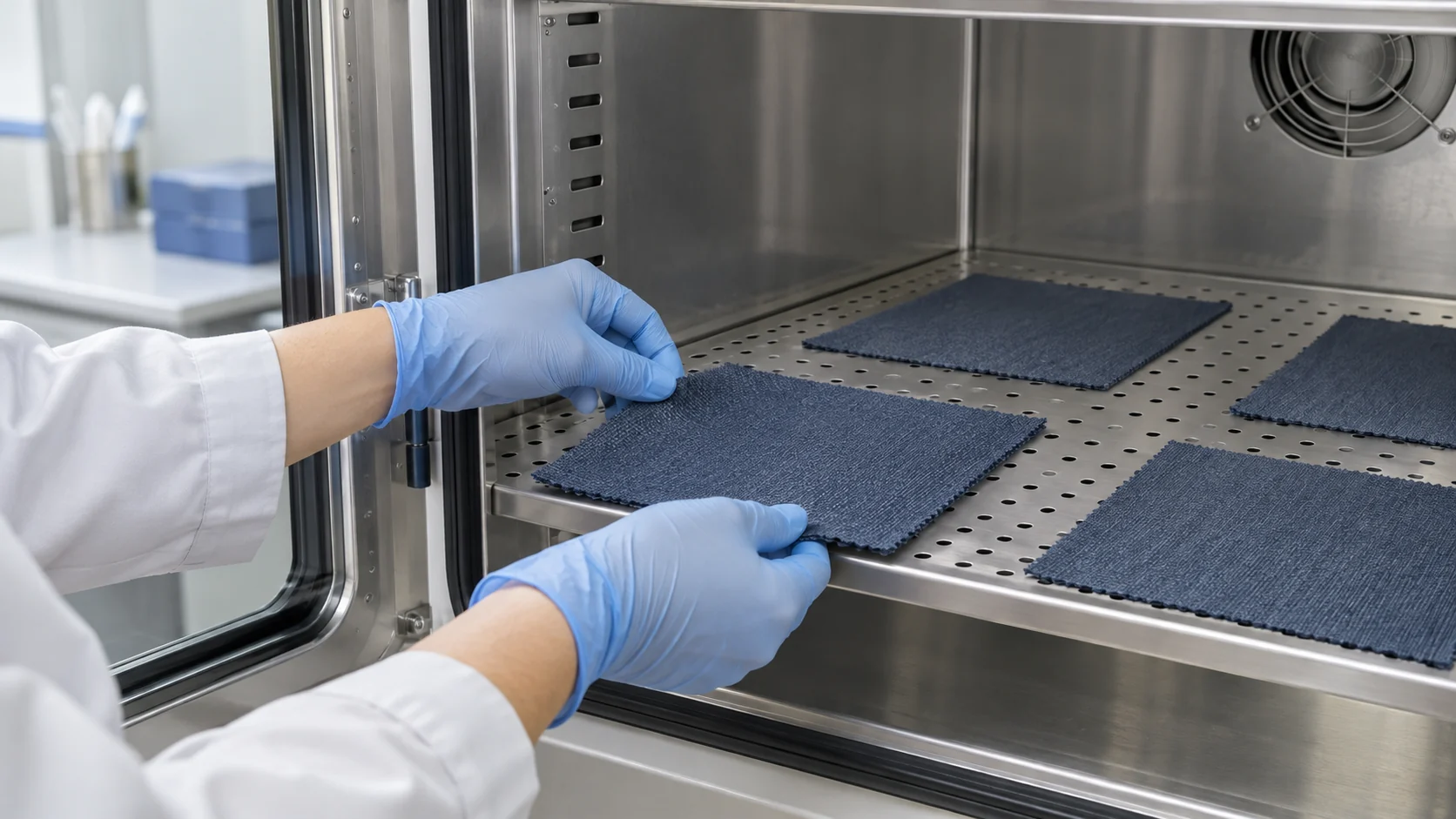
A laboratory result is only meaningful when the conditions behind it are clearly documented.
Even when two laboratories use the same general test method, differences in specimen preparation and environmental conditions can affect the final result.
1. Temperature and Relative Humidity
Temperature and relative humidity directly influence water vapour pressure and moisture transfer.[8]
A higher vapour pressure difference across the specimen may increase the measured transmission rate.
Therefore, an MVTR result obtained at one temperature and humidity condition should not automatically be compared with a result obtained under another condition.
For procurement purposes, specify the required environmental conditions before requesting supplier samples.
2. Test Method and Specimen Configuration
The laboratory should identify whether the fabric was tested using:
- Upright cup.
- Inverted cup.
- Desiccant method.
- Water method.
- Sweating guarded-hotplate method.
The report should also identify which side of the fabric faced the moisture source and whether the sample was tested in its original condition.
This is particularly important for laminated fabrics because the face fabric, membrane and backing may have different moisture-transfer characteristics.
3. Fabric Conditioning
Before testing, textile specimens should be conditioned according to the applicable test procedure.
Improper conditioning can create inconsistent results, particularly when comparing fabrics with different fibre compositions, coatings or moisture absorption characteristics.
For buyers, it is important to confirm that the laboratory followed the specimen conditioning requirements of the agreed standard.[1],[7]
4. Repeatability and Reproducibility
One test result is not enough to establish stable production quality.
Repeatability refers to the consistency of results when testing is repeated under similar conditions.
Reproducibility considers differences between laboratories, equipment or testing environments.
For important OEM orders, buyers should request multiple specimens and evaluate the average, range and variation of the results.
A fabric that produces an excellent result in one isolated test but inconsistent results across samples may create significant production risks.
5. Testing Before and After Washing
New fabric performance does not always represent long-term garment performance.
Washing, abrasion, flexing, contamination and repeated use may affect:
- Water repellency.
- Membrane integrity.
- Lamination adhesion.
- Coating performance.
- Seam construction.
- Moisture transfer.
For products intended for frequent outdoor use, consider requiring performance testing after a defined number of care cycles.
The number of cycles, washing procedure and acceptance limits should be agreed according to the intended product and applicable care requirements.
Procurement recommendation: Include initial-condition and post-care performance requirements in the technical specification rather than relying exclusively on the supplier's original fabric catalogue.