
06 / OEM & ODM APPLICATIONS
How to Select the Right Waterproof Breathable Fabric for Different Outdoor Products

There is no single fabric specification suitable for every waterproof jacket.
The correct balance between breathability, waterproofness, durability, weight and cost depends on the product's intended application.
1. Lightweight Rain Jackets
Primary requirements:
- Lightweight construction.
- Compact packability.
- Reliable rain protection.
- Adequate moisture transfer.
- Competitive production cost.
Potential applications include travel rainwear, urban outdoor apparel and entry-level hiking jackets.
A lightweight two-layer or 2.5-layer construction may be appropriate, depending on the target retail price and performance expectations.
2. Hiking and Trekking Jackets
Primary requirements:
- Balanced breathability and waterproofness.
- Good abrasion resistance.
- Durable water repellency.
- Reliable seam construction.
- Comfortable garment weight.
These products are often used during prolonged physical activity, making moisture management especially important.
The purchasing team should evaluate the complete garment design, including ventilation, hood construction and pocket placement.
3. Mountaineering and Technical Shell Jackets
Primary requirements:
- High waterproof protection.
- Durable face fabric.
- Stable membrane performance.
- Strong lamination.
- Reliable seam sealing.
- Performance consistency after repeated use.
Three-layer construction is frequently considered for demanding technical shell applications.
However, the final selection should be based on the intended exposure, product specification and field-testing requirements.
4. Workwear and Industrial Outdoor Clothing
Primary requirements:
- Long-term durability.
- Functional waterproof protection.
- Suitable breathability for work activity.
- Consistent bulk production.
- Compliance with relevant protective clothing requirements.
For products intended to provide protection against rain, buyers should also consider applicable standards such as EN 343 and the associated garment-level requirements.[12]
5. Private Label and Custom Outdoor Collections
For private-label brands, fabric selection should take account of the entire product positioning.
For example:
- Entry-level collections may prioritize cost efficiency and practical waterproof protection.
- Mid-range collections may emphasize balanced comfort, weight and durability.
- Premium technical collections may require more demanding material specifications and independent verification.
A supplier's ability to support custom fabric development, sample production, colour matching and bulk quality control can be just as important as the initial laboratory figures.
07 / PURCHASING SPECIFICATION
How to Write a Professional Breathability Requirement in an OEM Purchase Order
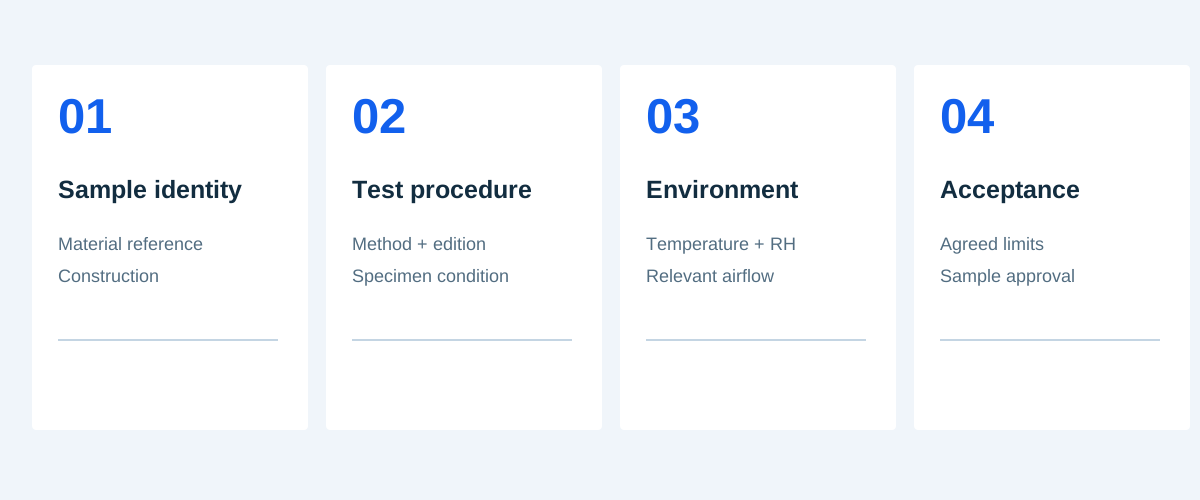
A technical requirement should be specific enough that both the buyer and supplier understand exactly what is being purchased.
Avoid writing:
"Fabric must have excellent breathability and waterproof performance."
This statement is too subjective and difficult to verify.
Instead, create a measurable technical specification.
Example: Waterproof Jacket Fabric Specification
| Specification | Purchasing requirement |
|---|---|
| Product application | Waterproof outdoor jacket |
| Fabric construction | 3-layer laminated fabric |
| Face fabric | To be agreed |
| Membrane | To be confirmed |
| Fabric weight | Project-specific target |
| MVTR | Agreed minimum under specified method |
| RET | Agreed maximum under specified method |
| Waterproofness | Agreed hydrostatic head requirement |
| DWR | Agreed initial and post-wash requirements |
| Colour fastness | Applicable project requirements |
| Washing durability | Agreed number of care cycles |
| Seam performance | Approved construction and testing |
| Testing laboratory | Agreed laboratory |
| Production approval | Approved pre-production sample |
The numerical performance limits should be established according to the target market, intended use, applicable product standards and budget.
Why This Matters
A well-defined technical specification helps prevent:
- Disputes over incompatible laboratory reports.
- Substitution of unapproved materials.
- Inconsistent production batches.
- Unexpected performance changes.
- Unclear quality acceptance criteria.
It also gives suppliers a clear basis for material selection and cost quotation.
For OEM and ODM projects, the specification should be finalized before bulk production begins.