
08 / FAQ
Frequently Asked Questions About MVTR and RET
Q1. Is a higher MVTR always better?
Not necessarily.
A higher MVTR indicates greater measured water vapour transmission under the specified test conditions.
However, it does not automatically mean the fabric is more suitable for every outdoor application.
Buyers should also consider waterproofness, durability, weight, fabric construction and cost.
Q2. Is a lower RET better for waterproof jackets?
Generally, yes.
A lower RET indicates lower resistance to water vapour transfer under the specified test conditions.
However, the final product must still satisfy the required waterproofness and durability standards.
Q3. Can MVTR and RET be converted into each other?
No universal conversion formula exists.
The two measurements use different principles and are influenced by different testing conditions.
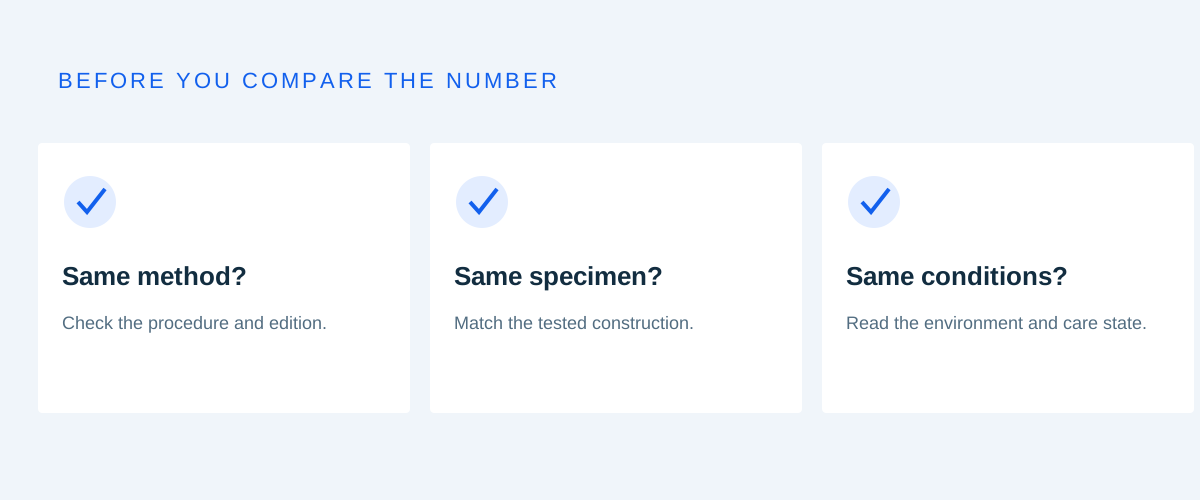
For procurement comparisons, request the same test method from all shortlisted suppliers.
Q4. Does a high MVTR guarantee that a jacket will feel comfortable?
No.
Actual wearing comfort also depends on temperature, humidity, physical activity, ventilation, garment fit, layering and construction.
A fabric test alone cannot fully predict the performance of a finished jacket.[6]
Q5. What is the difference between waterproofness and breathability?
Waterproofness measures resistance to liquid water penetration.
Breathability describes the transfer of water vapour through a material.
A waterproof breathable jacket is designed to manage both properties, but they must be evaluated separately.
Q6. Should buyers test fabric before or after washing?
Ideally, both.
Initial testing establishes the material's starting performance, while post-wash testing helps evaluate the durability of its functional properties.
The washing procedure and acceptance limits should be agreed in advance.
Q7. Which standard should I request from a fabric supplier?
For water-vapour resistance testing, ISO 11092 is an important reference.[1]
For textile water-vapour permeability quality control, ISO 15496 may also be relevant.[2]
For gravimetric water vapour transmission testing, ASTM E96/E96M is another commonly encountered reference.[3]
The correct standard depends on the product, application and intended evaluation.
Q8. Should I prioritize MVTR or RET when sourcing outdoor jackets?
Neither should be considered in isolation.
If your supplier provides MVTR, compare it with other MVTR results obtained under the same procedure.
If RET is available, use it to evaluate evaporative resistance under the agreed conditions.
For technically demanding products, request both measurements when appropriate, alongside waterproofness and durability testing.
Q9. Can the same fabric be used for hiking jackets and mountaineering shells?
Potentially, but not automatically.
The two products may have different requirements for waterproofness, abrasion resistance, fabric weight, construction and long-term durability.
Material selection should be based on the intended application and complete product specification.
Q10. Can Wisp Outdoor support custom waterproof jacket development?
For OEM and ODM projects, buyers should discuss their target market, intended application, performance requirements, design specifications and estimated order quantity with the manufacturing team.
This allows the appropriate materials and construction methods to be evaluated before sampling and production.
Conclusion: Make Better Fabric Purchasing Decisions with the Right Technical Data
MVTR and RET are both valuable measurements for understanding the moisture-management performance of waterproof breathable fabrics.
However, they measure different properties and cannot be directly converted into one another.
For professional buyers, the most important purchasing principles are:
- Always verify the test method behind the reported breathability figure.
- Compare suppliers using the same testing conditions.
- Evaluate waterproofness separately from breathability.
- Assess the complete fabric construction rather than focusing on membrane specifications alone.
- Consider the influence of washing, abrasion and long-term use.
- Test the finished garment, not just the raw fabric.
- Establish clear technical requirements before approving bulk production.
The right waterproof fabric is not necessarily the one with the highest MVTR or lowest RET.
It is the material that delivers the best combination of performance, durability, product suitability and commercial value for the intended outdoor application.
Looking for a Reliable OEM/ODM Outdoor Apparel Manufacturing Partner?
At Wisp Outdoor, we understand that successful outdoor apparel development requires more than selecting a fabric with impressive technical figures.
From material selection and product development to sample evaluation and bulk manufacturing, a structured development process helps brands turn product requirements into consistent, market-ready outdoor apparel.
Whether you are developing lightweight rain jackets, hiking shells, technical waterproof jackets or a custom outdoor collection, our team can work with you to evaluate suitable materials and manufacturing solutions.
Planning your next outdoor apparel collection?
Contact Wisp Outdoor to discuss your OEM/ODM requirements, fabric specifications and product development plans.
Let's develop outdoor apparel that meets your market's performance and quality expectations.